
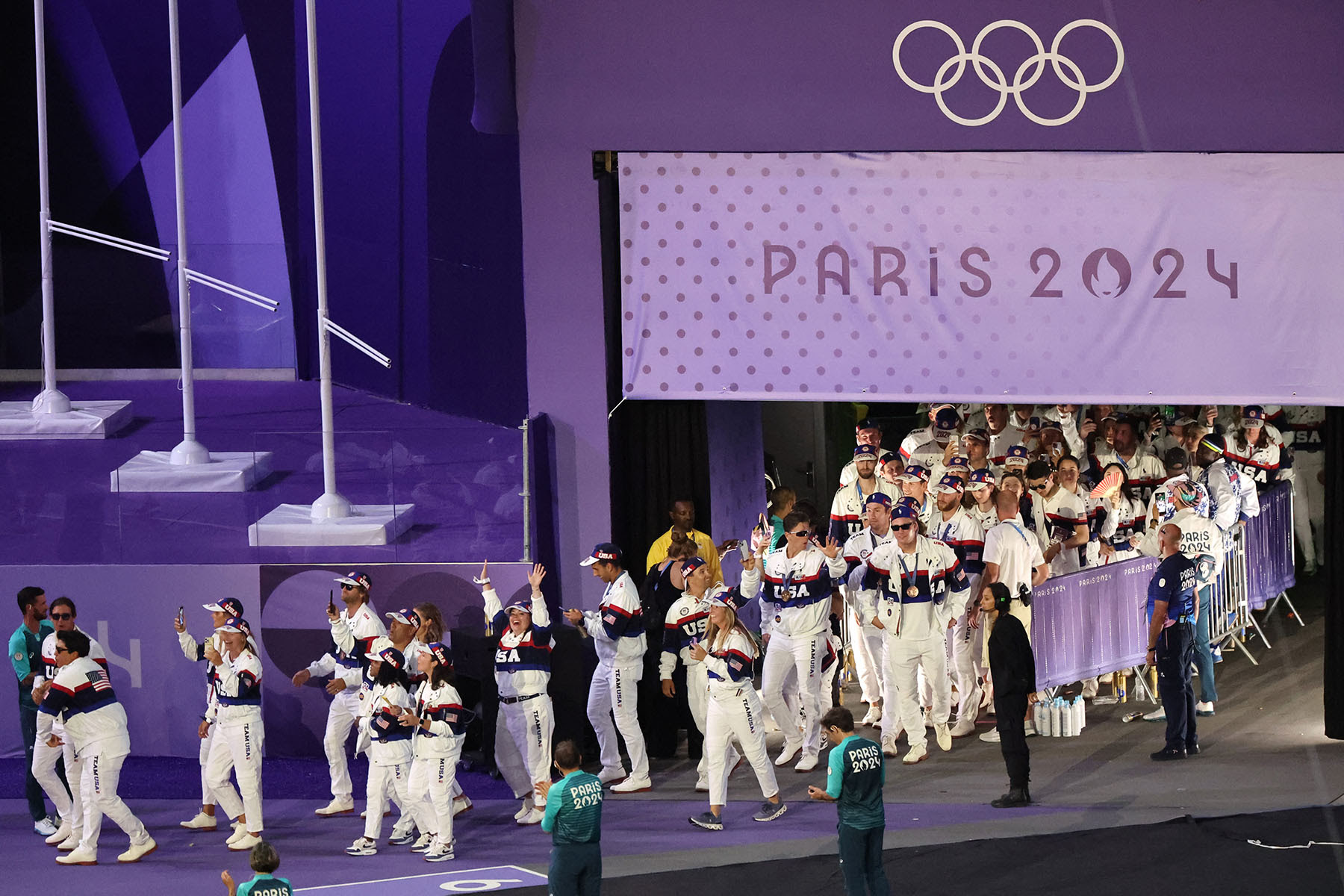
What a rare and unpleasant joy it is to write about something that, for 19 glorious days, provided us with the most wonderful distraction from the world at large–from wars, campaigns, anti-semitism and, frankly, my own myriad personal issues.
The Paris Olympics are done, and about the only negative I can come up with is that they should have gone on another few weeks. All the fears of violent protests from those who support terrorism and people dying from swimming in the Seine turned out to be overblown. About the worst things that happened was a case of COVID for Noah Lyles and the Jordan Chiles medal controversy. The former didn’t deter him from providing the world with one of the most exciting 100-yard dashes in history, and the latter may still wind up being favorable for the U.S.
And that was more often than not what the results were. The United States won a whopping 126 medals, their most in 40 years. 40 of those 126 were gold, a tie with China that resulted from perhaps the most surprisingly exciting international women’s basketball game ever contested, the concluding event of this Olympiad that saw the USA ladies set an all-time Olympic record with their eight consecutive Gold, and Diana Taurasi set an individual record with her sixth.
And as THE NEW YORK POST’s Bridget Reilly recapped this morning, there was a lot more than merely that deserves to be etched in our lifetime memories:
(T)he world was desperate to be reminded of what makes the Summer Olympics an international treat every four years. It’s not just the meeting of athletes across the world. It’s the close finishes, stirred-up drama and compelling storylines that keep fans invested, entertained and coming back for more. Paris did just that and more this summer after two weeks of compelling competition that will without a doubt be present in 2028 with new and old faces.
YAHOO SPORTS’ Kendall Baker added some numerical context:
 More than half of Team USA’s 40 golds came in athletics (14) and swimming (8). They also won three each in artistic gymnastics and cycling, two each in basketball, fencing and wrestling, and one each in soccer, golf, rowing, shooting, surfing and weightlifting.
FRONT OFFICE SPORTS’ David Rumsey and Colin Salao reinforced exactly how much of a win this was for sports media in general, and in particular the NBCU family of networks and platforms:
The network had a strong overall presentation ranging from its slew of broadcasters such as Mike Tirico and Noah Eagle, to the addition of Gold Zone on Peacock, and even to the integration of Snoop Dogg.
The final Saturday in Paris—which showcased the gold medal triumphs of the U.S. men’s basketball and women’s soccer teams—delivered 30.7 million viewers, almost three times as much as the comparable Saturday from Tokyo in 2021, according to NBC.
Team USA’s men’s basketball win over host France averaged 19.5 million viewers, the most for a gold medal basketball game since the 1996 Athens Games and over eight million more than the average 2024 NBA Finals game, while the USWNT’s win over Brazil averaged nine million viewers, the most for a soccer finale since the 2004 Athens Olympics.
While the Sunday viewership numbers are still yet to be revealed, the 16-day viewership of the Games since the opening ceremony on July 26 is at 31.3 million, an 82% increase from Tokyo.
And THE ATHLETIC’s Chris Branch waxed eloquently on some other amazing moments, some of which we’ve already covered herein, but one that occurred Saturday may have made the most impact on the gracious hosts:
(Steph) Curry’s otherworldly performance Saturday in the men’s gold medal game should stick with every basketball lover.  For over a decade, the best shooter to ever live has terrorized large swaths of NBA fans. It was a fun, unifying moment for Americans to rejoice in the 36-year-old Curry being Curry on a different stage. It was ridiculous even by his standards. I’ll never forget French announcers calling Curry “the devil.”
And Reilly also noted that even in events where the U.S. wasn’t quite competitive, their mere presence provided an allure for a new generation of fans to latch onto:
 Paris welcomed the debut of breaking (i.e. breakdancing) and kayak crossing — two things that certainly wouldn’t be thought of as Olympic sports to start but brought a fresh flavor to the games. Breaking shed some light on The Bronx, where the dancing movement originated, and American Victor Montalvo was one of the first to take a medal — a bronze — in the event. Kayak crossing, which was thought to be similar to ski and snowboard crossing, surpassed expectations. Instead of falls being a big deal along the trail, kayak crossing involves an intense version of bumper cars — fronts of kayaks hitting athletes in the chest as they race along a rushing river around pillars.
Something for just about anyone from 2 to 92 to rejoice. And a whole lot of them actually remembered where their NBC affiliate was and/or learned how to navigate to Peacock. For anyone with hopes that media might have a future as promising as the Olympics themselves, that’s a Gold Medal-level achievement unto itself.
And it all comes to Los Angeles in four years. Who knows, maybe I’ll be able to sneak in. Ideally to wherever breaking will be held. You never know who you might run into.
Courage…