
NOTE: This musing also appears today on our sister site Leblanguage. Please visit it regularly for musings on media, sports, politics and life.
I came into the world of media buying and selling in an era when the movie WALL STREET was a cultural touchstone. As Michael Douglas’ unapologetic lead character Gordon Gekko would frequently intone, “Greed , for lack of a better word, is good”. And that mantra drove a generation of transitional sales executives who employed what at the time were atypical and sometimes groundbreaking ways to massage and manipulate data as more different and efficient sources for mining it were emerging. What was previously a business that relied primarily on three-martini lunches and week-long road trips where an account executive would set up shop at a poolside hotel room with a private room fax machine waiting to accept bids on whatever they were peddling by a self-imposed draconian deadline became one which was dominated by relentless trade ads and press releases with pretty charts and graphics to tout their wares. They demanded more money than they often deserved, and they often succeeded in getting it by appearing to be smarter and more resourceful than their clients.
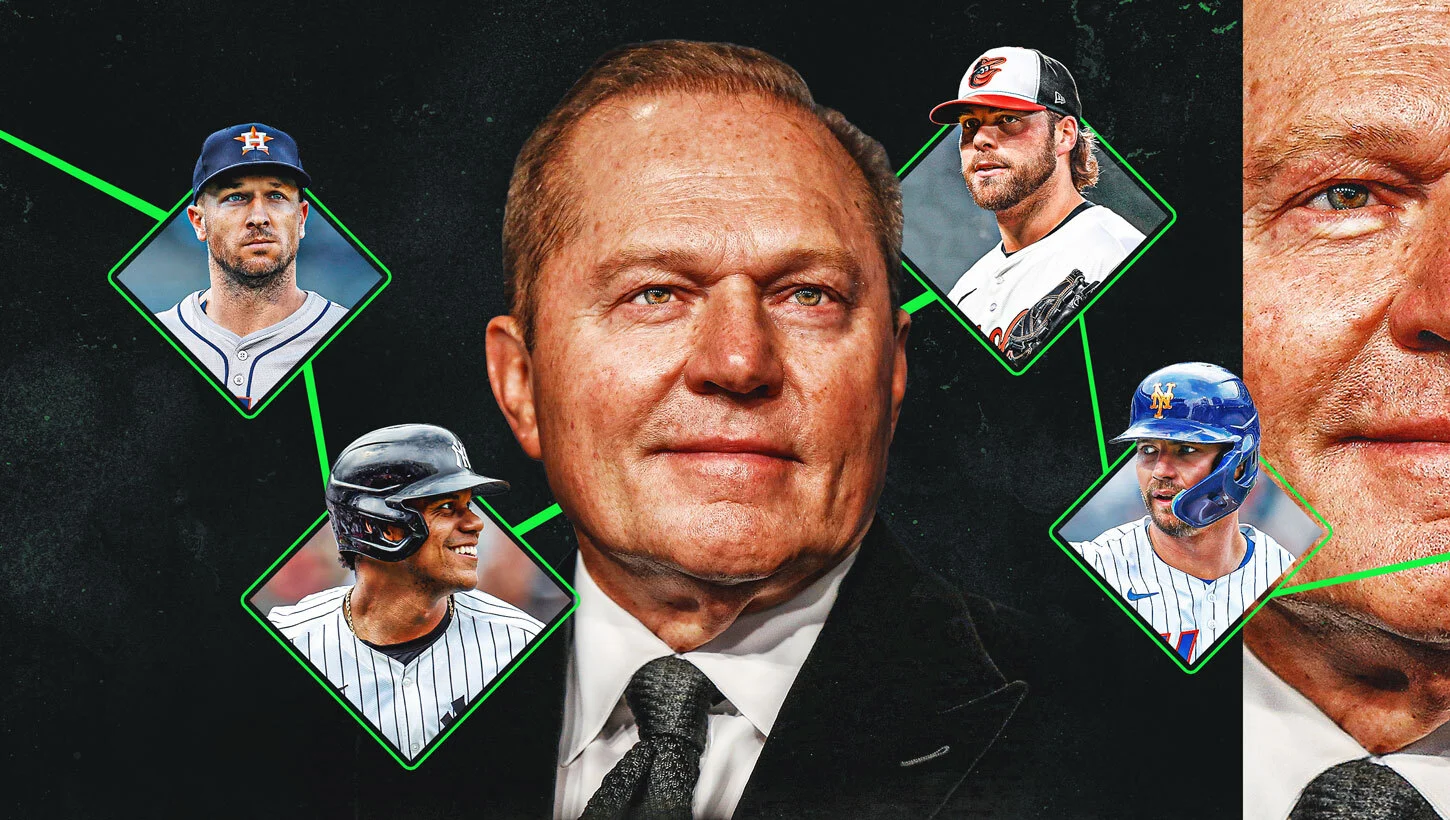
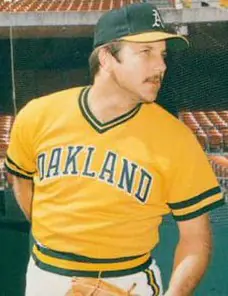
 At the same time this was going on, the world of athletic representation was being similarly reshaped, and among the more ambitious of these similarly empowered young turks was one Scott Boras. As his Wikipedia biography recounts, he began shortly after he grudgingly gave up his pursuit of a major league baseball career after setting records at that college baseball powerhose, Stockton’s University of the Pacific, and then soaring as high as a Florida State League all-star before knee problems forced him to the sidelines. Along the way, he earned the trust of a couple of fellow players, including a teammate named Bill Caudill, the closer for the early and wobegone Seattle Mariners. Boras was able to position him as an outsized performer on a far less competitive team. After an encouraging start to a 1982 season where he scored a then-record 17 saves by the All-Star break only to be snubbed by AL manager Billy Martin for a spot on the team, Boras rode the wave of his outsized popuarity in Seattle to secure one of the largest contracts in baseball history to that point, $7.5 million, for a pitcher who followed that breakout season by losing eight of ten decisions, seeing his ERA double and wound up being traded to Oakland at the end of it. But by that point Caudill was more than set up for life, and Boras was beginning an even more successful career.
Today, as Wikipedia notes, Boras is the president and owner of the Boras Corporation, a baseball-only sports agency.[17] In 2014, the Boras Corporation was named by Forbes magazine as the most valuable single-sport agency in the world. The Boras Corporation operates out of a $20 million, 23,000-square-foot (2,100 m2), two-story, glass-and-steel building in Newport Beach, California.[28] Subsidiary companies include Boras Marketing, which does memorabilia, marketing, and endorsements;[29] and the Boras Sports Training Institute for strength/conditioning and sports psychology.[30] Many of the 75-person staff are former major leaguers, including Bob Brower, Don Carman (and…drum roll)…Bill Caudill(.)
 The litany of Boras’ ability to make his clients far richer than even Caudill had dreamed of is legendary, as Wiki further noted, Boras was the first baseball agent to negotiate contracts in excess of $50 million: Greg Maddux, five years, $57.5 million in 1997;[20] $100 million Kevin Brown, seven years, $105 million in 1998;[21] and $200 million Alex Rodriguez, 10 years, $252 million in 2000.[22]
So it’s natural that even today’s top stars are drawn to such an impressive legacy, and Boras remains as unapologetically determined to optimize opportunities for his clients because, at least in his mind, greed is still good. But he’s now no longer the youngest nor the most resourceful voice in the room, and he’s begun to accumulate some Ls on his side of the ledger. And as this month began, he was once again in the crosshairs of controversy as YARDBARKER’s David Hill (no, not THAT one) chronicled:
Agent Scott Boras is in what is becoming a familiar place as spring training gets closer. Top free agents — first baseman Pete Alonso and third baseman Alex Bregman — remain unsigned. Alonso and the Mets are essentially in a game of financial chicken, having reportedly exchanged three-year offers. Bregman reportedly has a standing six-year, $156 million offer from the Astros on the table but is looking for a larger contract.
Boras found himself in a similar situation with other top free agents during the 2023-24 offseason. Four players — pitchers Jordan Montgomery and Blake Snell, outfielder Cody Bellinger and third baseman Matt Chapman — remained unsigned heading into spring training. Each player ended up taking a contract with an opt-out after the first year, hoping to have better luck in free agency the following year.
In some cases, that strategy worked out. Chapman signed a six-year, $151 million extension to remain in San Francisco. Snell received a five-year, $182 million contract from the Dodgers. Bellinger and Montgomery did not fare as well, opting into their 2025 salary after disappointing seasons. Montgomery was vocal in his criticism of Boras, saying that his former agent “kind of butchered” his free agency.
And Alonso became the face of an especially drawn out and emotional standoff that drove Mets fans to a level of consternation and frustration that even eclipsed Trump Derangement Syndrome during an off-season that followed what was arguably one of the franchise’s signature moment, a ninth inning, three-run home run in the deciding Wild Card playoff game off the Milwaukee Brewers’ otherwise impenetrable closer Devin Williams that turned a 2-0 deficit into an eventual 4-2 Mets win that took them through to within two victories of a World Series apperance. An at-bat that had loomed as potentially his last in a Mets uniform after Boras had been chosen to help him play his version of hardball, as YAHOO SPORTS! Jake Mintz reminded yesterday:
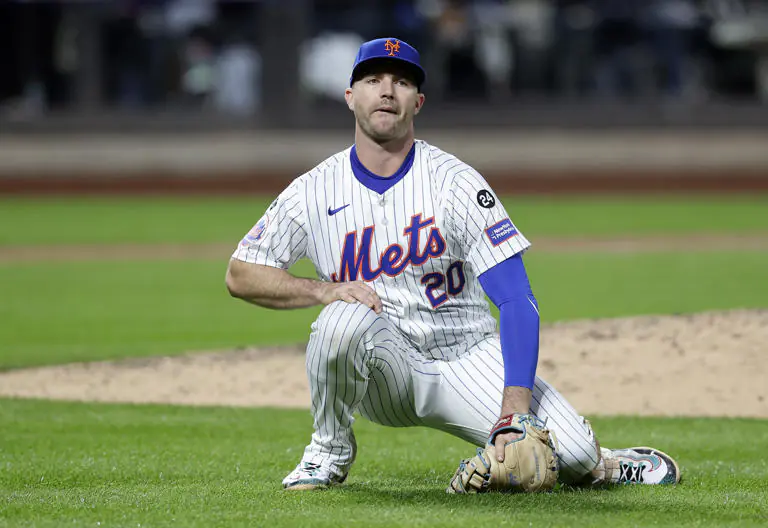 Alonso, a first-time free agent, was seeking a long-term pact commensurate with his status as one of the game’s top power hitters. In June 2023, while represented by a different agency, Alonso turned down a seven-year, $158 million extension. His hiring of Boras in October of that year was supposed to ensure a more massive payday.
But the market never materialized. By New Year’s Day, it was clear that Alonso, 30, would be forced to settle for a shorter deal. Even though his 226 home runs since the start of 2019 rank second in MLB behind only Aaron Judge, teams harbored doubts about whether Alonso could maintain his level of offensive impact moving forward. An underwhelming platform season served as another knock on his profile. The once-upon-a-time dream of surpassing Freddie Freeman’s $162 million contract faded into dust as his free-agency saga trudged forward without a conclusion.
But at long last this week that titanic battle finally came to a conclusion, as Mintz also shared:
On Wednesday, the two sides agreed to a two-year, $54 million deal. Notably, the contract includes an opt-out after the upcoming season, one that will almost certainly see Alonso retest the open market next winter. That style of deal has become commonplace for Boras clients who can’t secure long-term agreements. A month ago, the Mets — owned by Cohen, one of the world’s 100 richest people — made a final offer in the three-year, $70 million range. Boras and Alonso balked. That Boras had successfully steered three other clients to Queens this very offseason, including the record-breaking, $765 million outlay for superstar Juan Soto, didn’t matter. Speaking to fans at a panel, Cohen called the negotiations “exhausting.” Yet beneath all the discord, a reunion remained the likeliest outcome.
So to recap, under Boras’ guideance, over the course of a year and a half Alonso, who stands a strong chance to become the Mets’ all-time home run leader with even a mediocre 2025, lost more than $100 million and five years of security. Boras did his best to achieve a better result, going on a months-long campaign to justify his demands to anyone who could be coerced into given Boras a pulpit, such as the one veteran USA TODAY scribe Bob Nightengale offered him last month in the wake of his securing a record deal for pitcher Corbin Burnes and his desired destination of Arizona where he arrogantly offered this argument:
(T)he last anyone checked, no one has ever mistaken the Diamondbacks for a large-market club with massive TV rights. So, if the Diamondbacks can afford to sign Burnes, Boras argues, there should be absolutely no excuses for others not to strongly pursue and sign Bregman and Alonso to lucrative contracts.
Except Cohen employs some younger and even more analytically astute folks that Boras does these days, and one doesn’t get to be a billionaire by caving to old school negotiating in the press. As Mintz concluded, in the end, Boras (and Alonso) blinked first.
And as for Bregman, he’s still unsigned, and he may be suffering from some of the fallout attached to L’Affaire Alonso that NEWSWEEK’s Jon Vankin reported yesterday:
Boras has “ruined” Alonso, wrote Robert Casey, the managing editor and head writer of the popular Bleeding Yankee Blue site, in a piece posted on Tuesday. Though the site is obviously Yankee-focused, Casey and BYB’s writers cover the baseball landscape, with a focus on New York. Casey went beyond accusing Boras of making unreasonable contract demands. He wrote that the 72-year-old super-agent, who has been called “the most powerful man in baseball,” is more interested in “making himself the center of attention” than in securing the best deal for Alonso.
“Alonso isn’t the kind of player to make outrageous demands,” Casey wrote. “By all accounts, he’s not being greedy — he simply wants a fair contract that reflects his value. But thanks to Boras, teams aren’t even considering him, fearing the circus that comes with dealing with the super-agent.”
Boras continues to fight what he claims is the good fight, with the ever-accommodating Nightengale more than willing to offer up his pulpit yet again. Per FAN SIDED’s Jacob Mountz:
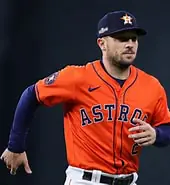 The Boston Red Sox have been in hot pursuit of Alex Bregman who may be the perfect fit for Fenway. His right-handed presence at the plate along with the Green Monster standing in left field looks like the perfect recipe for accruing doubles. A few key figures in the Boston clubhouse, namely Rafael Devers and Alex Cora, have endorsed the idea of signing him. Despite his seamless fit in Boston, there is a bit of a catch. Bregman remains unsigned while Scott Boras is trying to flush out the best offer.
However, the Tigers currently have a better offer on the table. According to Bob Nightengale, Scott Harris has offered Bregman five to six years compared to Craig Breslow’s offer of four years. Breslow could very well still end up with Bregman, but he will need to reup his offer.
 It is somewhat poignant that Boras continues to use a barely surviving staple of what was in the 80s considered to be breakthrough journalism in USA TODAY to offer up his arguments as the world around him has found far more efficient and insightful ways to communicate and negotiate. That seemed to be what Gordon Gekko always carried around in his briefcase along with the New York Times and Wall Street Journal. Some of us, in fact, still read all of them, though we haven’t used a briefcase in decades. Some of us have evolved. At some point, so might Scott Boras. Greed for the sake of greed isn’t necessarily good any more.