

Tony Clark didn’t just wake up one February morning, look at his calendar, and decide he was done with the union grind; the timing of his resignation screams that he wanted off the front lines before the next labor war really starts. With a lockout widely expected once the current CBA expires after the 2026 season, it sure feels like Clark chose not to be the public face of that chaos for the second time in just over five years.
Officially, the story is about scandal and investigations. Multiple major outlets reported that Clark stepped down after an internal MLBPA inquiry uncovered an inappropriate relationship with his sister‑in‑law, who worked for the union, on top of a federal probe into alleged financial improprieties and misuse of resources tied to licensing and union business. An internal investigation, prompted by a wider federal review of the union’s finances, uncovered enough information that players felt they had no choice but to force him out. The union’s statement was sanitized, but the reporting around it painted the picture of a leader whose out-of-office decisions finally caught up with him.

Peel that back, though, and you’re left with some very convenient timing. Clark has been the players’ voice at the bargaining table since 2013, the first former player ever to run the MLBPA, after joining the staff as director of player relations in 2010. He carried the shield through the brutal 99‑day owner‑imposed lockout that wiped out a big chunk of the 2021–22 offseason and briefly delayed the 2022 season, a fight that dragged into March before a deal finally got done. That experience was a grind not just for players and fans, but for the guy who had to stand in front of microphones every day and sell the union’s stance.
Now look at the calendar. The current collective bargaining agreement expires on December 1, 2026, and just about every serious labor preview frames a work stoppage — most likely another lockout by the owners — as the most probable outcome if things don’t break right. ESPN flat‑out said the greater likelihood is that MLB locks out the players the moment the deal expires, shutting down free agency and trades like it did in 2021. The core fight this time is even bigger.
Money and control at a structural level. Owners are already floating the idea of a real salary cap and possibly a salary floor when they sit down for this next CBA, something CNBC and others have detailed as part of MLB’s internal conversations about reshaping its entire economic system. Players, under Clark’s leadership for more than a decade, have treated any hard cap as a non‑starter, seeing it as rolling back decades of progress on free agency, arbitration, and top‑end salaries. That’s not the kind of disagreement you patch over with a tweak to the minimum salary; that’s a full‑on identity battle over how baseball works.
So put yourself in Clark’s shoes. He’s already lived through one modern lockout, complete with daily press conferences, angry fans, and owners using a shutdown as leverage while the union tried to claw back benefits for younger and mid‑tier players. Coming into 2026, he’s staring at another likely lockout, this time with owners openly toying with a cap and with his own leadership weakened by federal investigators digging through the union’s books. That’s not just one more negotiation. That’s walking straight back into a hurricane with less political capital and more personal baggage than last time.
In that light, the idea that Clark simply didn’t want to be the lightning rod for a second lockout in just over a five‑year span doesn’t sound far‑fetched at all. Yes, the internal investigation and inappropriate‑relationship findings gave players a clean reason to move on. But the practical effect is the same. Clark stepping aside now, in February 2026, months before talks fully ignite and long before owners are expected to slam the door on December 1. He avoids being the face of what many around the game already assume will be another extended work stoppage, something several commentary pieces have hinted at while tying his exit directly to the looming lockout.
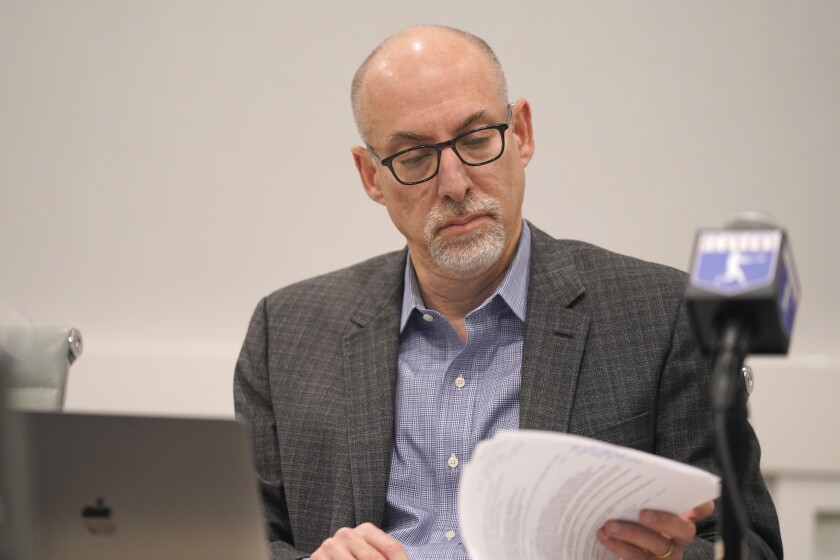
You can feel that subtext in a lot of the coverage. Many news outlets and blogs have framed his resignation as both a scandal and a vacuum at the worst possible time, with the MLBPA suddenly needing to regroup just as it heads into the most contentious talks in over 30 years. Some writers have openly argued that Clark’s scandal‑driven exit only increases the odds this coming fight with the owners turns nasty and prolonged, precisely because it robs the players of a long‑tenured, familiar frontman right before things get ugly. Whether they say it outright or not, there’s an undertone that Clark chose not to ride this one out.
Here’s the thing, folks: The players are left to patch the hole. Veteran labor lawyer Bruce Meyer, already the union’s top negotiator in recent CBA talks, was unanimously voted in as the interim MLBPA Directory as the union scrambles to project unity. He’ll be the one staring down owners who are increasingly vocal about reining in spending, testing the tax system, and reshaping the sport’s financial landscape. Any internal division or uncertainty only gives MLB more leverage once the lockout clock officially strikes midnight.
With that… It will always be known that Tony Clark resigned in disgrace, pushed out by an internal investigation and trailed by a federal probe into how the union did business. But zoom out and look at the timing. While the last lockout is still fresh, the next one is practically being advertised in advance, and the man who carried the blame last time suddenly decides he’s done just months before the storm hits. It’s hard not to read his exit as a calculated decision from someone who’s had his fill of lockout madness — and this time would rather watch the chaos from a distance than stand in front of the cameras and live it all over again.
If you cannot work with them, then sometimes as a fan you should be happy they are out!