

This season it has felt different watching baseball games because the usual slow burn between hitters and umpires over balls and strikes has a new outlet. Instead of a guy getting rung up on the corner and spinning around to bark at the plate ump, he taps his helmet, the whole park looks up at the screen, and in a few seconds everyone has an answer and the game moves on. The Automated Ball‑Strike challenge system doesn’t remove emotion from the moment, but it redirects it away from yelling and toward OK, let’s see what the system says instead.
From there, things get interesting. The ABS setup is actually pretty simple under the hood. Umpires still call every pitch, but the batter, catcher, or pitcher can immediately challenge a call they think was wrong, and Hawk‑Eye decides whether the ball clipped the zone or not. You only get a few of these per game, and you only keep them if you’re right, so nobody is just mashing the challenge button for fun.
What really changes is the emotional temperature. Instead of the slow build of resentment that used to hang over a night after a bad strike three in the second inning, players have a release valve that finishes in about 15 seconds and then everyone has to live with the result.
You can already see how that cuts down on the old‑school, red‑faced blowups. If the hitter is convinced that pitch was off the plate, he can spend a challenge and find out. If the pitcher thinks he painted the corner and got squeezed, he can do the same.
Instead of managers charging out of the dugout to defend their guys, they’re… mostly standing there watching the giant strike zone graphic with everybody else. When the graphic confirms the call, that anger has nowhere to go. When it overturns the call, the roar from the crowd replaces the confrontation that used to follow.
A lot of fans, though, are still hung up on who should be allowed to challenge. You hear a ton of people insisting this should really be a batter‑and‑catcher thing. The logic sounds reasonable because the catcher has the best look at the glove, the hitter is living pitch by pitch, and the pitcher is 60 feet away and emotionally invested. But the rules make zero distinction there. MLB has been clear that the batter, catcher, and pitcher all have equal power to initiate a challenge; the dugout is shut out entirely.
That’s led to some fascinating internal rules on actual teams. During minor league testing and early write‑ups, we saw examples of clubs basically telling certain hitters you don’t challenge, you’re bad at it and funneling those decisions through the catcher instead.

Other organizations want their veteran starters to have full freedom to tap if they felt they absolutely threw a pitch that got called a ball. Fans can argue all day about whether the pitcher should have that right, but as far as MLB is concerned, the three people directly involved in every pitch all get the same tool — it’s up to teams to decide how much leash to give each one.
Zoom out to the bigger picture, and ABS is just the latest step in a pretty obvious trend. MLB has been hacking away at dead time for a couple of years now. The pitch clock that started being fully implemented in 2023 — 15 seconds with bases empty, 20 with runners on — immediately chopped game times down from the three‑plus‑hour marathons that had become normal.
Combine that with limits on pickoff moves, a single timeout for hitters, and tighter enforcement, and those long stretches where nothing really happened between pitches basically evaporateds-shifts.
Then you throw in the shift restrictions, bigger bases, and stricter rules on mound visits. Those weren’t just aesthetic choices. They were carefully aimed at getting the ball in play faster and more often, creating more action, and wiping out some of the stalling tactics fans had grown tired of.
MLB has been very open about the logic. When they ask fans what they want, the answer keeps coming back around two and a half hours, not three hours and seven minutes with a ton of downtime wedged between balls in play.
The clever thing with ABS is that, on the surface, it looks like the kind of thing that would slow a game down, but it actually does the opposite. A traditional argument over balls and strikes eats up multiple minutes, sometimes includes an ejection, and absolutely freezes the rhythm of everything.
A challenge eats maybe 15 seconds, tops, and everyone’s incentive is to be selective because wrong challenges are a finite resource. A handful of those per game is nothing compared to what used to happen when a big spot and a wide zone collided.
It also changes the shape of the drama. Now, instead of a batter thinking for three innings about a call he thinks cost him an RBI, he has to decide in the moment if that pitch was worth burning a challenge. If he taps and loses, the conversation in the dugout shifts from the umpire screwed me to I wasted our challenge. If he taps and wins, the crowd celebrates and we all move on to the next pitch without a five‑minute detour.
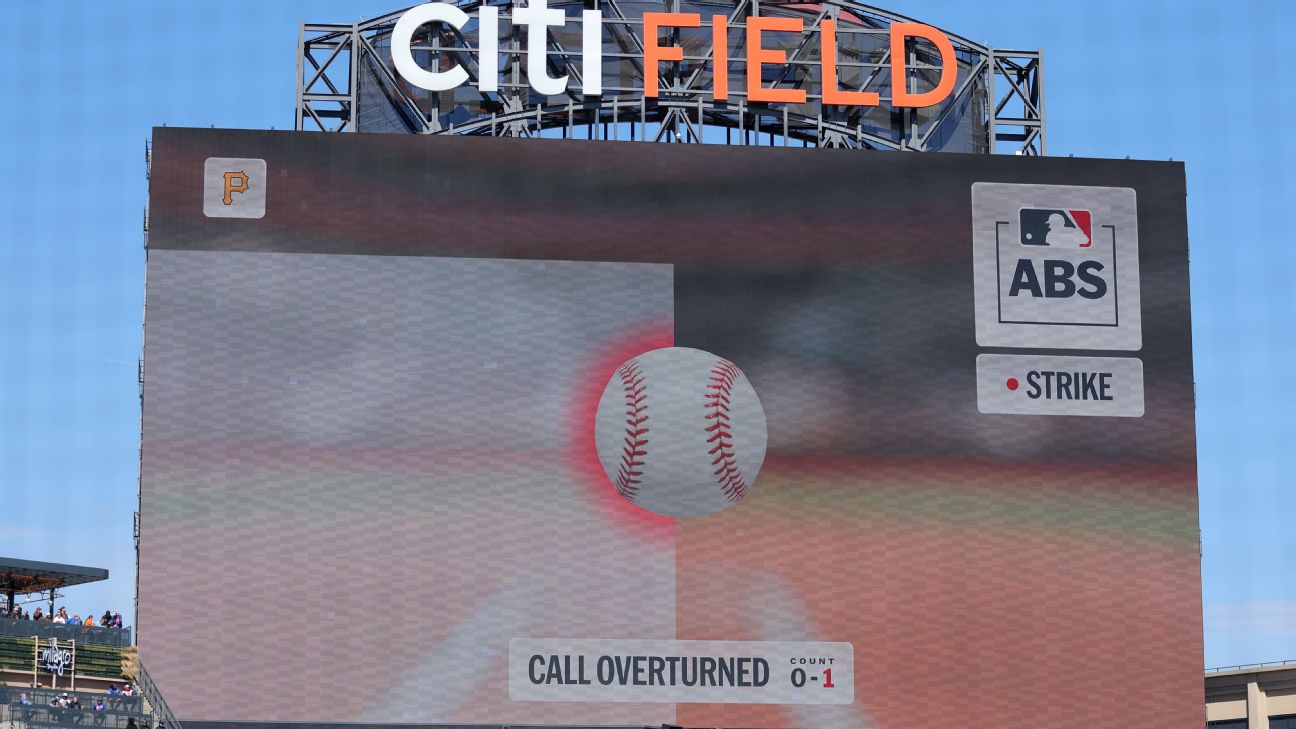
And in the background of all this, you can feel something shifting in how players interact with umpires. When there’s a clear, fast, objective way to dispute a call, the need to blow up over every borderline pitch drops. When challenges are scarce, the casual chirping from the dugout stops making sense; if you really believed that pitch was terrible, you should’ve tapped.
That’s a subtle cultural change, but it adds up. Over nine innings, you get more baseball, fewer stand‑offs, and fewer nights where the lasting memory is who got tossed instead of who hit the big homer.
Here’s the thing, folks: Opening Week is supposed to be about optimism and clean slates, but this year it’s also been a showcase of just how much the sport has changed in a short time. Between the pitch clock, the shift rules, the tighter visit limits, and now ABS, baseball has gone from stubbornly slow to surprisingly modern almost overnight.
With that… Fans still feel the tension of a full count, the cat‑and‑mouse of pitch selection, the art of framing and sequencing. What you don’t get as much of is the filler around the edges. Instead fans get a show of sportsmanship from guys getting paid millions of dollars to play a game we all played, at least once, as kids.
If you cannot play with them, then root for them.