

Whilte the New York Knicks are up 2–0 and the Oklahoma City Thunder are tied 1–1 in their Conference Finals series there have been too many possessions this post-season where the conversation has not been about the actual shot, but what happens after it. In games that should be about poise, shot-making, and nerves, we are spending way too much time watching stars tumble to the floor like they are auditioning for a foul call instead of trying to win a basketball game.
When you get to this stage, every possession is supposed to feel like a test of execution, not a referendum on who can sell contact the best. The crowd rises because a star has a clean look, and instead of living with the make or miss, the whole arena ends up staring at the referee while the shooter sprawls on the hardwood, arms out, asking for three freebies. It cheapens the drama when the first instinct after a jumper is to fall down and lobby instead of land on balance and get back on defense.
The league has already admitted this is a problem. A few years ago, the NBA changed its rules so referees would stop rewarding non-basketball moves like offensive players launching or leaning into defenders at abnormal angles, kicking their legs out, or veering off their path just to create contact. On paper, that was supposed to dial back the foul-hunting era; in practice, players have just shifted the game to something subtler — especially in how they land.

No one embodies this shift more than James Harden, who basically turned foul-drawing into a core skill set. At his peak, Harden led the league in free throws attempted in five of six seasons, averaging double-digit trips to the line and weaponizing every tiny reach and bump into two easy points. A huge part of that came from the way he shot and landed on threes, often stepping or falling into defenders so any bit of contact looked like a violation of his landing space.
Many breakdowns show Harden has drawn hundreds of three-point shooting fouls. When you watch him rise up in a big moment and immediately fling his legs out, twist midair, and then collapse to the floor looking straight at the ref, it does not feel like basketball instincts — it feels like paperwork. Even when it works, it sucks the joy out of the possession, and when it does not, you are left with a superstar on the ground while the other team runs the other way.
Shai Gilgeous-Alexander is not Harden stylistically, but he lives in the same conversation now because of how relentlessly he gets to the line. He just put up an MVP-level year, averaging over 31 points per game while also ranking near the very top of the league with around 9 free throw attempts a night, after a season where he got to the stripe nearly 11 times per game. That kind of whistle inevitably sparks the free-throw merchant discourse, even though he is also one of the most efficient midrange scorers in the league, knocking down a huge share of his pull-up jumpers.
The problem is not that Shai attacks the rim — he is brilliant at it — it is what happens on the margins. You see more and more possessions where he leans, hangs, or lands in a way that practically invites contact on the way down, followed by the familiar delayed fall and head snap toward the official. Articles, talk shows, and even satire have latched onto the idea of him constantly trying to draw fouls, because the perception has become that he is operating the whistle as much as he is operating the defense. In a tight playoff game, that perception matters; it colors every jumper, every landing, every close call.
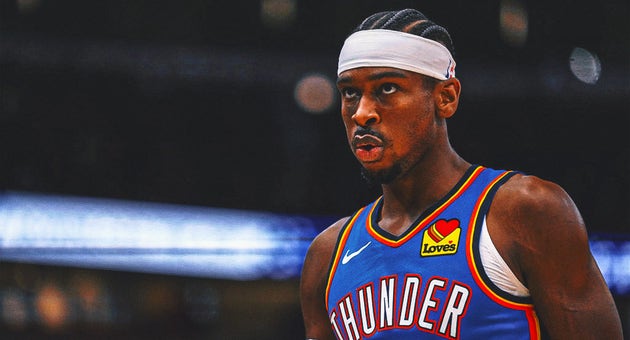
What makes all of this so frustrating is that landing lazily after a shot appears to be intentional — it is not some unavoidable, optional, side effect of elite scoring. Players are choosing to sacrifice balance and transition defense in exchange for a lottery ticket on three free throws. On a pure fan level, nothing kills the flow of a playoff game faster than a shooter collapsing to the floor with minimal contact, lying there in disbelief while everyone else has already moved on to the next play.
This is exactly the kind of behavior the league tried to target when it told referees to stop rewarding abnormal launches, leg kicks, and abrupt sideways movements designed solely to generate whistles. But because the rules focus on the motion into the defender, guys have found a gray area — selling every bump, every foot brush, every contest as if their landing space has been violated. That is how you get possessions where the shot is fine, the defense is fine, and yet we are all stuck inside a mini courtroom drama at the three-point line.
Here’s the thing, folks: The fix is not complicated conceptually, even if it will be hard culturally. First, stars need to reclaim basic fundamentals, go up straight, come down on balance, and assume play will continue unless you are genuinely knocked off course. There is a massive difference between protecting yourself when a defender truly undercuts your legs and hurling yourself backward because you felt a hand on your hip. The former is safety; the latter is theater.
Second, coaches and front offices have to stop rewarding this stuff in film rooms and analytics meetings. Yes, free throws are efficient, and yes, every contender needs someone who can live at the line, but at some point you have to ask whether chasing two cheap points is worth constantly bogging down the game and alienating your audience. When crunch time possessions devolve into flop-and-pray sequences, even diehard fans tune out, and casual viewers never buy in.
Finally, the league should extend its existing language on abnormal offensive moves to cover landings more explicitly. If a shooter clearly abandons a normal landing path just to crash into a defender’s body or legs, that should be an offensive foul or a no-call by rule, not a debate topic on the Last Two Minute Report. Give defenders a fair chance to contest, give stars a reason to stay upright, and give fans their game back.
With that . . . These Conference Finals should be about whether the Knicks can actually close the door and whether the Thunder’s young core can get back to the league finals — not about whether James Harden, Shai Gilgeous-Alexander, or anyone else can perfect the art of falling down on purpose.
If you cannot play with them, then root for them!