

NBA owners have officially signed off on the new 3-2-1 draft lottery, a three-year experiment that kicks in for the 2027 draft and is being sold as the league’s boldest anti-tanking move yet. On paper, it sounds pretty clever. They will expand the lottery, flatten the odds, and actually punish the three worst teams in the league instead of rewarding them. In reality, it brings more competitive balance to the draft board, but it does not actually kill tanking — it just moves it around the standings.
Under the old system, only the top four picks were decided by lottery and the rest of the order followed regular-season record, which made finishing as low as possible still very attractive. The 3-2-1 format blows that up by expanding the lottery from 14 to 16 teams and using ping-pong balls to decide the entire order for picks 1 through 16.
Teams that miss both the playoffs and the play-in get three balls each, the three worst teams are draft relegated down to two balls with a guaranteed floor of pick 12, the 9 and 10 seeds get two balls, and the losers of the 7–8 play-in games get one. That means the seven non-playoff, non-play-in teams actually have better odds at the top than the three worst records, roughly 8.1 percent versus 5.4 percent for the No. 1 pick in one analysis of the structure.
So yes, the bottom feeders are clearly getting smacked with the new system. Being one of the three worst teams no longer maximizes your draft upside; it now locks in worse odds for the top pick and only guarantees that you won’t fall past 12. The league’s hope is obvious. Landing in the absolute basement comes with a penalty instead of a reward, bad teams will fight to escape that bottom-three relegation zone instead of pulling the plug in February. You can imagine those late-season games between the 28th and 26th best teams suddenly having real stakes as they try to climb out of that penalty band.
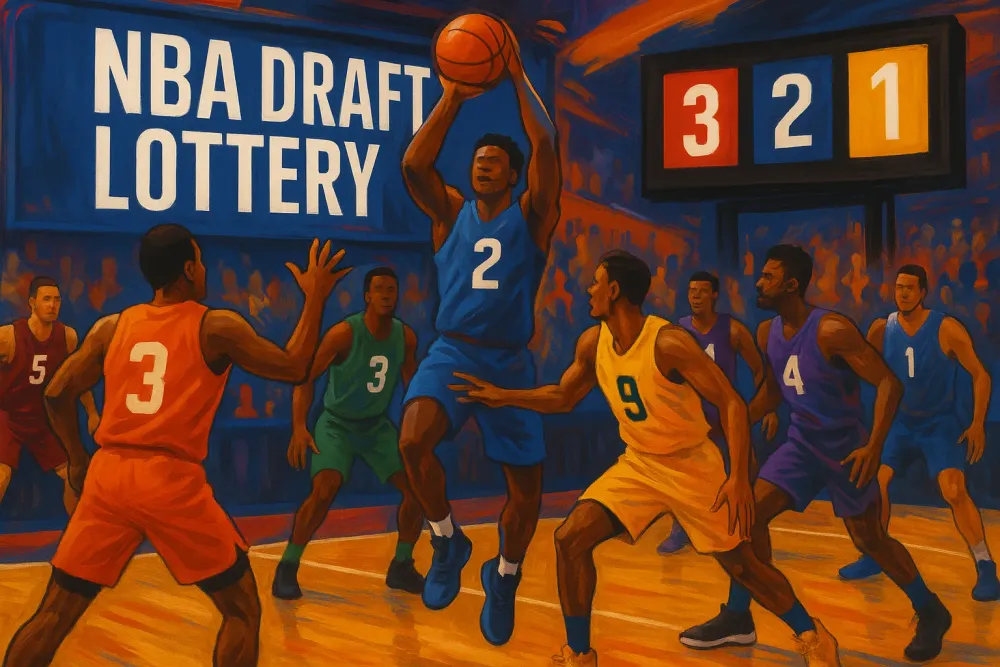
The thing is tanking was never only about hitting rock bottom — it was about playing the odds at the margins, and the margins still exist. The new sweet spot just happens to be the 4–10 range instead of the 1–3 range. If you’re a front office stuck around 11th or 12th worst in March, you now have every incentive to pivot to development mode, lean into rest days, and slide into that 4–10 band where you get three balls instead of two. You’re still manipulating results to chase a probability curve; the curve is just shaped differently.
The incentives get even weirder around the play-in line. Ninth and 10th seeds only get two balls, while the seven non-play-in, non-playoff teams get three, which creates a scenario where a team might prefer to miss the play-in entirely for better odds at a top-three talent. One analysis pointed out that a 9th or 10th seed could be looking at significantly worse odds for a premium pick than a team that just stayed out of the play-in mess to begin with. That opens the door for tanking to the middle — resting guys late, being a little less aggressive in the play-in chase, and quietly deciding that a lottery bump is better than a likely one-and-done appearance.
The rule tweaks around repeat top picks are another layer meant to balance things rather than end tanking. No team can win the No. 1 pick in back-to-back years, and nobody can end up with a top-five pick three drafts in a row, which caps the ability to live at the top of the lottery indefinitely. Add in the ban on protections in the 12–15 range and these restrictions are clearly aimed at stopping teams from engineering “soft landings” with pick protections while camping near the bottom. Again, that’s about spreading opportunity around the league more evenly, not about removing the incentive to lose selectively.
The league has also given itself more teeth, at least on paper. Under the new system, the NBA can reduce a team’s lottery odds, move its draft position, and levy multi-million-dollar fines if it decides a team is openly tanking. Enforcing what actually counts as tanking when every team can claim it is managing workloads and prioritizing development in a long regular season could become more of a problem with this lottery system. We’ve already seen gray areas in recent years where fans and media call something an obvious tank move while the league shrugs and moves on.
Here’s the thing, folks: Tanking is baked into the economics of the sport, not just the lottery math. As long as transformational stars come into the league on cheap rookie deals and can swing a franchise’s fate for a decade, teams will search for any edge to get closer to those players. The 3-2-1 system does a good job of flattening out the distribution of those chances and making it harder to build a dynasty out of repeated top-five picks. But it doesn’t change the fact that, if you’re stuck in that dreaded good-but-not-great tier, missing the playoffs and nudging your lottery odds can still look rational.
With that . . . This is only guaranteed to last through the 2029 draft, after which the Board of Governors can keep it or rip it up and try again. In that sense, the league is admitting this is more of an experiment than a final answer. So yes, the 3-2-1 lottery should create more competitive balance across the board and finally put a real dent in the incentive to be truly awful, year after year. It just doesn’t erase tanking. Instead it rebrands it, nudges it toward the middle, and dares front offices to find new and more subtle ways to game the system.