
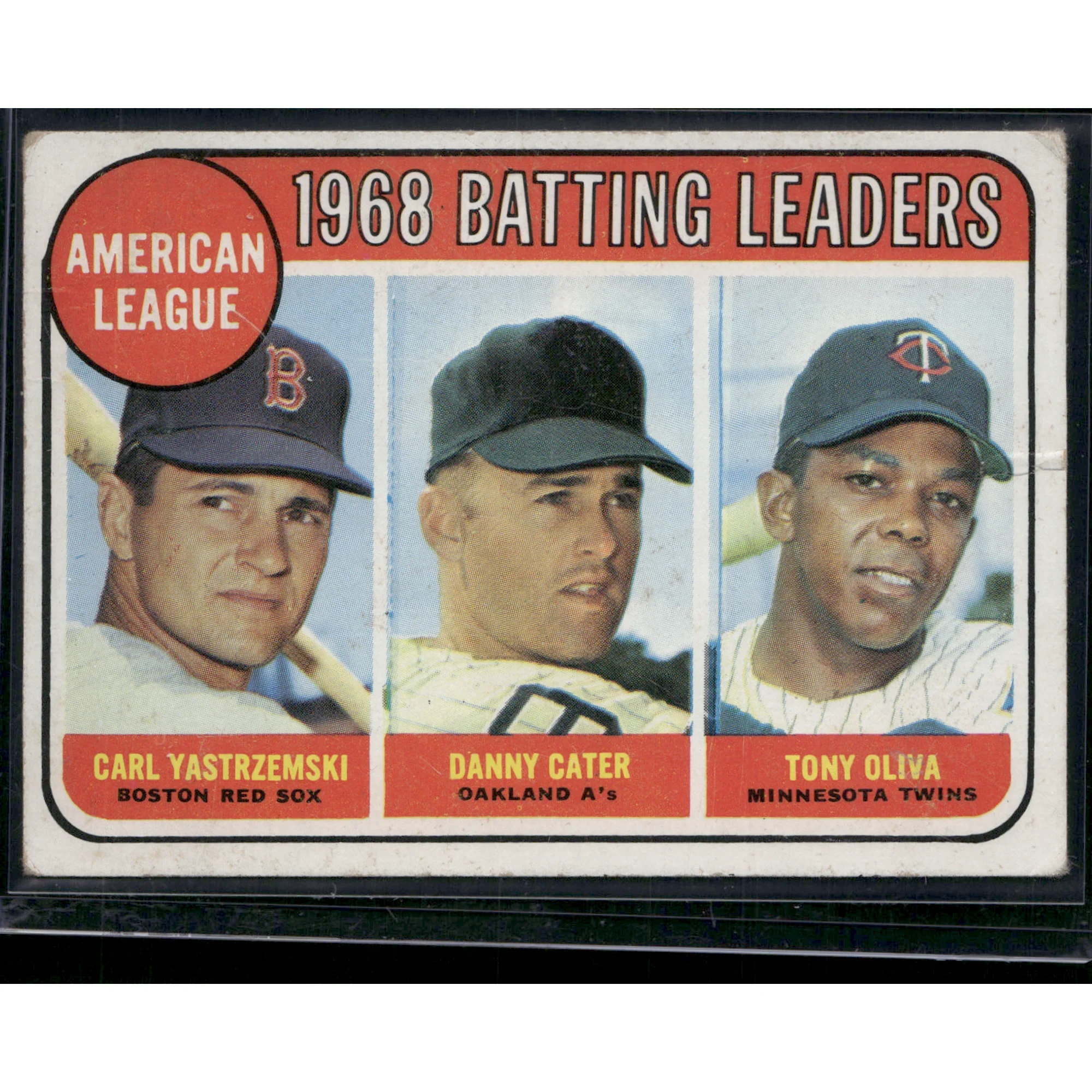
The short answer to the obviously rhetorical question I’ve posited above is “nope”. At the moment, Danny Cater is 86 years old and while my first inclination is that he’d probably still be able to outrun Jorge Polanco to first base today, his reflexes are likely slowed down enough where even for the Mets he’d be a risk.
But I hope you’ll forgive me that the possibility of Cater’s comeback crossed my mind when I recently caught this story that FORBES’ senior correspondent Barry Bloom dropped last month:
If there’s a theme to the 2026 season so far, it’s that great pitching is dominating good hitting. The league batting average is .240, the lowest since 1968 when hitters hit .237 and it was dubbed the year of the pitcher. That was the lowest recorded batting average for a single season in Major League history. MLB’s answer was to lower the height of the pitching mound from 15 inches to 10 inches.
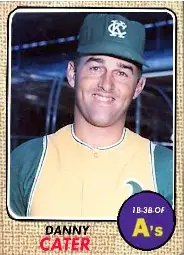 I’m seasoned enough to remember that fateful summer, one where America desperately needed distractions amidst a deluge of assssinations, riots, aborted presidential runs and “peaceful” protests. It was one of the first summers I paid close attention to everything going on in baseball–enough so that every Sunday I copiously read the agate type in the expanded sports section and committed to memory as many of the season-to-date batting averages I could. And when that summer ended, while I recognized the name of the American League’s top hitter, defending Triple Crown winner Carl Yastrzemski, and the league’s bronze medalist, the Twins’ flamboyant now Hall of Fame outfielder Tony Oliva, I had to stay up way past my bedtime to learn that the guy who finished sandwiched between Yaz and Tony O was indeed the now-Oakland Athletics’ first baseman Danny Cater. With an average of .292. Nine percentage points behind Yastrzemski, the only player in the entire ten-team league to fail to get a base hit less than seven out of ten times.
The veteran observer Bloom proceeded to try and make sense of what was occurring this year–with emphasis on the word try:
Not even the new rules have made a dent in hitting. The elimination of extreme infield shifts, larger bases, only three pickoff throws, a limit on how relief pitchers can be used, and the pitch clock were supposed to positively impact hitting…None of it has. Overall hitting jumped from .243 in 2022 to .248 in 2023. That increase was ephemeral as the current numbers show. Even the advent of the universal designated hitter in 2022, when pitchers stopped hitting, hasn’t had its desired effect.
(P)itchers are really good,” said Jeff Bannister, the Arizona Diamondbacks bench coach. “Young guys come in and veteran hitters have a lot of history. They’ve been around a long time. And that’s an advantage, really, with all the information that’s out there in our league, video, analytical data. And the way pitchers study hitters under the hood to learn how to get them out, it’s a trend. They always try to be one step ahead of hitters.”
But for as confident as Bannister sounds, his boss trails far behind.
“It’s my job to figure out the puzzle,” D-backs manager Torey Lovullo said. Why are so many great players not hitting? “I don’t know. I don’t have that answer,” he added.
A quick look at what now substitutes for those essentially defunct Sunday sections shows only a slightly rosier close-up on who’s delivering on even that minimal bar as we have just passed the one-third pole of the 2026 season. Just 17 qualifying players are hitting at least .300–a mere seven in the American League; the top two being pure DHs —veterans Yandy Diaz of the Rays and Yordan Alvarez of the Astros. A peek at the NL’s top six shows a disturbing trend that reflects a cadre of slap-hitting mehs like the Phillies’ Brandon Marsh, the Marlins’ Otto Lopez, the Giants’ Jung Hoo Lee and Luis Arreaz, the Pirates’ Nick Gonzales and the Rockies’ Troy Johnston–none being household names and all but Marsh currently playing for a team that were the season to end today would not be playing in the post-season. All this one year removed from the sobering reality that Yastrzemski’s feat of being the sole +.300 batting average in a league was matched last season by the Phillies’ Trea Turner. 
And as Bloom grudingly concedes, while there was the ability to rectify things after that Summer of ’68 the odds of repeating such a feat today are somewhat dim:
MLB’s answer was to lower the height of the pitching mound from 15 inches to 10 inches. Hitters responded, batting .248 in 1969 and .254 in 1970. Hitting reached a high of .270 in 2000… MLB can’t move the mound back because it begs more shoulder and elbow injuries, which pitchers already suffer in in the near triple-digits each season. MLB has experimented with moving it back 12 inches in the Atlantic League, but it was inconclusive. It’s part of the evolution of the game and at this point there seems to be no turning back.
My one question to such indifference would be–at what cost is this to the fate of the game? When I was captivated by the pitching lines of Bob Gibson, Don Drysdale and Denny McLain in far calmer and tranquil times, those outsized performances at least created some real stars and striking stats that made up for the likes of the Danny Caters. These days? How many complete games are being pitched, as the immortal Vin Scully once referenced a Gibson shutout, “like he’s double-parked”? How many truly dominant pitchers are active today–especially in the American League? The sole qualifying AL pitcher with an ERA under 2.00 is the Yankees’ up-and-coming Cam Schlittler–and while he’s impressive he’s arguably the third most crucial starter on their staff. Are even Yankee fans making an extra effort to schlep out and see him live?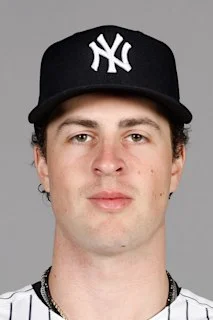
I’d urge the powers that be to at least try and revisit some of those more radical proposals as we head for ievitable change with a tough summer and even tougher winter of negotiations ahead. Giving this generation’s version of the Danny Cater-conscious me more reasons to pay attention–at least long enough to look up from their screens–wouldn’t be the worst way to assure a bit more stickiness moving forward than perhaps Nick Gonzales or Troy Johnston can provide.
OTOH, by this time next summer we could all be looking at an average far lower than .240. Like .000. That’s when you get when you have zero at-bats. Or, another way of putting it–as many as Danny Cater’s taking this year.
Courage…