
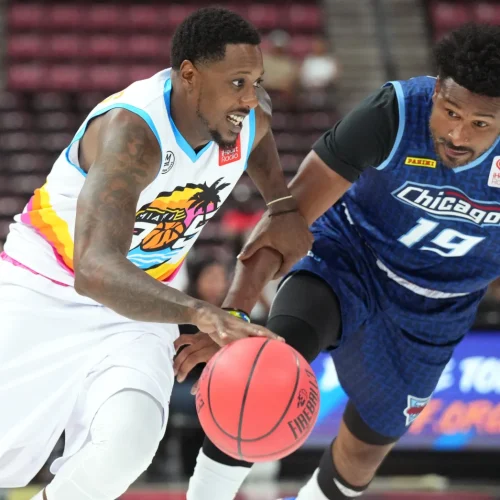
I’ve grown over time to become a much bigger basketball fan than I began as. I’m seasoned enough to have seen the NBA grow two and a half-fold and major college schedules more than double in size. We’re seeing even greater growth and relevance in the women’s game, and I for one love it. The WNBA scheduling arc effectively fills the gap between the start of the playoffs and the start of fall training camps, and the explosion of interest on those nearly 400 Division I campuses has made it nearly impossible to not have some live game streaming at some point morning, afternoon or evening between Election Day and St. Patrick’s Day.
But there are apparently those among thus for whom this much isn’t enough, particularly during the dog days of almost August that are now upon us. The professional leagues that are active, including the WNBA, are definitively in their doldrums, exacerbated by the draining heat and humidity they are being conducted in. The games are just not all that significant in the moment no matter how much a rational observer might otherwise remind that every win and loss ultimately does.
For those of such mind, especially for subscribers to Paramount Plus and for viewers of CBS and BET, there’s something called the Big 3 that is attempting to provide still more sustinence. I stumbled upon it this past weekend for the first time and apparently I’m more than a little late to this party, as Wikipedia reminded me:
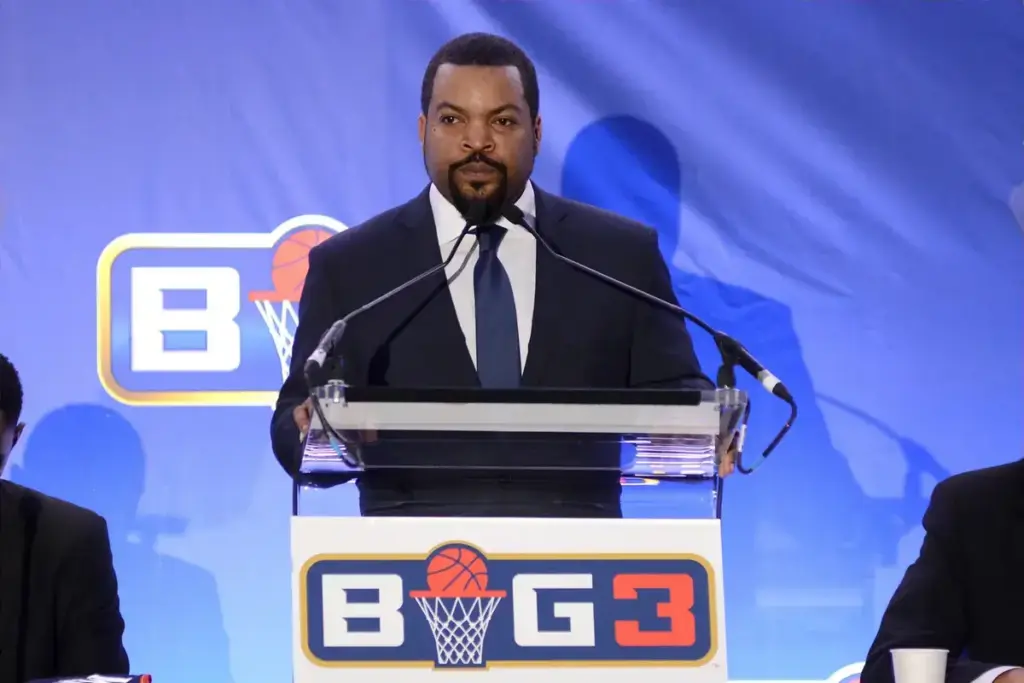 It debuted in 2017 and takes place during the NBA offseason. In January 2020, Big3 announced its rule set would be the core of a new basketball variant called “Fireball3” (stylized FIREBALL3). (It’)s a 3-on-3 basketball league founded by rapper and actor Ice Cube and businessman Jeff Kwatinetz. The league consists of 8 teams whose rosters include both former NBA players and international players.
For those who became familiar with this variant during the most recent Summer Olympics, it’s distinctly different that the 3-on-3 iteration that was showcased in Paris. That Wikipedia entry also has a lengthy list of such differences–some intriguing but most essentially compromises. That may be because the league initially began as a de facto seniors league–no one under the age of 30 competed during its first two seasons. That was eventually adjusted post-COVID and now provides a lane for both players not quite good enough for the G League or those simply too addicted to hoops to at least attempt to remain relevant. Among this season’s more recognizable younger players include Glen Rice, Jr., Amir Johnson and Cam Smith.
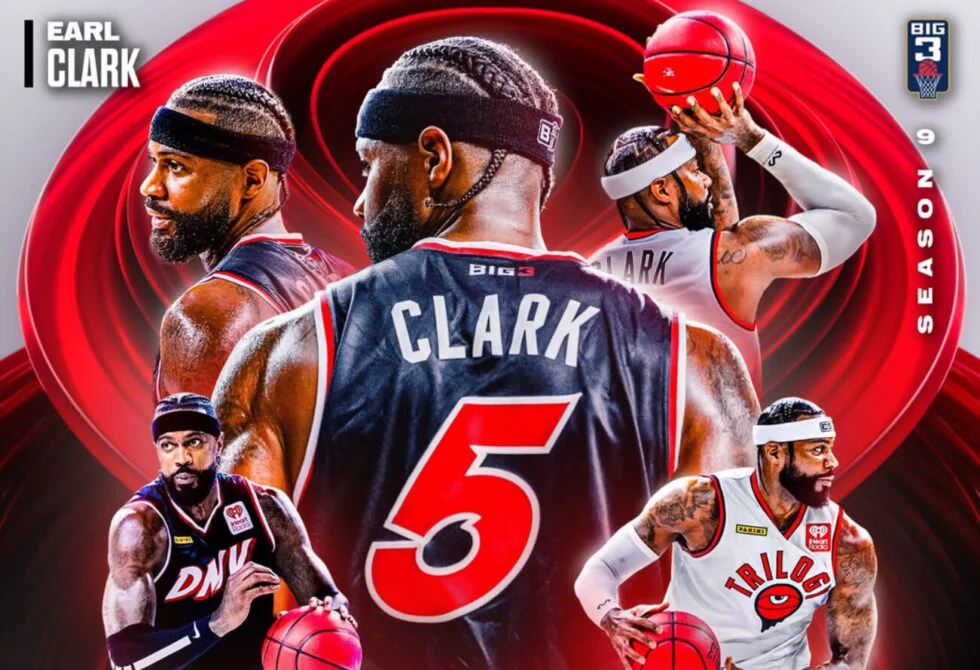 But the main attractions are still those whose best days are at least a decade in the rear view mirror–Earl Clark, Greg Monroe, Montrezl Harrell, Wesley Johnson and Leandro Barbosa. The fact that they play on exactly half a court and with a Elam Ending that maxes out the winning score at 50 allows for those “senior citizens” to pace themselves appropriately. That’s a good thing, because the masterminds on the benches are even more obvious old school shout-outs than they are. Among the coaches are Gary Payton (SENIOR!), Dwight Howard, Nancy Lieberman, Rick Mahorn, Mario Chalmers, Stephen Jackson and FFS Calvin Murphy and Dr. J himself, Julius Erving. I can only surmise Hubie Brown didn’t need the money.
Once the initial intrigue of seeing these relics in some sort of competition has happened, the competition takes on all of the urgency of a charity exhibition. The efforts on all parts are lackadaisical and haphazard, and the hype that the participating networks and the league’s overzealous website offer comes off all the more hollow and disingenous. The very fact that they’re promoting the venue for the Miami 305 as being Miami-based when it’s in reality the clearly suburban Broward County home of the Florida Panthers and not the Heat was unto itself a telling enough sign for me. It got me to thinking what kind of hucksters would be behind this. As it turns out, the answer was already right in front of me.
Kwatinetz is an attorney who’s been behind some other pretty shady efforts in recent years, not the least of being a company called Prospect Park that attempted to fill a perceived void in daytime entertainment when ABC unceremoniously put its veteran soap operas ALL MY CHILDREN and ONE LIFE TO LIVE out to pasture in 2011 and early 2012 respectively. He took full advantage of actors and writers seeing their gigs of in some cases multiple decades dry up and hastily signed them to a bunch of holding deals and then set out to attempt to try to revolutionize video entertainment with something called The Online Network. He promised day-and-date deliveries of original episodes and believed he would ultimately bring ABC to its knees for having the audacity to choose THE VIEW and, worse yet, THE CHEW as what they felt was worthy and affordable enough to join GENERAL HOSPITAL on the remnants of their once-robust daytime lineup.
I came face-to-face with him and his fellow Prospectors, which included the former Disney chairman and Television Academy head Rich Frank, when he acknowledged that his advertisers demanded more of an audience than a website alone was able to provide in 2013. Even though my employer was clearly called Game Show Network that didn’t stop our CEO from scheduling a meeting where they provided tangible evidence that the audience overlap between our titles and theirs was significant. They promised us an equity stake in the venture if we would provide them with a needed linear component. Since my immediate superiors were open to reality shows and had previously dabbled in poker competitions, we didn’t immediately shut down those negotiations. And since I was already arguing we should consider licensing reruns of courtroom shows because they too had similar profiles to those of game show viewers and had a soapish storyline (albeit with a daily closed-end conclusion, but alas I digress) any objections I might have otherwise had about blurring the lines of a network dedicated to a particular genre were already being compromised anyway.
Still, when we insisted upon guarantees of frequency and volume were we to commit a significant time period to those shows, they red-lined our asks out of the deal terms. As it turned out, they had no choice. They ultimately only produced 21 episodes of AMC and 22 of OLTL over a tumultous five-month span–both about half the length of those that had been being produced for ABC–with a significant number of participants never getting paid, They spent most of the next year in court blaming ABC for those hiccups and eventually filed for Chapter 11 bankruptcy. At least in that case we dodged a bullet.
 And when one digs into Kwatinetz’s own Wiki one learns he’s still involved in plenty of lawsuits–mostly on the receiving side. Judging by the kind of company he keeps, I just can’t help but wonder if his favorite snack food is Oreos, because he sure seems to take a shine to those who are willing–unwittingly or not–to be perceived as such. I have to further wonder how quickly these hoopsters–desperate for some sort of career– have to rush to the bank to assure their checks with clear. Let’s just say the “crowd” I observed in the SUNRISE, Florida located Amerant Bank Arena wasn’t quite on the par of what the Panthers draw for hockey–or even what Tiger Woods’ indoor golf league attracted in a de facto TV venue not far from there last winter.
So armed with this knowledge I will assure you I’ll find better things to do–and certainly other things to watch–besides Big 3 Basketball going forward. With someone like that in charge, half court comes off half-hearted if not half-assed. Kwatinetz’s presence alone assures the presence of a full ass.
Courage…