
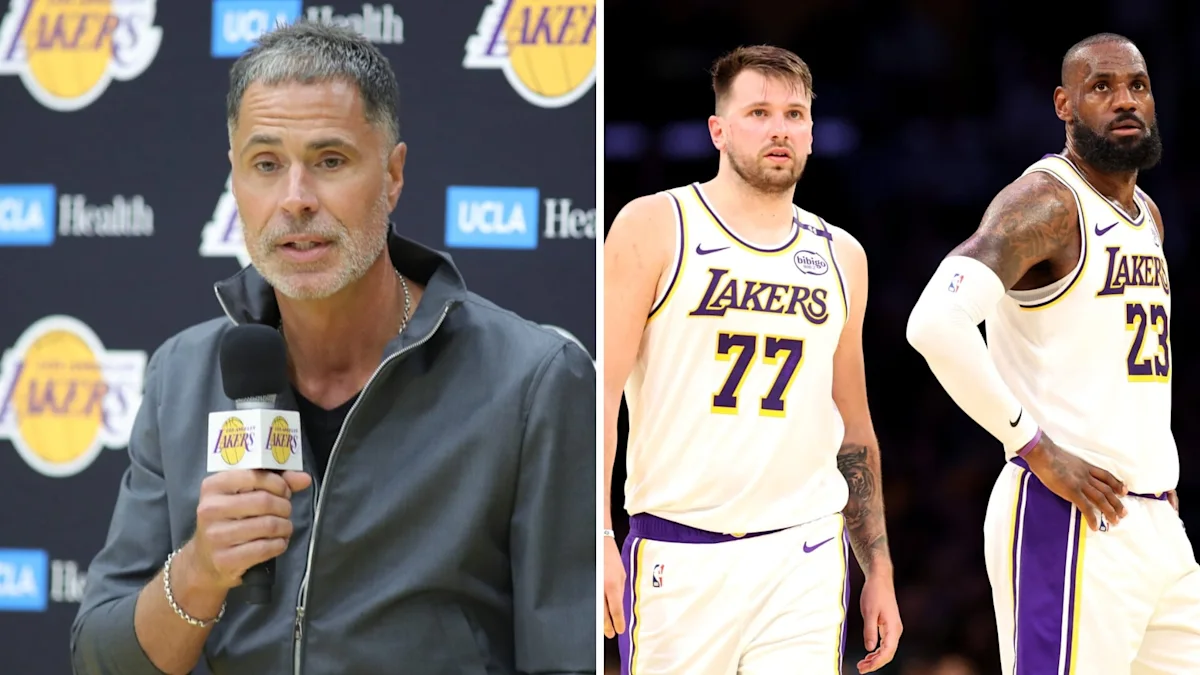
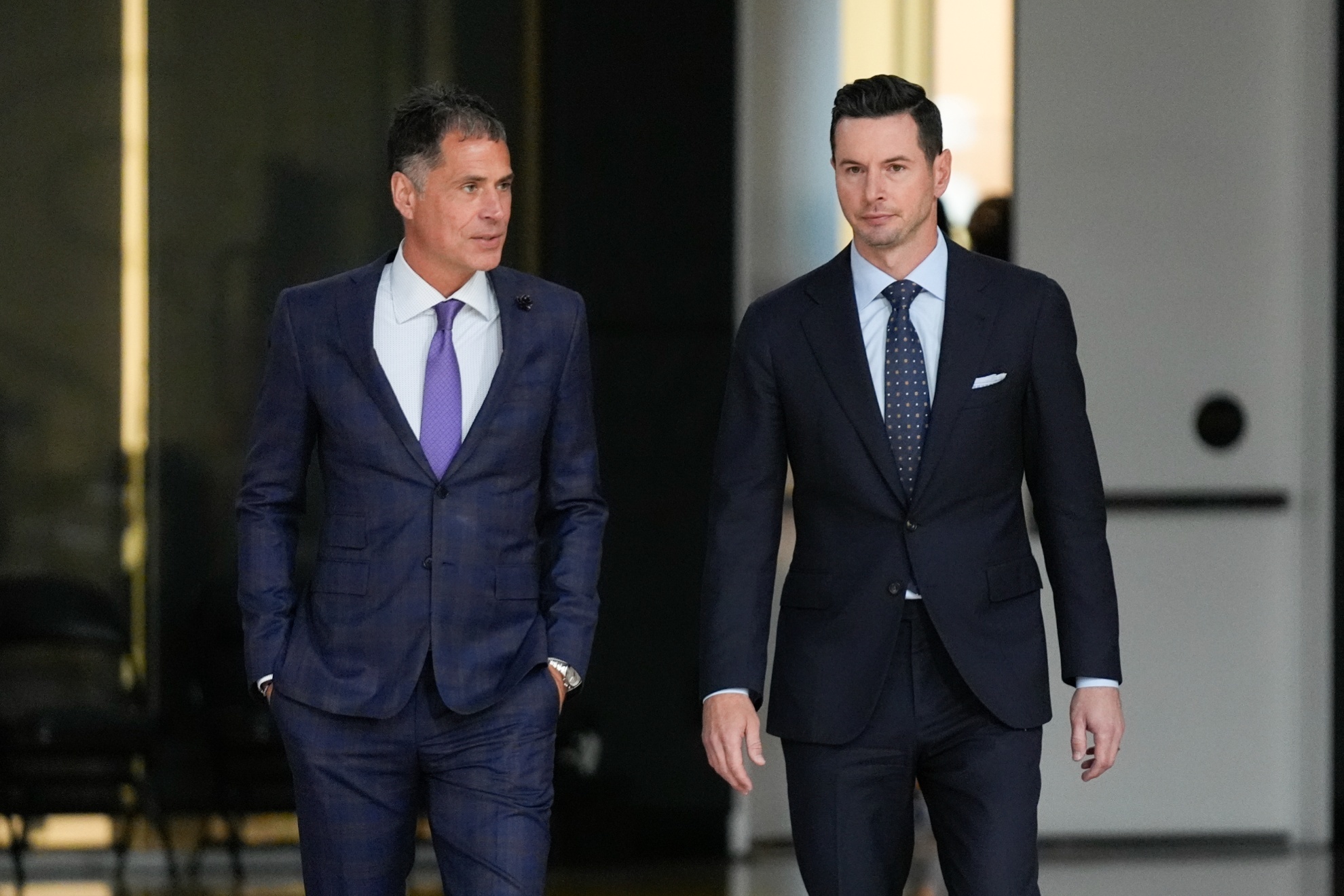
Rob Pelinka and JJ Redick struck the right tone when they addressed the Lakers’ future without LeBron James the other day. They were respectful about everything James accomplished in Los Angeles, but more importantly, they sounded ready to stop looking backward. For a large portion of the fan base, that is exactly what needed to happen.
No Lakers fan should pretend LeBron’s years in Los Angeles meant nothing. He arrived in 2018 and helped restore relevance to a franchise that had spent years wandering through the post-Kobe wilderness. The 2020 championship will always count. The 2023 Western Conference finals run was real. Even in seasons when the roster looked unfinished or exhausted, LeBron’s presence kept the Lakers on national television, in the playoff conversation and under a spotlight that many franchises would gladly take.
Pelinka was correct to call the split amicable and to say the organization is grateful. That was the professional thing to say, and it was also true. LeBron gave the Lakers credibility when they badly needed it. He brought a title to a franchise that measures itself in banners, not moral victories. His decision to take the next chapter of his career to Philadelphia does not erase any of that.
But gratitude does not mean sadness. It definitely does not mean Lakers fans should act as though the franchise has been left hopeless without him.
In fact, there are plenty of fans who feel something much closer to relief.
The LeBron era had become heavy. Every season felt like it existed under a countdown clock. Every roster move was judged through the narrow lens of whether it could maximize the last remaining years of a 40-something superstar. Every offseason became an argument about urgency, loyalty, draft picks, future flexibility and whether the Lakers were doing enough to chase one more title before the window shut for good.
That pressure is understandable when a player of LeBron’s stature is on the team. It is also exhausting.
The Lakers became a franchise caught between two timelines. They wanted to honor LeBron’s desire to compete immediately, but they also needed to build for a future beyond him. Those two goals did not always fit together. The result was a roster that often felt patched together, too old in certain spots, too thin in others and constantly one move away from being described as either dangerous or doomed.
Now, for the first time in a long time, the Lakers can build with a clear direction.
Pelinka laid out that direction in unusually straightforward terms. The Lakers wanted to retain Austin Reaves, acquire a franchise center and add younger players who can dribble, pass and shoot around Luka Dončić. In other words, the front office is no longer trying to solve a new version of the same LeBron problem every summer. It is constructing a team around a 27-year-old superstar whose timeline can shape the franchise for years instead of months.
That is why so many fans are energized by this moment. It is not because they dislike LeBron James as a player. Nobody with any appreciation for basketball can deny what he has been. It is because Lakers fans want to root for a basketball team with an identity that feels sustainable.
For years, the Lakers were LeBron’s team first and a Lakers team second. That may sound harsh, but it is how the experience often felt. Every conversation revolved around his age, his minutes, his health, his desire to play with family, his relationship with the front office, his supporting cast and the possibility of one final run. The franchise’s larger story was always being postponed.
Now it can begin again.
Redick’s comments were revealing in that sense. He did not sell the idea that the Lakers are already finished products or guaranteed contenders. He said no team is championship-level before the season begins and emphasized that becoming one is a process. That may not be the kind of headline fans are conditioned to expect from the Lakers, but it is the right message.
For too long, the franchise was forced to talk in absolutes. Was this roster good enough for LeBron? Was this trade enough to save the season? Was this the last chance? Was the championship window closed? The new version of the Lakers can think in terms of development, continuity and actual team-building.
That does not mean the Lakers are suddenly free of pressure. Nothing about the franchise is ever low-pressure, especially with Luka now at the center of everything. Dončić is a generational offensive talent, but his presence also raises expectations immediately. If the Lakers have him, they are not allowed to drift through mediocrity and call it a rebuild.
Still, the pressure is healthier now.
The Lakers did not want to squeeze one more elite season out of an aging legend. They are trying to build a roster that makes sense around Luka, Reaves and a younger supporting cast. Pelinka’s mention of Walker Kessler matters because it signals a more coherent basketball plan.
Kessler protects the rim, rebound, run pick-and-roll, create lob threats and surround elite creators with players who can make quick decisions. Redick called Kessler a strong fit because of his rim protection, rebounding and ability to play around the basket with Luka and Reaves.
That may sound basic, but Lakers fans have watched enough strange roster construction to understand how valuable basic can be.
There is also a cultural reset happening. The Lakers no longer have to pretend that every choice is about extending a championship window that had become increasingly difficult to open. They can invest in youth without it being framed as a failure to support LeBron. They can let Redick coach a system rather than manage a season-long emergency. They can develop chemistry over time instead of forcing instant answers.
And yes, some fans are happy the LeBron era is over because they are ready for the attention to shift away from one individual. Lakers fandom has always been bigger than any one player, including great ones. Magic Johnson did not own the Lakers. Kobe Bryant did not own the Lakers. Shaquille O’Neal did not own the Lakers. They became part of the franchise’s history, but the franchise survived and evolved after each chapter.
LeBron should be remembered the same way. An all-time great who delivered a championship, gave the Lakers important years and eventually moved on.
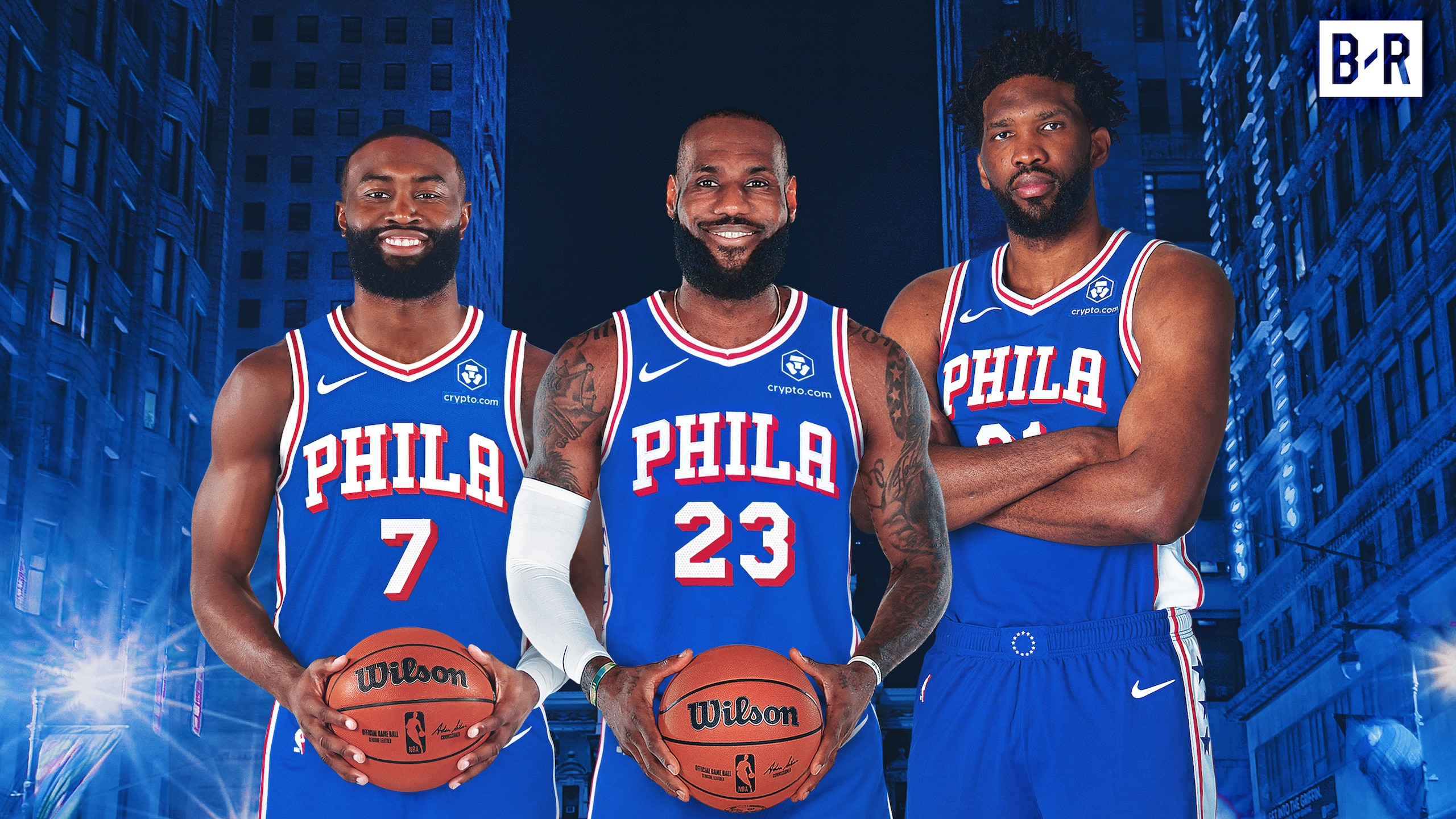
Philadelphia gets the next chapter. Los Angeles gets its own.
Pelinka and Redick deserve credit for not turning LeBron’s departure into a public feud or a dramatic grievance session. Pelinka’s repeated emphasis on gratitude and professionalism was appropriate, especially given the magnitude of LeBron’s place in Lakers history. But the real significance of last week’s comments was not the farewell. It was the blueprint.
Here’s the thing, folks: The Lakers have a younger cornerstone. They have a front office and coach publicly aligned on what the roster should look like. They have Austin Reaves as an important piece rather than a trade-rumor accessory. And they have a chance to form a team identity that is not dependent on preserving the final years of an icon.
That is not disrespectful to LeBron. It is simply reality.
With that . . . The LeBron era deserves appreciation. The Lakers’ next era deserves excitement. And for many fans who have spent years waiting for the franchise to feel like it belongs to its future again, the feeling is not mourning.
It is relief.
If you cannot play with them, then root for them!