

Chicago’s comeback kids of 2026 are all playing golf and watching the rest of the playoffs from their couches. After the Cubs and White Sox established themselves as come-from-behind teams during the early part of the regular season, both discovered that October offers considerably less time to recover from a bad night—or three of them.
The Cubs provided the first hints of a memorable baseball summer. They erased an early six-run deficit to beat Pittsburgh in April, then extended a 10-game winning streak by rallying past the Dodgers on a ninth-inning Dansby Swanson home run.
Days later, the White Sox scored seven runs in the seventh inning to turn a late deficit against the Angels into an 8-7 victory. Chicago suddenly had two teams capable of making games feel unfinished until the final out.
Neither could carry that identity far enough in October. The Cubs were outscored 12-1 while being swept by San Diego in the Wild Card Series, while the White Sox advanced by sweeping Houston and winning the first two games of their Division Series in Cleveland. The Sox appeared ready to prolong Chicago’s remarkable history in winner-take-all postseason games against Cleveland, but the Guardians won three straight and finished the comeback with Saturday night’s 2-0 victory.
Before that decisive fifth game, Chicago teams had never lost a winner-take-all postseason contest against a Cleveland team. The city was 3-0, with two victories belonging to the Bulls and the other occupying the most cherished place in Cubs history.
The first came in 1988, when Michael Jordan and the Bulls beat the Cavaliers 107-101 in the fifth and deciding game of their opening-round series. Jordan averaged 45.2 points during those five games, announcing that Cleveland would become one of the primary stages upon which his postseason legend was built.
One year later came the moment that turned a competitive regional matchup into a permanent piece of NBA history. With Chicago trailing by one and three seconds remaining in Game 5, Jordan rose over Craig Ehlo and hit the series-winning jumper at the buzzer. The 101-100 victory, completed by Jordan’s 44-point performance, gave Chicago its second winner-take-all triumph over Cleveland.
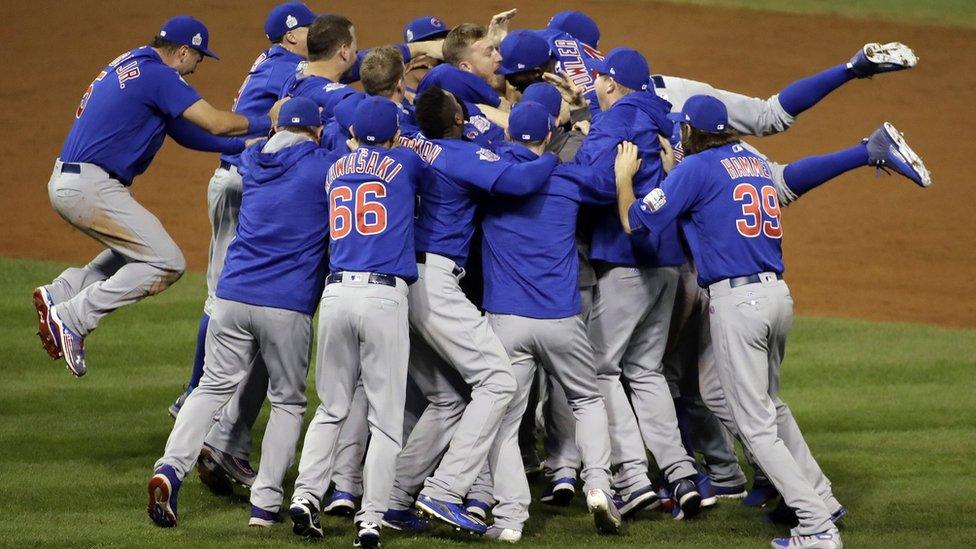
The Cubs added the third in 2016, and they did it with considerably more drama. Down three games to one in the World Series, Chicago survived Game 5 at Wrigley Field, won Game 6 in Cleveland and then captured Game 7 at Progressive Field, 8-7, in 10 innings following a rain delay and a blown late lead. The victory completed the comeback and ended the Cubs’ 108-year championship drought. [
Although the Blackhawks never had a Cleveland opponent available to join that history, they helped create Chicago’s broader belief that its teams could survive elimination games. The 2013 Blackhawks came back from a 3-1 series deficit and eliminated Detroit on Brent Seabrook’s overtime goal in Game 7, then continued on to win the Stanley Cup. Two years later, they went to Anaheim and defeated the Ducks 5-3 in another Game 7 on their way to a third championship in six seasons.
That history made Saturday’s game feel as though Chicago had brought generations of postseason magic to Cleveland. There were memories of Jordan hanging in the air, the Cubs waiting out the rain and the Blackhawks repeatedly finding another gear whenever their season approached its final minutes.
The White Sox even seemed prepared to add their own chapter. They had opened the postseason with four consecutive road victories, the first 4-0 playoff start in franchise history, and returned home needing only one win to eliminate the Guardians. Instead, Cleveland scored nine runs in each of the next two games at Rate Field, sending the series back to Progressive Field and forcing Chicago to rely on its old winner-take-all advantage.
This time, history offered no protection. Gavin Williams struck out 12 White Sox hitters, José Ramírez supplied the game’s only runs with a two-run homer, and Cleveland’s pitchers recorded 21 strikeouts—the most ever in a winner-take-all MLB postseason game. A White Sox lineup that had spent the season fighting back never produced one final response.
The ending was especially cruel because Cleveland beat Chicago by becoming the better version of what the Cubs and White Sox had been celebrated for becoming. The Guardians lost the first two games at home, faced elimination three times and won them all. Chicago’s perfect winner-take-all record against Cleveland ended at 3-1, and the South Side’s surprising postseason run ended one victory short of the American League Championship Series.
Here’s the thing, folks: Chicago baseball still gave the city an entertaining and often unexpected season. The Cubs won 89 games and reached the postseason for a second consecutive year, while the White Sox finished 84-78, swept Houston and won their first playoff series since the 2005 World Series championship. But October ultimately delivered the same destination for both teams: the golf course, the couch and an offseason filled with questions.
With that . . . The remaining field has Cleveland facing Tampa Bay for the American League pennant, while Milwaukee meets the two-time defending champion Dodgers in the National League Championship Series. With both Chicago clubs eliminated—and with Cleveland having finally broken the city’s winner-take-all spell—many fans are now rooting for a Brewers versus Rays World Series.
If you cannot play with them, then root for them.