
The midpoint of any college football season is typically when whatever semblance of lightheartedness disappears and the teams of destiny emerge from the pack. But this is not just any season, and yesterday’s events pretty much underscored that reality with sobering clarity. SPORTS ILLUSTRATED (well, CFB-HQ on SI)’s James Parks captured the essence:
We had a suspicion that the Week 7 college football slate would be pretty crazy coming in, and looking at the tattered remnants of the AP top 25 poll before and after Saturday, it was clear that those forecasts were correct.
This weekend was nothing short of a massacre for teams placed in the top ten of the rankings, with nearly half of those contenders losing on the field.
Part of that was expected, with six matchups involving ranked teams on both sides of the same field, but some other surprising upsets also played a role in this week’s poll upheaval.
Saturday’s action was the first time in the AP poll era since 1936, a full 90 years of college football, that five teams in the top eight lost their games.
The YAHOO! Sports Staff (ye gods, the whole damn lot?!) provided a few examples of the level of weirdness that contributed to it:
The day started with a thriller in the Big Ten as No. 4 Ohio State hung on to beat No. 5 Indiana 19-15, ending the Hoosiers’ 22-game win streak. Indiana WR Nick Marsh couldn’t keep his feet in bounds on a potential go-ahead touchdown in the final seconds.
(Un)nranked teams stole the show — especially in the SEC. Florida rallied to beat No. 7 Texas 27-24 in Austin, where Arch Manning struggled for the second straight game, and then Auburn took down No. 1 Georgia with a game-winning field goal by Alex McPherson as time expired in Athens.
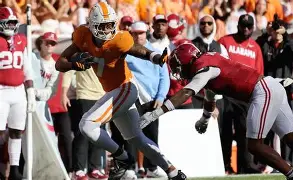 In another stunner, No. 14 Tennessee manhandled No. 6 Alabama in the “Third Saturday in October” rivalry game and unranked Florida State gave No. 3 Miami everything it could handle as the Hurricanes barely escaped with a controversial double-overtime win.
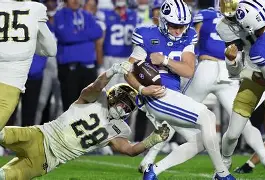
In the evening marquee, No. 8 BYU delivered the final big upset of the day, taking a late lead on No. 2 Notre Dame and then holding off CJ Carr and the Irish with a defensive stand to end things on the final play of the game.
 Throw it that games that lasted until nearly 3 A.M. Eastern Time saw #11 Utah barely escape with a 27-24 eking of what’s left of Deion Sanders’ Colorado and Oregon somehow found just enough offense to put together a last minute touchdown drive to edge a Nebraska team that occupied half of Autzen Stadium and it made for a dizzying thirteen hours that will undoubtedly see a total reset of the landscape as we head into cooler, darker weather.
But if one takes NBC SPORTS’ Nicole Auerbach at face value (as one should), it’s a landscape that has pretty much regressed to the mean:
There appear to be a lot of very good college football teams that have flaws that can be exploited. No one is infallible. There are no unbeaten SEC teams left. UCLA (!) is the last undefeated team in the Big Ten. This season isn’t going according to anyone’s plan, with the teams that looked dominant against inferior competition struggling when a team with comparable talent lines up across the field. Or maybe they just succumbed to the SEC’s game of musical chairs. Or perhaps their big-name quarterback no-showed.
The college football environment is flatter than it’s ever been before in the NIL and transfer portal age. Talent is dispersed more widely. If Alabama and Georgia can’t stockpile talent like they used to, then more teams have good players who can beat teams with other good players. It’s very fun but also chaotic. And it seems like it’s one of those years in this beautiful, insane sport…I don’t think there’s any other possible takeaway.
Which makes the news that trickled out yesterday about this potentially being the last season with this much actually at stake that much more daunting. It took both Austin Nivison and Brandon Marcello of CBS SPORTS to handle this one:
The College Football Playoff is nearing a deal to expand to 24 teams, CBS Sports’ Matt Zenitz confirms. The new format is slated to debut in 2027, but final approvals are still required.
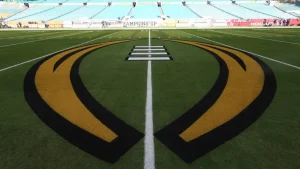 The new format is expected to feature a “19+4+1” model with 19 at-large bids, four reserved for Power Four champions and one for the highest-rated Group of Six champ.
The 30-day negotiating window between the CFP and ESPN was set to close at the end of last week, but was extended when playoff officials activated a clause that gave the network five more business days to review the numbers.
“Constructive discussions with ESPN continued this week,” the CFP said in a statement Thursday. “We have enjoyed a strong partnership with ESPN since our inception and are appreciative of the productive dialogue we have had throughout the negotiating period and continuing over the last several days. We will provide additional updates on the matters of future format and media rights when appropriate.”
Expansion to 24 teams brings even more questions about a variety of topics, including whether it signals the end of conference championship games. “They’re gonna be gone,” said CBS Sports’ John Talty on Thursday’s College Football Insiders following the expansion news. “That’s the reality of the situation.”
That will accommodate what will amount to a full tradeout of eight games being spread out over three or potentially four days right after Thanksgiving that will replace the likes of Mountain West and MAC conference championship games with first-round games involving teams ranked 13-24 that are imminently more recognizable. It will also likely impact even further the quality of any team going to a traditional bowl game–we will effectively be looking at a series of exhibitions with even more sub-.500 teams having little motivation for the top players or even coaches to risk potential injury for something so inconsequential. And there’s not even a hint of discussion of utilizing the existing games for neutral site contests the way the current set-up’s quarterfinals and semifinals have at least attempted to. These will be home games rewarded to the higher-seeded schools.
So with little more than seeding at stake on future Saturdays like yesterday’s how much interest beyond over/unders and props do you think there might be? Especially in megaconferences where regional rivalries have been reduced to occasional afterthoughts or eliminated completely? Where something like Nebraska at Oregon is a Big Ten showdown, and future ones won’t be for sheer survival?
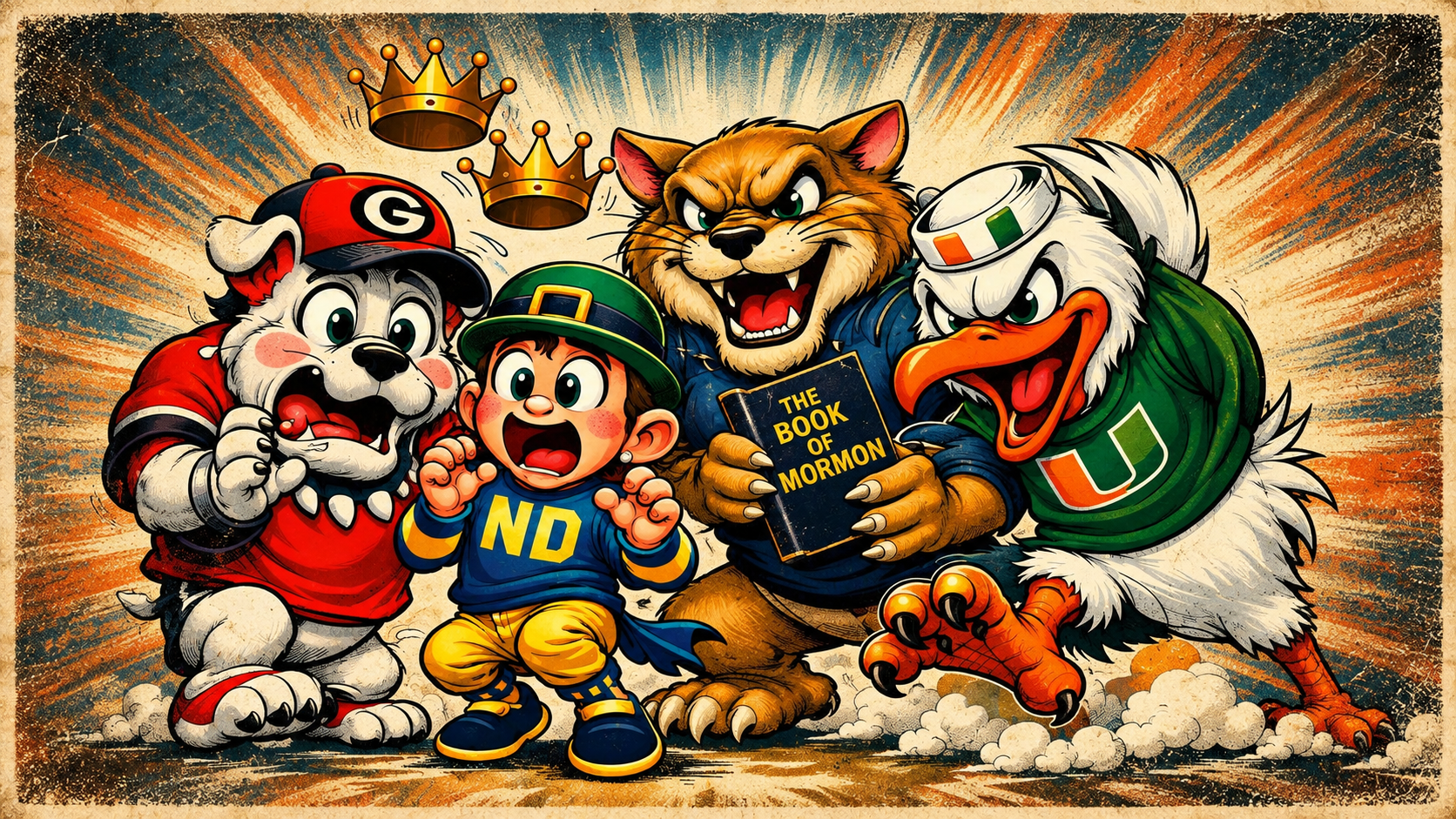
I’m not one to stand in the way of progress. But this one has me feeling a lot more like a bulldog and a leprechaun are feeling this morning.
Courage…