

Please sign up to get our Binary Response articles directly in your inbox!
Spirit Airlines quietly flew into the history books last on May 2, 2026 when the ultra-low-cost carrier abruptly ceased operations and canceled all remaining flights, telling customers not to come to the airport and beginning an “orderly wind-down” effective immediately
It marked the first shutdown of a major U.S. airline in roughly a quarter century and instantly stranded thousands of travelers who had built their plans around Spirit’s famously cheap yellow jets.
Behind the scenes, the end had been building for years. Spirit filed for bankruptcy protection in November 2024 and again in August 2025, warning investors there was substantial doubt about its ability to keep operating as a going concern. The carrier failed to secure a roughly 500 million dollar federal bailout from the Trump administration after bondholders and key creditors balked, leaving it without a financial lifeline when cash ran low this spring. On top of that, rising jet fuel prices tied to turmoil around the Strait of Hormuz squeezed margins for a model that depends on tight cost control.
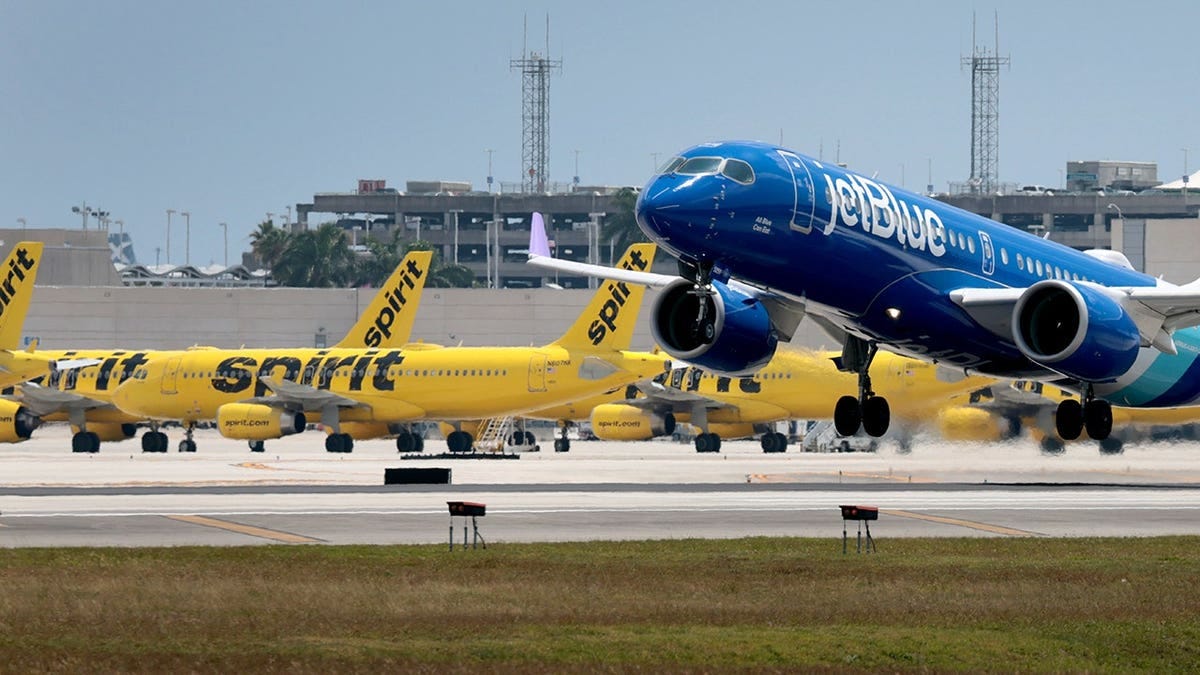
Spirit’s collapse is also evidence of a failed attempt to escape its troubles through consolidation. The Justice Department sued to block a 3.8 billion dollar merger with JetBlue on antitrust grounds, arguing that removing Spirit as an independent ultra-low-cost competitor would raise fares and reduce choice. A federal judge agreed with regulators, JetBlue walked away, and Spirit was left to survive on its own in a market dominated by larger legacy carriers. slate
At its peak, Spirit was the largest ultra-low-cost carrier in the United States and the eighth-largest airline overall. It operated a dense domestic and near-international network and employed around 17,000 people. The company said all flights were canceled and customer service channels shut down, with automatic refunds for credit and debit purchases. Travelers who used vouchers or loyalty points will need to wait for the bankruptcy process.
Other airlines, working with the Department of Transportation, have introduced capped rescue fares and priority hiring pipelines for displaced Spirit employees. These steps soften the blow, but they do not eliminate the broader disruption for travelers and workers.
For more than three decades, Spirit built its brand on rock-bottom fares and aggressive unbundling — charging extra for everything from carry-ons to printed boarding passes — and it reshaped the economics of U.S. leisure travel. The same model that made travel cheap also left the airline exposed when demand softened and costs rose. Without financial cushioning, the system eventually broke.
Analysts now warn that removing tens of millions of ultra-low-cost seats will likely push average fares higher on routes where Spirit once undercut competitors.
Of course, Spirit’s reputation was never just about economics. It consistently ranked near the bottom of customer satisfaction surveys, including the American Customer Satisfaction Index. Tight seats, dense cabins, and layers of fees made it a frequent target of complaints, memes, and travel horror stories — even as millions of passengers still chose it for the price.
Still, Spirit was not alone in driving passenger frustration. Industrywide complaints have surged in recent years, with the Department of Transportation recording record consumer submissions in 2024 about delays, cancellations, and baggage issues. Frontier has also drawn especially high complaint rates, and legacy carriers frequently face backlash during operational disruptions.
In other words, Spirit became the clearest symbol of the ultra-low-cost model, but not the only source of frustration in U.S. air travel. Overall satisfaction remains mixed, with persistent complaints about delays, baggage handling, and service across the industry (https://www.businessinsider.com/us-airlines-ranking-customer-satisfaction-index-travel-alaska-spirit-2023-4). The broader system — packed cabins, complex fees, and fragile operations — extends well beyond any single airline. businessinsider
Here’s the thing, folks: For travelers, Spirit’s end is a mix of frustration, relief, and uncertainty. Some will see it as the inevitable result of a business model that pushed too far on cost-cutting. Others will remember it as the only way many trips were ever affordable.
With that… The collapse of Spirit Airlines highlights the trade-offs embedded in modern air travel — trade-offs that reach far beyond one airline or one fleet of bright yellow jets. pbs
Please visit Binary News where we post regular opinion pieces about including but not limited to business, politics, sports, and technology.