

Major League Baseball will be fully implementing their high-tech strike-zone system this season and creating an uneasy alliance between data scientists, umpires, and fans. As a result, today’s Binary Response is about why it always made business sense for MLB to flirt with robot umps — and why pairing the new ABS era with a likely lockout is a perfect recipe for losing the very fans the sport claims it win back over the last 30 years since the 1994-95 strike. Please sign up to get our Binary Response articles directly in your inbox!
Let’s start where Steve Leblang did, with the idea that killing the engineer might be the only way to save the soul of the sport. His belief is that the game is basically a broken app that just needs enough code pushes and tweaks to make everybody happy. The Automated Ball-Strike (ABS) challenge system is that mindset made flesh. MLB has locked in a setup where each team gets a limited number of ball-strike challenges per game, successful ones are retained, and a camera-based zone tied to each hitter’s height quietly overrules the guy in blue when summoned. This isn’t a one-off experiment; it’s embedded in how the sport will function.
On paper, it sounds slick. Early tests show only a handful of challenges per game, reviews that last seconds, and about half of them flipping the call. From the league office’s perspective, that’s ideal. You can promise greater accuracy without slowing things down. You can point to infamous missed calls and say those moments are now correctable. And you can still claim the human element survives, since the plate umpire makes the initial call — unless a hitter or catcher taps the helmet and invites the machine in.
ABS doesn’t radically change the viewing experience; it smooths it out. A few quick reviews, a couple overturned calls, and on we go. That’s fine if the goal is eliminating friction. It’s less fine if the goal is building attachment. A blown strike call that fuels sports-radio outrage becomes part of fan folklore. Replace it with a 12-second graphic and you’ve improved the product while flattening the emotion.
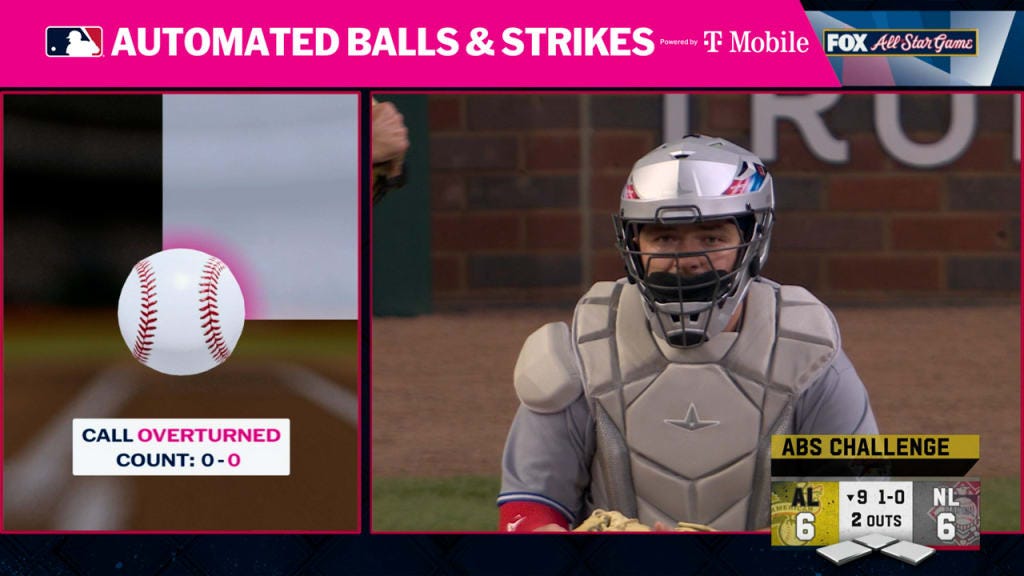 That’s where Steve’s argument hits home. When you treat baseball like a product roadmap, anything messy starts to look like a defect. The ump with a generous high strike is a bug. The catcher who steals a borderline pitch is a bug. Even a legendary at-bat that ends on a missed call becomes a bug. Keep shipping patches long enough and the game grows cleaner — and somehow emptier.
If this were happening in isolation, it might just be another rule tweak traditionalists grumble about before moving on. But it’s arriving under a looming deadline. The current collective bargaining agreement expires after the 2026 season, and many observers see a lockout as more likely than not. Owners and players are already staking out positions. We’ve seen how this plays out, and it rarely strengthens fan loyalty.
So imagine being told for years that baseball is too slow, too confusing, too old-fashioned — and watching the league respond with pitch clocks, larger bases, shift restrictions, and now a semi-automated strike zone. You’re told the sport is modernizing for you. Then you’re warned the same league might shutter the game next winter over labor terms. That’s whiplash.
This is why ABS doesn’t feel like a fan-first masterstroke. Yes, it may improve accuracy at the margins. Yes, it might fix a few unjust plate appearances. But paired with the prospect of another lockout, the message shifts to we’ll perfect the strike zone, but we can’t promise the 2027 season. That’s how fans drift away — not only older ones wary of change, but younger ones deciding where to invest their time and money.
Here’s the thing, folks: Kids won’t fall in love with a sport that keeps vanishing over business disputes. Families don’t build traditions around uncertainty. Perfect graphics can’t erase the frustration of a lost April. At some point, constant optimization starts to sound like a tech company promising the next update will solve everything while the service keeps going dark.
With that… The question isn’t whether ABS works. Technically, it probably will. The cameras will track, the verdicts will appear instantly, and the broadcast package will look sharp. The real question is whether the league’s leadership will apply the same precision to the one issue technology can’t solve, trust. Without that, the new strike zone becomes another symbol of a sport that keeps refining the code while neglecting the relationship — until the lights go out for a lockout and fans have to decide whether to come back.
If you cannot play with them, then root for them.