

Please sign up to get our Binary Response articles directly in your inbox!
Two weeks ago when we learned what Googles plans are with AI over the next year it was very obvious that Microsoft would be focusing on AI at their yearly Build Keynote when it came this week. And they did.
Their 2026 Build keynote made it very clear that AI is no longer a side feature for the company. It is the organizing principle for Windows, Azure, and Microsoft 365 going forward. From agent-style workflows on the desktop to chip-to-cloud platforms and sovereign AI in the data center, almost every major announcement framed AI as the glue binding Microsoft’s stack together.
A big narrative shift was moving from chat-style assistants to always‑on agents that can actually take action on a user’s behalf. Satya Nadella introduced a new category called Autopilots — persistent agents with their own identity that operate under organizational policies instead of waiting for ad‑hoc prompts.
The flagship example is Microsoft Scout, an Autopilot integrated across Microsoft 365 that can work across Teams, Outlook, OneDrive, SharePoint and your everyday data such as email, calendar and contacts, all orchestrated through Teams and a desktop companion app. The idea is that work keeps moving even when your attention is elsewhere, with agents grounded in your permissions model rather than acting as a generic chatbot.
To support those agents beyond traditional PCs, Microsoft unveiled Project Solara, a chip‑to‑cloud platform and Android‑based OS designed specifically for agent‑first devices rather than classic app‑centric computing. Solara runs on the Microsoft Device Ecosystem Platform (MDEP), a lightweight AOSP‑based operating system that hosts an Agent Shell capable of loading multiple cloud‑backed agents instead of local apps.
Microsoft showed two concept devices — a wearable Badge Device built on Qualcomm silicon and an 8‑inch Desk Device on a MediaTek IoT SoC — both designed to keep agents always available with voice, vision, and glanceable UIs. Large enterprises such as AccuWeather, Best Buy, CVS Health, Levi’s and Target are expected to pilot Solara‑based hardware as reference implementations rather than Microsoft shipping these devices directly.
On the Windows side, Microsoft focused on making the OS a safe host for powerful local agents like OpenClaw, which previously raised serious security concerns due to its need for deep system access. The company introduced Microsoft Execution Containers (MXC), an isolation framework that lets developers and IT admins strictly control which resources an AI agent can touch on a Windows machine.
A companion app for OpenClaw on Windows lets users configure permissions — for example, marking the Desktop as read‑only — and the keynote demo famously showed a claw agent failing to delete all desktop files because of those enforced policies. The message was that Windows should become an agent‑native environment where powerful automation is possible without sacrificing basic safety or user trust.
Hardware is being tuned for this agentic future as well, with Microsoft highlighting new RTX Spark‑based PCs that bring serious AI compute onto the client. The new Surface Laptop Ultra and Surface RTX Spark Dev Box pair NVIDIA’s RTX Spark system‑on‑chip with unified memory and GPU‑class acceleration aimed at running local models and agents without constant cloud dependence.
This ties directly into Jensen Huang’s framing of the PC evolving from a personal computer into a personal AI that can be texted to handle tasks like coding or workflow automation while you are on a call or traveling. Microsoft’s pitch is that local silicon plus Windows containers gives developers a realistic path to deploy persistent agents on end‑user hardware, not just in data centers.
In the cloud, Azure AI Foundry — rebranded simply as Microsoft Foundry — was positioned as the central factory for building and governing AI apps and agents. Foundry bundles model catalogs, an agent runtime, tooling, grounding via Foundry IQ (the evolution of Azure AI Search), and governance controls in a single portal for developers. A key Build announcement was Foundry Local on Azure Local, which lets organizations run the same model catalog, workflows, and governance stack in sovereign or on‑prem environments that need strict data residency controls. In practice, that means you can design an agent once in Foundry and deploy it consistently across public Azure and regulated, local footprints with shared security and compliance policies.
Windows itself picked up a clearer AI platform story, with Microsoft documenting AI‑powered features like Click to Do, Recall, the Copilot hardware key, Studio Effects, Phi Silica, and AI‑driven App Content Search as building blocks developers can hook into. These APIs span everything from natural‑language actions based on on‑screen content (Click to Do) to a visual timeline of past activity (Recall) and on‑device model acceleration via Phi Silica. Combined with Microsoft’s broader push to expand the Windows AI API to more PCs, the goal is to let apps feel agent‑aware without every developer rebuilding the AI stack from scratch.
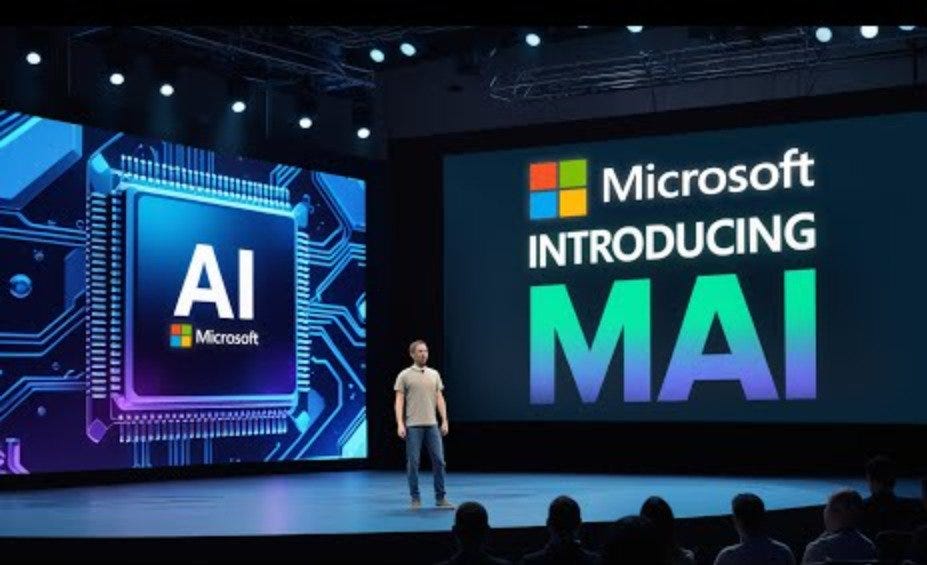
On the model side, Mustafa Suleyman’s segment introduced seven new AI models, including so‑called Unmetered Agentic AI models intended to power long‑running agents without punishing usage economics. Microsoft also showcased Majorana 2, its next‑generation quantum chip, as part of a longer‑term effort to align future quantum hardware with advanced AI workloads. While quantum is not immediately applicable to everyday developers, pairing it with agentic AI in the keynote underscored Microsoft’s view that AI and new compute architectures will co‑evolve.
Here’s the thing, folks: Underneath the hype, there is still healthy skepticism about how quickly mainstream users will embrace always‑on agents and pervasive AI features in Windows. It’s worth noting that Microsoft is simultaneously walking back some earlier over‑aggressive Windows AI integrations even as it doubles down on agents, signaling lessons learned from controversial features like Recall.
With that . . . By centering Build 2026 around Autopilots, Project Solara, Foundry, and secure execution for tools like OpenClaw, Microsoft clearly wants developers to start designing for a world where software is less about opening apps and more about delegating work to specialized, policy‑aware agents.
When you use technology every day it is very interesting to hear what it’s future holds but it will be more interesting to actually use the features once they are released.