
NOTE: This also appears today on our sister site, Leblanguage. Please visit it regularly for musings on media, sports, politics and life.
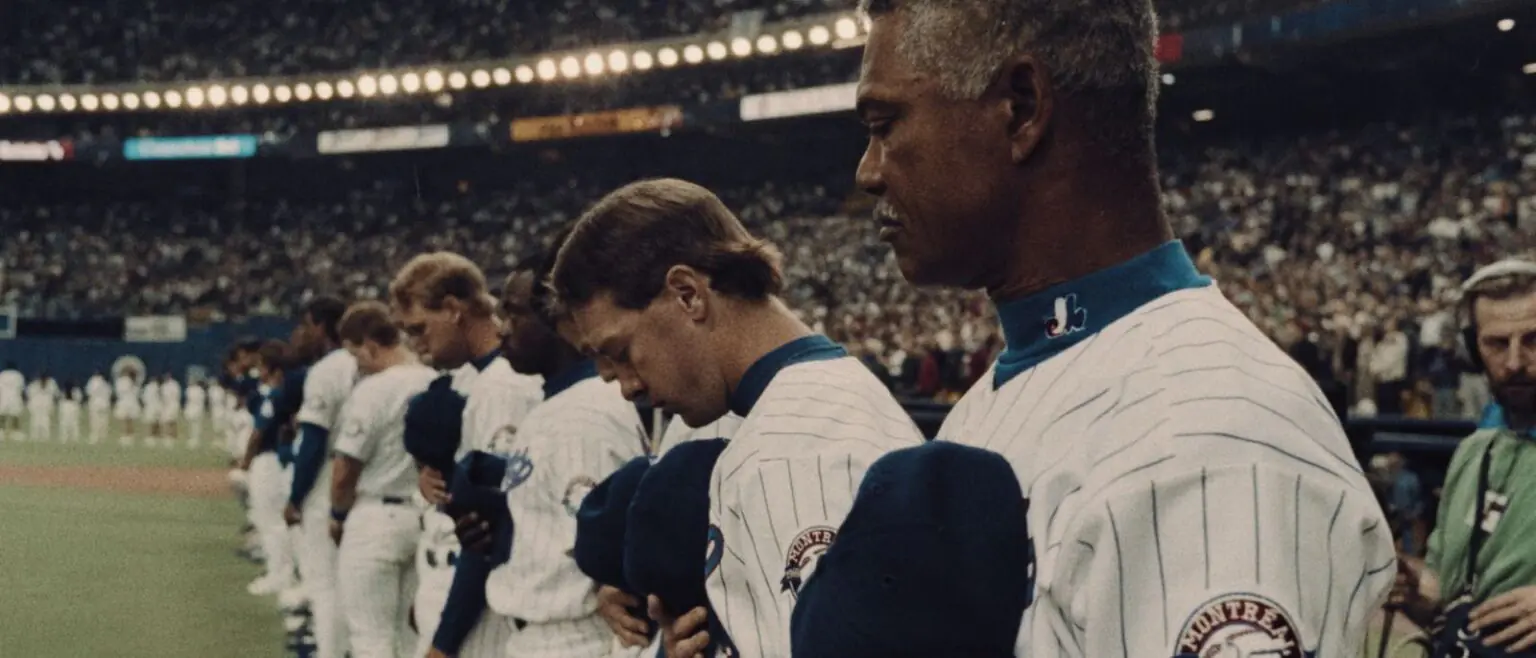
The World Series opens tomorrow night outside the United States for only the second time in history when the Los Angeles Dodgers cross the border to take on what is currently Canada’s only major league baseball team They’re not exactly arch-rivals; the Dodgers have in fact only visited Toronto a handful of times in their existence. But the connection the Dodgers have with the other franchise that used to represent our northern neighbors, and the city they proudly represented, was much deeper and enduring. So that got me to pay atypically close attention to the documentary WHO KILLED THE MONTREAL EXPOS?, which dropped onto Netflix earlier this week. For a change, this was a case of good timing for them.
 The Dodgers have a much deeper history with the city of Montreal, which once housed their top farm team and was indeed the first non-Negro League team Jackie Robinson played for, the beloved International League powerhouse Royals. That history, coupled with the city’s rise to global prominence with the World’s Fair that most immediately followed the two-year stint in Flushing that was known as Expo ’67, gave Major League Baseball the confidence to greenlight the Expos as their first international franchise in its centennial year of 1969. The early Expos played in a gerryrigged bandbox located within the footprint of a city park called Parc Jarry and were anything but competitive. But by 1980 they had taken over the futuristic Stade Olympique that was built for the 1976 Olympics and had finally built a contender, peaking during the strike-shortened summer of 1981 where they had enough of a spurt to qualify for the expanded playoffs, where they actually knocked off the defending world champion Phillies in the first-ever Division Series. And they actually had home field advantage in the NLCS where they battled the Dodgers to a draw in the fifth and deciding game before American flag hero and current broadcaster Rick Monday hit a ninth-inning home run that denied them a trip to the World Series and broke the hearts of the faithful that gleefully warbled “The Happy Wanderer” as if they were about to conquer the Alps.
 It’s this backdrop that sets up the narrative for this focus on the Expos’ eventual return to prominence and relevance which SPORTS ILLUSTRATED’s Jon Wertheim offered further perspective on in the preview he dropped concurrent with the Netflix release:
The film depicts a cast of heroes, including the universally beloved Felipe Alou, a very cool Pedro Martínez, Canadian star Larry Walker and an assortment of beleaguered fans whose loyalty wasn’t reciprocated. And there are villains—cloying David Samson and his former stepdad, owner Jeffrey Loria, and, to a lesser degree, the hapless Claude Brochu.
And Rachel Po of the Canadian-based POV offered still more context:
When the Montreal Expos relocated to Washington D.C. in 2005, becoming the Washington Nationals, the vacancy of “Nos Amours” created a hole in Canadian sports that has yet to be filled. Expos hats continue to adorn baseball fans up North, and with Major League Baseball well past due for another expansion, questions of whether Montreal will be a part of those discussion always rear their head.
Filmmaker Jean-François Poisson’s focus, though, isn’t on whether a team will return. He wants to know why they left in the first place, and who is to blame. Poisson…takes an almost true crime approach to his investigation (albeit to a lesser degree than Jayme). He employs the timeline visual that the Michael Jordan doc The Last Dance used to situate viewers, allowing for Poisson to work through the team’s history with ease.
AS.com’s Joseph McMahon delved into attempting to answer the film’s seminal question, in the process revealing how yet another strike season produced even more heartrbreak and ultimately set the stage for the team’s eventual demise:
If you pay attention to what happened in the 90s, many of those interviewed point their finger at one specific person. It’s true that the MLB strike of 1994-95 didn’t help and was what detonated the fall of the club, but it’s clear that the management at the time didn’t navigate the situation well despite finishing in second place in the NL East in 1992 and 1993.
The fire sale of players after the strike is what ultimately killed the Expos. Other owners and front office personnel came and went, but giving away players after two very successful seasons didn’t make sense. Marquis Grissom was sold to the Braves and Larry Walker sent to the Colorado Rockies, “I didn’t leave, I was forced to go,” The Canadian native said. The fire sale killed fans’ hope and many stopped being fans. For many of those interviewed, that was the moment the team died. Claude Brochu was the head of the consortium that bought the Expos in 1991 and was the head owner in the 90s during the player strike and the fire sale.
Ultimately Brochu couldn’t find funding, public or private, to build a new stadium and that put a nail in the Expos’ coffin. The documentary explains the lack of support by the Quebec government to finance a new stadium and the bickering amongst the other shareholders. “There was more drama than a high school prom,” one fan explained.
 It’s a compelling story that’s told with candor now allowed with more than two decades of hindsight and with emotional conviction by all involved, including the fan base that still mourns their departure. Samson, now a particularly odious podcaster who along with Loria subsequently decimated the Florida Marlins, comes off as a truly despicable yet uncomfortably accurate counterpointer–in direct contrast to the true lament of those who really felt they were building something that had the Expos on top of the MLB world with a 74-40 record, on the heels of a summer streak that saw them win 19 of 21 games, when the sport shut down on August 12, 1994 and resulted in no World Series for the first time in 90 years. Particularly poignant is the frail but still capitvating Alou, now 90 years old and a veteran of more than six decades in the game with roots going back to the original San Francisco Giants. His enthusiasm and lament are both palpable, especially for someone who actually married a Quebecois and began a new family during his decade in Canada. He is to this was Scottie Pippen was to THE LAST DANCE–an unlikely source of honesty and emotion that allows even a casual fan to grasp exactly what sort of opportunity was missed.
And that inescapable conclusion was accurately captured by Po in the final words of her review:
Poisson concludes his film on a note of wanting. It’s clear Montreal still cherishes the franchise, and those old enough to remember seeing the Expos in person have passed down their passion and love to a younger generation who will only know the team as a relic of their city’s history. In asking his subjects whether they think Montreal will have a team again, no one dares give a firm “oui.” Instead, they provide responses of hope, because that’s all they have left.
 It’s now been 21 years since the last major league game was played in Montreal, although a couple of well-attended Blue Jays exhibition games in the still-standing Stade Olympique have occasionally given some hope and attention. If nothing else, it’s helped the Jays fill the void. It also doesn’t hurt that their best player, Vladimir Guerrero, Jr., just happens to be the same-named son of one of the Expos’ last home-grown stars.
Be sure that as the cameras pan the crowd at Rogers Centre (nee Skydome) this weekend, there will be more than a handful of Expos’ jerseys and tri-color caps in solidarity and to take one more direct swipe at revenge over the Dodgers. Even though the 2019 Nationals ousted them in a thrilling Division Series en route to their first-ever championship in franchise history, to true Canadian fans that doesn’t count. They have their own unique memories and scores to settle. As Po eloquently concludes, je me souviens.
Courage…