
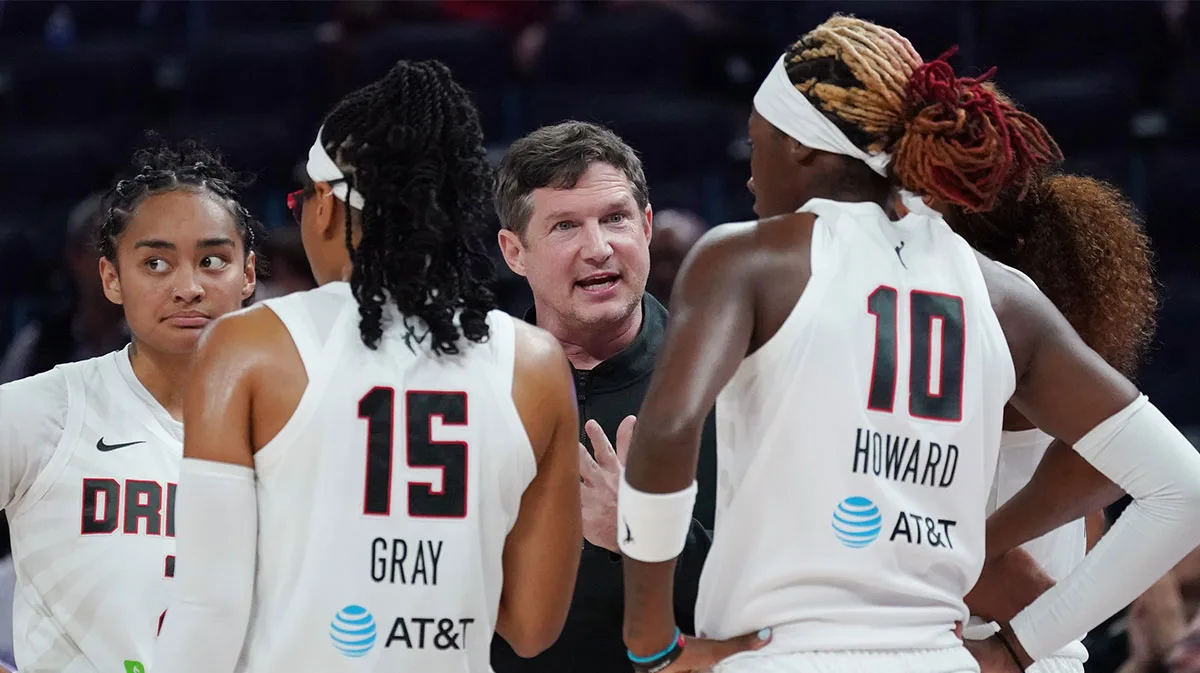
The longest WNBA regular season in history ends tonight, and perhaps not a moment too soon. In so many ways it has actually been a banner season if one actually digs into the details. One need look no farther than Atlanta, where as the ASSOCIATED PRESS reported last night it reached a new pinnacle for a team with scant little positive history:
Brittney Griner scored 17 points off the bench, Rhyne Howard added 15 and the Atlanta Dream beat the Connecticut Sun 88-72 on Wednesday night to move into second place in the WNBA standings.
Atlanta (30-14) became just the sixth team in league history to reach 30 wins during the regular season. The Dream can secure the No. 2 seed in the playoffs if Las Vegas (29-14) loses to Los Angeles on Thursday.
And earlier this week, the architect behind it reached a personal best, as CLUTCH POINTS’ Richard Pereira reported:
 Karl Smesko has broken a WNBA record that stood tall for 25 years in the Atlanta Dream’s matchup against the Connecticut Sun on Monday night.
Smesko is nearing the completion of his first regular season as a head coach in the WNBA. He coached women’s basketball in college prior to taking the next step to the professional level, leading Florida Gulf Coast from 2002 to 2024.
His first season with the Dream has been a major success, propelling them to the top of the league’s standings. With the blowout win over the Sun, he achieved history in the record books, per the Dream’s PR page.
“History made. Karl Smesko has earned his 29th win of the season — the most ever by a first-year head coach in WNBA history, surpassing Michael Cooper’s 28 wins in 2000,” they wrote.
In a year where scant little else about Atlanta pro sports is worth celebrating–ask any Braves fan salivating at the impending retirement of manager Brian Snitker after a nosedive season that makes last year’s early post-season exit seem like a distant fond memory–one might expect Smesko to be elevated to some sort of deserved pantheon beyond his core fan base.
 But in Atlanta the Dream are at best an afterthought playing in what is rapidly becoming a media desert. They play the majority of their games in a 3500 seat college arena that they rarely sell out. Their games are covered on an over-the-air channel that recently lost its CBS affiliation and hence its identity (did you know WANF stood for Atlanta News First?). The only games that were capable of being moved to a real NBA arena? The ones where Caitlin Clark was to be their opponent.
And in perhaps a true fit of irony, should Atlanta secure that number two seed they would be bound for a first-round matchup against Clark’s Indiana Fever. But Clark, let alone her comrade in arms and budding media darling Sophie Cunningham, will be merely sideline cheerleaders in these playoffs. As will the teams in Los Angeles and Chicago.
Meaning all of the good stories that have otherwise emerged in 2025 will reach denouement with a lot fewer and far less diverse eyeballs than were watching last season, when Clark emerged as a force and a magnet that allowed it to compete even with late season baseball and early season football. And even when her Fever made an early exit, the attention quickly shifted to the front-running New York Liberty, who proceeded to win their first-ever league title with arguably one of the most exciting Finals in any basketball league’s history–four of the five games in what wound up as a 3-2 series win went to overtime. And while the Liberty are at least back in the post-season, some key injuries of their own, most notably star Sabrina Ionescu, reduced them to a 4-5 matchup that may see them quickly ousted in as few as two games.
The average fan probably heard a lot more about green dildos being tossed onto courts than the encouraging rise of the expansion Golden State Valkyries to become one of the few pro teams in history to reach the post-season in their maiden voyage. There’s more news being made about the possibility of a player’s strike that could delay the start of the 2026 season than there is about the Minnesota Lynx’s rise to an unquestioned number one in the league–let alone the potentially delicioous storyline that it might finally give a second title to now co-owner Alex Rodriguez.
And there’s arguably more news being made about the growth of a winter league than the disconnect between the rank and file who so deeply resent the attention paid to Clark and Cunningham that there have been numerous reports that their season-ending injuries weren’t all that severe–that for their own safety the league has quietly asked them to take a back seat for the sadly racially-tinged jealousy to dissipate and to at least give those who feel their “representation” isn’t being embraced to have an uncompromised moment in the spotlight.
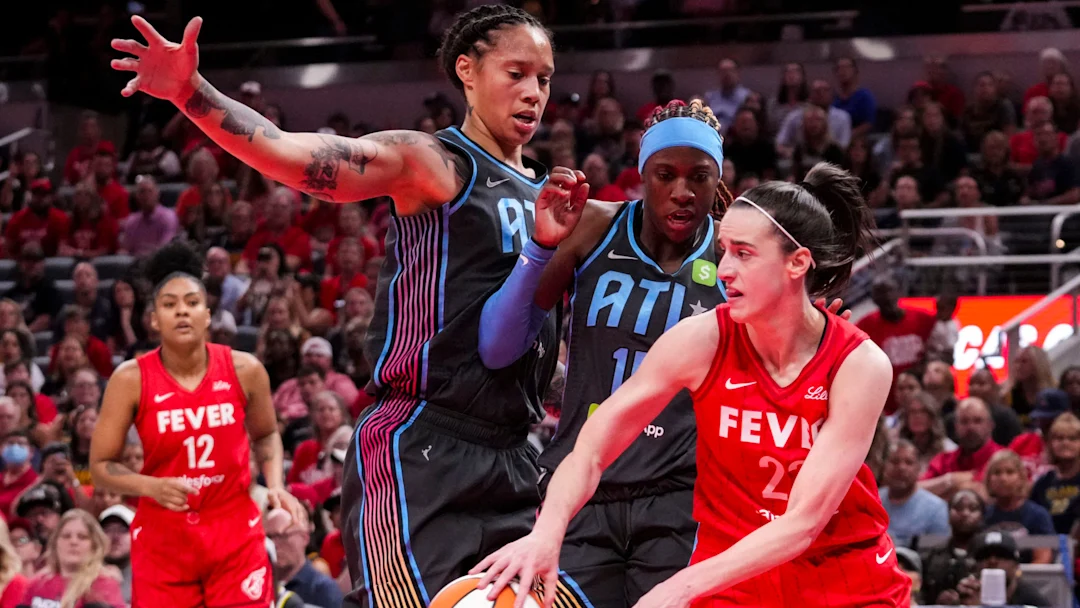 They can cajole, threaten and beg all they damn want. The fact is that the sport itself may be healthy and corporate interest and media rights never higher. But Caitlin Clark and larger market teams drive that gravy train. Even her likely successor as WNBA Rookie of the Year Paige Bueckers did little to move the needle for her rock-bottom Dallas Wings, who also still play the majority of their games in a college arena. And are even more of an afterthought in a city still reeling from the loss of both Luka Doncic and Mikah Parsons during this calendar year.
I can at least attest to being enough of a WNBA fan to still care about what unfolds over the next three-ish weeks as the Elite Eight battle it out for the title. But especially among my age and gender categories, I’m an outlier. And I wonder how likely I am to care a year from now if the desired trajectory for the thin-skinned minority who are celebrating the opportunity to not have to compete with the ominpresence of Clark comes to pass.
I still care. Do you?
Courage…