
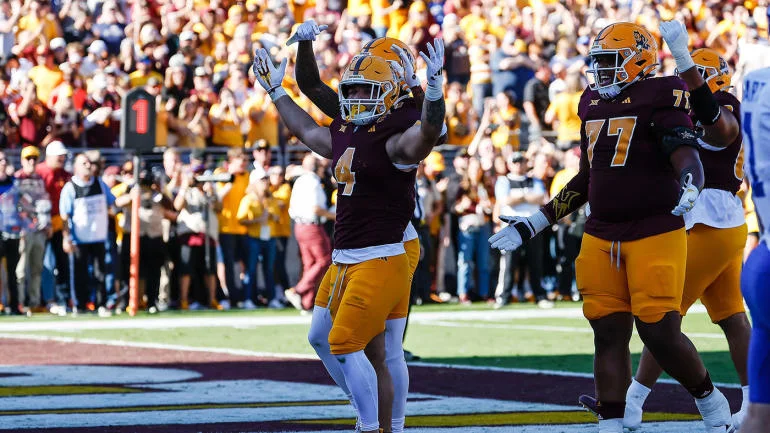
I suppose if I were a huge fan of Arizona State football I might have been a bit more motivated to debate if I felt the coaches of America were being unfairly harsh. After all, according to the poll whose results were released yesterday morning, not a single one of them apparently thought the Sun Devils were better than the 15th best team in the nation, and a number of them didn’t think they were worthy of the Top 25.
Meanwhile, the writers who cover them had already placed them as 14th best in the Associated Press poll whose results were excitedly released during the first window of NFL Sunday games as it has been on most college football weekends for decades. There was a time when that truly mattered, as the AP was the standard by which national champions were crowned. The coaches poll which went through their arch-rival UPI was always deemed secondary, if for no other reason than alphabetical order. Only on the rare occasions when the final polls differed would there be any sort of attention paid.
But in an era where championships are decided on the field through a playoff, and especially one that has now expanded to a 12-team bracket, and where since the beginning of November said bracket is ultimately determined by a separate poll that is released in prime time on Tuesday evenings, it’s honestly much harder to take those Sunday morning alerts with anything more than a grain of salt.
As NCAA.com’s appropriately surnamed Wayne Staats explained in his pre-season primer:
Unlike other polls, the College Football Playoff rankings come out only until well into the season. And unlike other polls, it’s the only one that really matters, as it’s for the 12-team playoff. For a decade, the CFP was only a four-team playoff. Starting with the 2024 season, it moved up to 12 teams. The CFP Selection Committee ranks its own top 25, using factors like strength of schedule, results, championships won, common opponents and more.
And since Arizona State is now embroiled in a dogfight for a berth in the championship game of its new home conference, the Big 12, the fact is that whether they’re #14 or #15 is wholly immaterial, since as Staats further explained they ultimately have a path to the playoffs regardless of what the CFP Selection Committee might be thinking:
The 12-team field will be made up of the five conference champions ranked highest by the committee, plus the next seven highest-ranked teams. The four highest-ranked conference champs receive a first-round bye and are seeded one through four. The fifth conference champion ranked the highest will be seeded were it was ranked or at No. 12 if it landed outside the top 12 of the rankings. Any non-conference champion team will be seeded starting at No. 5.
So the reality is that they’re at the moment one of no less than NINE teams in the misnomenclatured conference (they have 16 teams, ya know) who could ultimately wind up being #12 in the nation no matter what anyone who isn’t actually playing might think. And as THE DALLAS MORNING NEWS reported this morning (albeit without updating their rankings with any of this weekend’s polls) depending upon what goes down this week things could get really crazy in Tempe and in far less balmy climes:
Kansas upsetting No. 16 Colorado and No. 21 Arizona State beating No. 14 BYU dropped the conference’s two front runners into a pack of contenders tied at 6-2 ahead of Week 14. If two of the four teams currently tied at 6-2 lose and the other two win, the two winners will meet in the Big 12 Championship Game the following week. Likewise, if all four teams win and tie at 7-2 the championship game would be between Arizona State and Iowa State.
 If three or more teams are tied with a 7-2 record, these are the potential tie-breakers in play:
- If only Colorado loses next week then Arizona State will face Iowa State.
- If only Arizona State loses then Iowa State faces BYU.
- An Iowa State loss results in an Arizona State-BYU rematch in the title game.
- If BYU loses, things get complicated:
- If Texas Tech beats West Virginia, Baylor beats Kansas and Cincinnati beats TCU then the title game is Colorado vs. Iowa State
- If Tech beats WVU and those other two results are different then Colorado plays Arizona State for the conference title.
- If West Virginia defeats Texas Tech then Arizona State will play Iowa State in Arlington.
The five teams currently tied at 5-3 only come into play for the title game if they win next week and three of the four teams ahead of them lose. The conference did not offer information on the potential tiebreakers in that scenario.
In other words, even the folks who actually run the place haven’t quite figured everything out. And that includes a bunch of coaches and probably a few overly influential writers.
The real reason apart from legacy and “tradition” that the writers’ and coaches’ polls exist is to help establish a credible pecking order to hype games that air on the more than dozen networks and platforms that cover college football. Having a Boise State or an Army in the mix gives street cred to their conferences’ media packages. Earlier in the year UNLV was also ranked in the Top 25 and somehow made the Mountain West all the more credible with the presence of a “rival” for the Broncos.
But by the time November rolls around and confefence standings become more meaningful, it’s much easier to identify what games matter and are worth both hyping and watching. I’d argue that particularly in the era of an expanded on-field playoff that the AP and LBM have outlived their usefulness. No one needs to have a splashy graphic with a number sign touting an arbitrary ranking to justify why they’re a team worth watching.
Besides, a real college fan will choose to watch their team regardless. Because the only poll that ultimately matters to them is the one that they conduct in their hearts, and we know their team will always rank #1.
Isn’t that right, Trojan Nation?
Courage…