

NOTE: This article was posted on our sister site Friday Folder. Please visit it weekly for detailed pieces about sports, technology, business, and mroe.
The news of Stacey King’s sudden passing last weekend hit Chicago like a punch to the gut. He was just 59 years old, gone after what reports describe as a fall at his home in River Forest. The official cause of death remains under investigation, but for Bulls fans, the details almost feel secondary. What matters is that a beloved player, broadcaster, and Chicago institution is gone far too soon.
Long before he became one of the most recognizable voices in basketball, King was a highly touted prospect out of Oklahoma. The 6-foot-11 forward-center was selected sixth overall by the Bulls in the 1989 NBA Draft after helping lead the Sooners to the 1988 NCAA championship game. Expectations were high, but King arrived in Chicago at exactly the right moment, just before the Bulls transformed from contenders into a dynasty.
King was never the centerpiece of those championship teams. He didn’t need to be. Surrounded by Michael Jordan, Scottie Pippen, and a roster loaded with talent, he embraced his role as a dependable reserve big man. He provided scoring, rebounding, toughness, and depth during the grueling NBA season, helping the Bulls capture championships in 1991, 1992, and 1993.
His career statistics reflect the value of a player who understood his role. King averaged roughly 7 points and 3 rebounds per game, with a strong rookie campaign that saw him post 8.9 points and 4.7 rebounds per contest. In 1994, the Bulls traded him to Minnesota in the deal that brought Luc Longley to Chicago, a move that would help shape the second phase of the franchise’s championship run. King later spent time with Miami, Boston, Dallas, and overseas before eventually retiring from professional basketball.
Yet as meaningful as his playing career was, it became only the opening chapter of his relationship with Chicago.
In 2006, King returned to the Bulls organization as a studio analyst before moving into the television broadcast booth. What followed was one of the most successful second acts in franchise history.
For nearly two decades, King became a nightly companion for Bulls fans. He wasn’t technically a beat reporter, but he traveled with the team, watched practices, attended shootarounds, and lived through every winning streak, losing streak, rebuild, and playoff chase. Then he translated all of it into broadcasts that were informative, entertaining, and unmistakably authentic.
Even during some of the franchise’s leanest years, King made Bulls basketball worth watching.
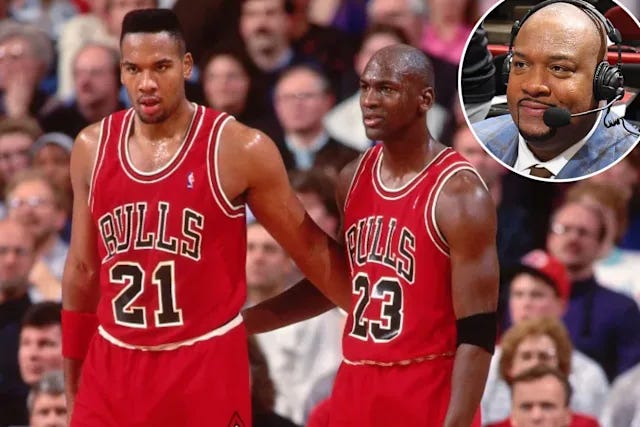
What separated him from many analysts was that he never sounded like he was lecturing the audience. He sounded like a fan who happened to own three championship rings.
His broadcasts became part of the rhythm of Bulls basketball. The catchphrases, the excitement after a thunderous dunk, the stories from the Jordan era, and the genuine laughter during chaotic stretches of play all made viewers feel like they were watching the game alongside a friend.
King also had a gift for creating memorable nicknames. Derrick Rose became the Windy City Assassin. Kyle Korver became Hot Sauce. Those labels spread through social media, sports bars, and living rooms because they felt natural, not manufactured. They became part of the culture surrounding the team.
For much of his broadcasting career, King shared the booth with legendary play-by-play announcer Neil Funk. The partnership became one of the most beloved broadcasting duos in Chicago sports.
Funk provided the steady voice and veteran presence. King brought energy, humor, and personality. Together they guided fans through everything from Derrick Rose’s MVP season to years of frustrating rebuilds.
Their partnership also represented a bridge between generations. Before King, Bulls broadcasts were defined by figures like Johnny Red Kerr, whose humor and passion made him a fan favorite for decades. King even worked alongside Kerr during the final years of Kerr’s broadcasting career, creating the feeling of a torch being passed from one era to the next.
When Adam Amin replaced Funk in 2020, King seamlessly adapted once again. The chemistry remained, and Bulls broadcasts continued to rank among the league’s most entertaining local productions.
That adaptability is part of what makes King’s legacy so unique.
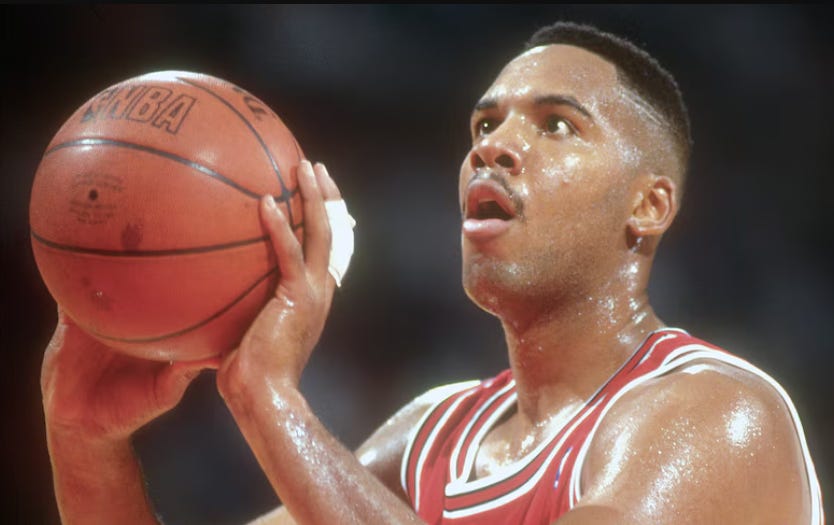
He experienced the Bulls from nearly every possible perspective. He was a player during the first three-peat. He witnessed the Jordan era from inside the locker room. He watched the Derrick Rose era unfold from courtside. He chronicled the Jimmy Butler years, the Zach LaVine-DeMar DeRozan teams, and every rebuilding phase in between.
For younger fans, King wasn’t merely a former player. He was the voice of Bulls basketball.
That’s why this loss feels bigger than the passing of a television analyst. He became the connective tissue between generations of fans. Whether someone grew up watching Jordan, Rose, or today’s Bulls, King was often the common thread.
The flood of tributes from former teammates, media members, players, and fans all tell the same story. People describe him as generous, funny, approachable, and fiercely proud of Chicago. His family has spoken about discovering just how many lives he touched through years of broadcasting and community involvement.
For Bulls fans, there will be a strange silence when the next season begins. There won’t be another Stacey King reaction to a game-changing dunk. There won’t be another perfectly timed joke during a sloppy stretch of basketball. There won’t be another story connecting today’s players to the championship teams that built the franchise’s legacy.
What remains is everything he left behind.
The three championship banners will always hang in the United Center rafters. His broadcasts will continue to live on in highlight clips and treasured memories. More importantly, the joy he brought to millions of viewers will remain part of the fabric of Chicago sports.
In the end, Stacey King’s greatest contribution may not have been the championships he helped win. It may have been the way he kept generations of fans connected to the game long after those title runs ended. He made basketball feel fun, personal, and accessible. He helped people care about the Bulls, even when the team gave them plenty of reasons not to.
Chicago lost a champion, a broadcaster, and a beloved personality. Bulls fans lost a familiar voice that had become part of their lives.
That voice is gone far too soon, but its echoes will be heard every time a fan remembers a catchphrase, laughs at an old broadcast clip, or thinks back to what made watching Bulls basketball special.
Rest In Peace
Ronald Stacey King
January 29, 1967 – June 7, 2026