

Antitrust lawsuit against NASCAR caught my attention when the trial started last week because it connected to the Michael Jordan, the G.O.A.T. As a result, I couldn’t look away. Here we have one of sports’ greatest legends stepping into the courtroom to challenge one of motorsports’ most powerful organizations, and the implications are absolutely fascinating.
The backstory here is pretty straightforward, and the emotions and stakes involved are anything but simple. Michael Jordan, along with his co-owned racing team 23XI Racing and another team called Front Row Motorsports, filed an antitrust lawsuit against NASCAR back in October 2024. What sparked this legal battle wasn’t some sudden whim — it was a genuinely contentious situation that came down to money, control, and what Jordan felt was an unfair ultimatum delivered by NASCAR executives. The situation has drawn intense public scrutiny as fans and industry observers watch one of basketball’s greatest compete in the legal arena.
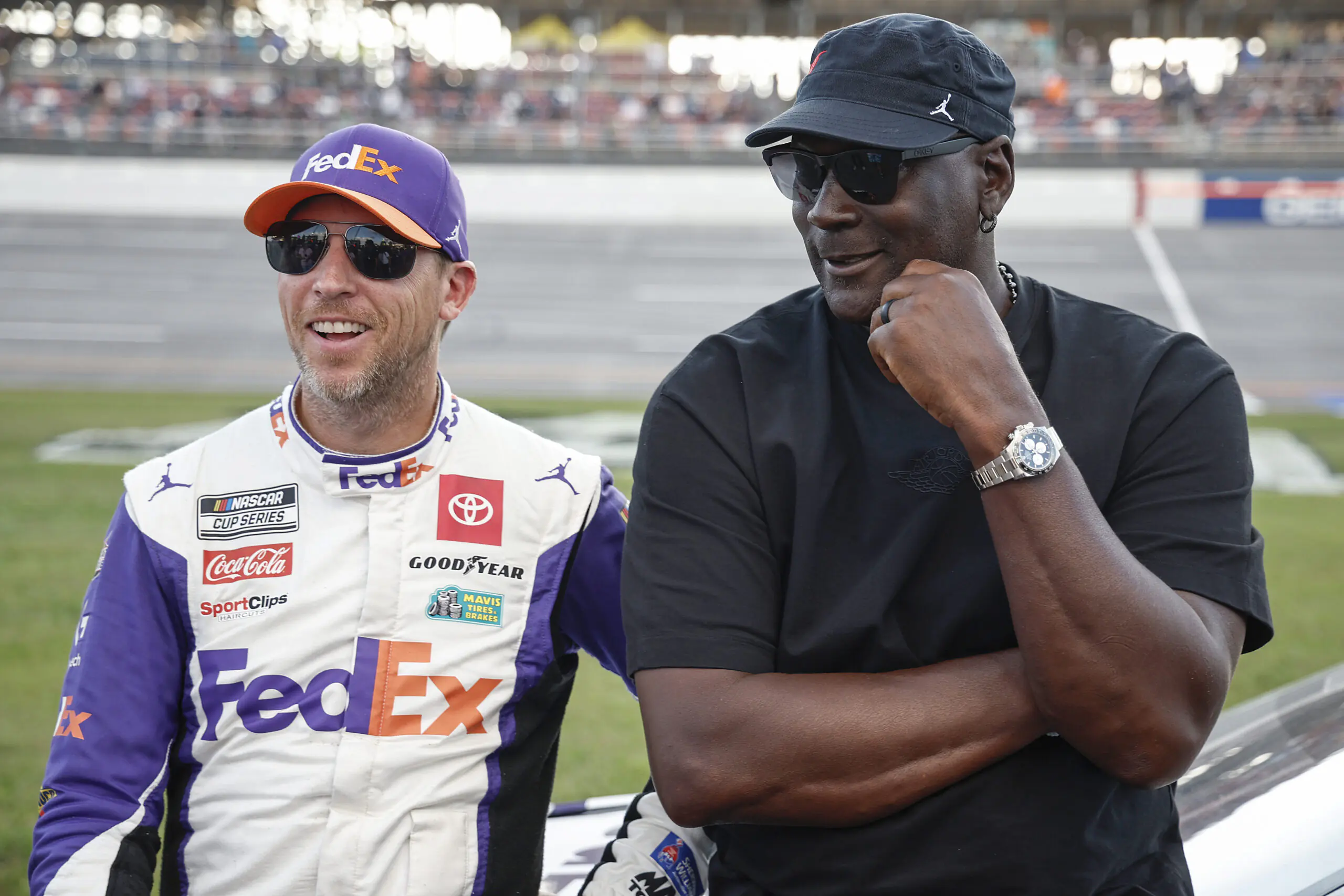
The core issue revolves around something called charters, which might sound like some boring legal terminology but actually represents the lifeblood of NASCAR teams. Think of charters like franchises in other sports. These documents guarantee that a team can compete in all 38 NASCAR Cup Series races each season and come with defined payouts from a weekly prize pool. Without a charter, a team basically can’t survive financially in NASCAR. When NASCAR presented new charter agreements in September 2024, they gave teams just six hours to sign a 112-page document. Thirteen out of fifteen teams eventually signed, Jordan and Bob Jenkins from Front Row Motorsports refused, sending them straight to federal court.
What really gets interesting is the reasoning behind Jordan’s decision to fight back. When he took the stand on December 5th he explained that he couldn’t sign the agreement for three specific reasons. First, he didn’t believe the financial terms were viable. Second, the agreement contained a clause that would have prevented him from suing NASCAR, which Jordan himself viewed as an antitrust violation. Third, the entire situation felt like an unfair ultimatum rather than a genuine business partnership. Jordan testified that he and the other team owners had requested four key things from NASCAR during negotiations — including permanent charters — but NASCAR essentially refused to negotiate on any of them. Jordan stated in court, Someone needed to step up and confront the organization. I believed I could take on NASCAR as a whole.
The lawsuit alleges that NASCAR functions as an illegal monopoly that exercises excessive control over virtually every aspect of the sport — race locations, financial distributions, the rulebook, which vehicles teams must use, where they can buy parts, and even owns most of the racetracks on the Cup schedule. The plaintiffs argue that this monopolistic control has prevented innovation and has artificially suppressed competition and profitability. An economist testified that NASCAR has essentially underpaid 36 chartered teams by a combined $1.06 billion between 2021 and 2024. NASCAR owes 23XI Racing about $215.8 million and Front Row Motorsports about $148.9 million, totaling $364.7 million in damages.
To understand just how serious Jordan took this, consider what he gave up. When he refused to sign the charter extension, 23XI Racing forfeited three charters valued at over $120 million. Despite that massive financial hit, Jordan was so convinced that he needed to challenge NASCAR that he actually invested an additional $28 million to acquire a third charter in late 2024. I’m quite sure they know I have a competitive spirit, he told the courtroom with a bit of his characteristic humor. Denny persuaded me that adding a third driver would enhance our likelihood of winning, so I took the plunge. That kind of conviction and willingness to back it up financially speaks volumes about how unfairly he believed he was being treated.
What caught everyone’s attention during the trial wasn’t just Jordan’s testimony, though. The daughter-in-law of Pro Football Hall of Famer Joe Gibbs and the chief operating officer of Joe Gibbs Racing, provided some pretty damning testimony about the pressure teams faced. She described feeling like she was operating with a gun to my head and said that the charter document was something you would never agree to in business. Even teams that did sign felt coerced into doing so because the alternative — losing a charter worth over $40 million — would essentially destroy their business overnight.
The trial is expected to last approximately two more weeks, with a six-member jury deciding the case. What makes this particularly noteworthy is that NASCAR has basically been controlled by the France family since 1948, and that family structure may be a crucial part of the problem that Jordan is highlighting. The racing series isn’t a league with multiple ownership stakes like the NFL or NBA. It’s essentially one family that owns and controls everything, and that centralized power is exactly what Jordan believes violates antitrust law. The case has significant implications for how racing organizations structure their business operations.
Here’s the thing, folks: Jordan’s presence in the courtroom has been notable not just for his celebrity status but for what he represents. Here’s someone who owns multiple businesses, who built a billion-dollar brand around his name, and who knows competitive marketplaces intimately. When he says NASCAR is being unfair and anticompetitive, that carries real weight. He’s not some angry team owner — he’s the greatest basketball player of all time putting his reputation on the line to fix what he sees as a broken system.
With that… The verdict here could reshape NASCAR entirely. If Jordan wins, NASCAR might be forced to make permanent charters, negotiate more fairly with teams, and fundamentally restructure how it does business. If he loses, well, that could potentially signal the end of his NASCAR involvement altogether. Either way, watching Michael Jordan take on one of sports’ most entrenched power structures is genuinely compelling television and a reminder that even icons aren’t afraid to fight for what they believe is right.
If you cannot play with them, then root for them!