
NOTE: This also appears today on our sister site, Leblanguage. Please visit it regularly for musings on media, sports, politics and life.
Degenerate gamblers and lucky office workers (assuming you’re actually one of those unfortunates who are grudgingly trucking into one these days) can rejoice. It’s officially March Madness season, and there are 68 very happy college campuses and fandoms this morning who know there will be at least one more nationally televised game to their season. Well, actually there are 111, since the women’s have now achieved full parity both in size and, at least based on last year, audience size. 25 campuses actually have a horse in both races; all the more reason to effectively expect attention to actual learning will likely be compromised this week.
It’s a BIG deal, to be sure. INVESTOPEDIA’s Aaron McDade advised last week that on a monetary basis it’s even bigger than that one-off we tend to obsess over:
Americans are expected to legally wager roughly $3.1 billion on this year’s “March Madness” college basketball tournaments, according to estimates released Thursday by the American Gaming Association.
Legalized sports betting has exploded since a 2018 Supreme Court decision left the issue up to the states. Last year, the group estimated that a total $2.72 billion would be legally wagered on the two tournaments, and the $3.1 billion is more than double the $1.39 billion the AGA estimated would be legally bet on the Super Bowl last month.
“March Madness is one of the most exciting times in American sports, with fans fired up for both the men’s and women’s NCAA tournaments,” AGA SVP of Strategic Communications Joe Maloney said. “As legal wagering expands across the U.S., more fans than ever have the opportunity to bet legally and responsibly.”
And for embattled media entities like CBS and the Warner Brothers Discovery suite of cable networks–-including the still not-renamed truTV– it’s a much-needed shot in the arm. Having a top-tier team out of New York City (St. John’s) for the first time in decades is a darn good start. And ESPN is pretty giddy in their own right with exclusive coverage of the women’s tournament; with a captivated Los Angeles basking in the glow of having both the number one overall team (UCLA) and this year’s media darling (USC’s JuJu Watkins) ready to step in for the now-professional Caitlin Clark. And if last year was any indication, there will be press releases aplenty in the next three weeks touting record deliveries for the glut of games that will dominate their schedules, especially this coming weekend. With what we’ve been seeing with the outsized increases and ability for out-of-home and mobile viewing to be accurately measured, as well as the sheer volume of hours involved, it’s likely these networks will continue to break records for viewership and engagement–-especially with three billion and change on the line.
So with so much upside, there’s been constant chatter about adding still more teams to the mix. Purists decry the fact that so many schools qualify for a post-season, but it needs to be noted that there are now 365 different schools with a Division I basketball program and counting–close to three times the number of FCS schools that can qualify for the just-expanded College Football Playoff. And just like that sport was allowed to expand amidst controversy of deserving schools being left out in the cold, this year we have a doozy of one in men’s college hoops. Per THE NEW YORK POST’s Howie Kussoy:
 North Carolina dropped the ball again and again, repeatedly blowing opportunities to prove it belonged in the NCAA Tournament. Still, the selection committee gave the Tar Heels another mulligan.
Despite a disastrous 1-12 mark in Quad 1 games, North Carolina was given the final at-large invitation to the Big Dance, as an 11-seed — the program’s lowest in NCAA Tournament history — and will meet 11-seed San Diego State in Tuesday’s First Four in Dayton.
The controversial choice of the basketball blue blood drew greater scrutiny since North Carolina athletic director Bubba Cunningham served as the committee chair. However, Cunningham was required to leave the room during all discussions involving the Tar Heels.
Sure, everybody changes their tune about pleasing their boss when they’re lurking in a hallway. Ask anyone of those remaining office workers how that plays out in real life.
The fact is that the ratings for college basketball in top 75 markets within the state of North Carolina–including Charlotte, Raleigh-Durham and Greensboro-Winston-Salem-High Point–are dramatically larger than the ones seen elsewhere. Which might explain in part why a deserving school in a less populous state is all the more ticked off this morning, as CLUTCH POINTS’ somehow spot-on-named Ryan Bologna observed:
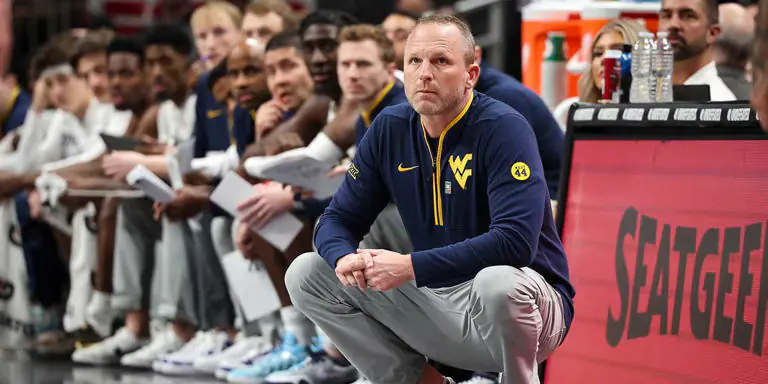
The West Virginia basketball program was surprisingly left out of the NCAA Tournament on selection Sunday, despite what looked like a solid resume.
West Virginia basketball went 19-13 overall and 10-10 in Big 12 play this season, but they had several quality wins to build their resume. The Mountaineers were the first team left out of the tournament, with North Carolina, Texas, Xavier and San Diego State being the last four teams in.
There are usually some surprising selections or snubs during the bracket reveal, and the biggest snub in the eyes of many is West Virginia, with Indiana being another school viewed as a snub. Let’s get to some of the reactions from fans and media members to West Virginia basketball being left out of the NCAA Tournament.
“UNC getting in over West Virginia, which had neutral site wins over Gonzaga and Arizona, along with a win at Kansas, is, well, um, kind of a bad call.” wrote Chris Fallica of Fox Sports.
“West Virginia being left out of the NCAA Tournament is the DIRTIEST, most rigged, biggest load of garbage I have seen all year,” wrote Matt Thornsbury. “Everyone on the set were in agreement…West Virginia should’ve been IN because they beat good teams and UNC did not. Absolute garbage. Nobody has to answer for it either.”
March Madness doesn’t need such negative ju-ju, especially when they’ve literally got so much of a positive version already. So I for one would advocate for adding a few more schools, and I can back up my argument with a couple of reality checks that would assure even purists it wouldn’t be so revolutionary.
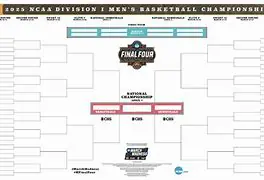 The most recent men’s expansion occurred in 2011, when three additional teams created the First Four, a quartet of play-in games impacting two of the rock-bottom #16 seeds and two #11 seeds–often the delineation point where larger schools rarely go below and mid-major conference champions rarely go above. (The women achieved parity by mirroring that when their tournament earned equal-time nomenclature last year). That created a group of games to justify the existence of the recently rebranded truTV for Turner, as IMPRACTICAL JOKERS marathons were apparently not an attractive enough proposal in their own right. They are clustered in double-headers on the two nights immediately preceding the Big Dance and in the old-fashioned bracket world are often not even factored in–bluntly, if you’re enough of a schmuck to bet on any 16 seed pulling an upset (it’s happened exactly once in 40 years) that’s on you. #11 seeds do occasionally advance–-North Carolina State did make it to the Final Four from that pole position last year–-but they did so without a play-in game. It’s not all that fair for certain #11 seeds not to be handicapped.
So here’s my modest proposal:
— Expand the field to 76 teams by expanding the First Four’s play-ins to include both all four #16 seeds, all four #11 seeds and, for good measure, all four #12 seeds.
— Adding the additional possible #12 seeds will assure that the incremental teams will come from schools and conferences of consequence.
— The additional #16 play-in schools would come from the qualifiers currently drawing #13-#15 seeds, thus allowing a couple of larger schools on the bubble to replace them and likely improve the likelihood of bracket-busters. Bracket-busters with the potential of a North Carolina State as opposed to a “one shining moment” that rarely goes beyond a shocking upset.
— Play these games on the existing First Four days, with the four #16 games relegated to afternoon time slots with scheduling akin to what Thursday and Friday see. The prime time games would involve the #11 and #12 seed candidates–almost assuredly larger, more familiar schools capable of generating larger viewing audiences.
— Offer those Tuesday and Wednesday afternoon games exclusively on a streaming platform, with exceptions made for concurrent over-the-air availability for the markets in the footprints of the competing schools. This regional availability model was utilized for years by the fourth quarterfinal game on the second day, usually involving Western region teams, so there is precedence. And this would be yet another reason for these struggling platforms to acquire subscribers at least for a while–which their companies would be all too happy to pony up significant incremental dollars for. If not Paramount + or MAX or even ESPN , hey, maybe Peacock or FOX’s soon-to-debut platform might be willing to get in on this?
— Mandate that officially sponsored brackets conducted by advertising partners and participating media entities, such as ESPN.com, add those play-in games (call it Round 0, for lack of a better name) to the challenge of winning pools. More interest beyond merely wagering on outcomes, and the road to a perfect bracket all the more unlikely. I’ll let the math teachers reading this to re-calculate the revised odds, but I suspect we’re looking at numbers only seen by Elon Musk, and lately only in his ketamine-fueled fantasies.
There, was THAT so radical? You’d still be looking at a field where roughly one in five schools qualifies for any post-season–contrast that where the NBA play-in round has now made their proportion two in three and where even an expanded WNBA awards 62% of its league. And at least those aggrieved fans in West Virginia, Indiana and some other schools of influence will have one less thing to bitch about.
Madness should come exclusively from the results, not from the process.
Until next time..