

Milano Santagiulia Arena got its first real jolt of Olympic electricity when the U.S. men’s hockey team walked off with a 5-1 win over Latvia in their opener, and the score honestly feels about right. After a bumpy, borderline weird first period, the U.S. Team settled in, let their talent and depth take over, and turned what could’ve been a nervy debut into exactly the kind of statement game people have been waiting to see since NHL players were cleared to come back to the Olympics.
The opening 20 minutes were chaos in the most Olympic way possible. Brady Tkachuk got the honor of scoring the first U.S. goal less than six minutes in, ripping one from the right circle after a chip-ahead from his brother Matthew, only for things to get messy from there. Latvia punched back to tie it 1-1, and in between, the U.S. Team had not one but two goals wiped out on challenges — one for offside, one for goaltender interference, both involving Brock Nelson’s fingerprints somewhere in the build-up. It was the kind of period where the better team looks like it should be up a couple but glances at the scoreboard and realizes they’re starting all over again.
The second period is where the separation showed. Once the U.S. found its rhythm, Latvia just couldn’t live with the speed, the puck movement, or the sheer number of dangerous players hopping over the boards. Nelson finally got a goal that counted, taking a slick feed from Jack Hughes, walking Elvis Merzļikins and tucking it in with a forehand-to-backhand move that looked almost casual for a go-ahead 2-1 strike. From there, it turned into a highlight reel. Tage Thompson roofed a backhander on the power play to stretch the lead, and Nelson added another late in the frame off a gorgeous tic-tac-toe passing sequence, again driven by Hughes. By the time the horn sounded, the U.S. had outscored Latvia 3-0 in the period and outshot them 17-2, which is about as suffocating as it gets.
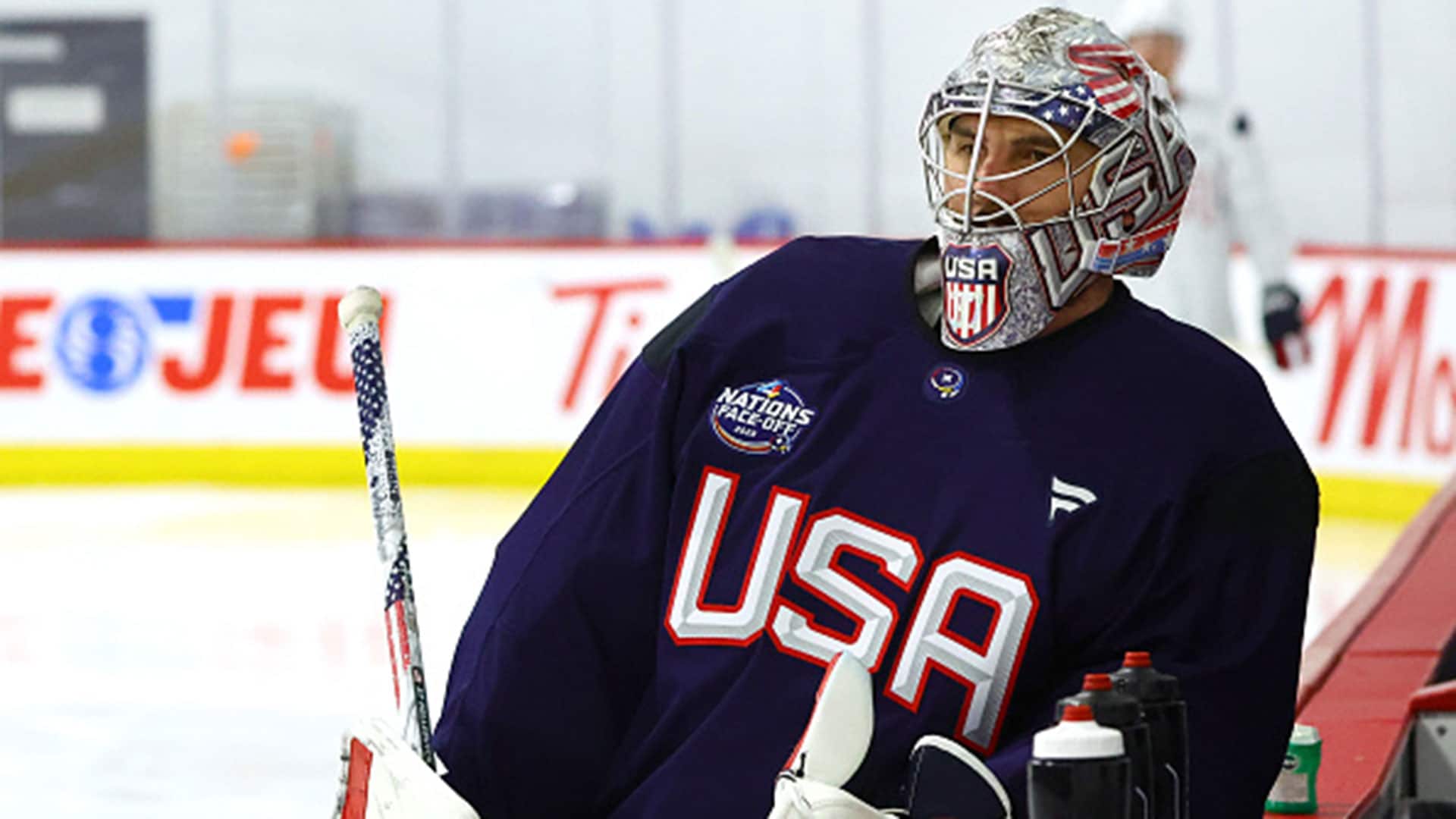
If there was any doubt about the outcome heading into the third, Auston Matthews ended that pretty quickly. Early in the final frame, on yet another dangerous power play, he stepped into the slot and hammered home the 5-1 goal off a pass from Jack Eichel, giving the U.S. Team their second tally with the man advantage. That was more than enough for Connor Hellebuyck, who didn’t have to be spectacular but was rock-solid whenever Latvia did manage to create something, finishing with 17 saves on 18 shots. The shot clock told the story: 38-18 U.S., a territorial domination that matched what it felt like watching the game play out.
What really jumps off the page from every recap isn’t just the score; it’s the distribution. Nelson scored twice, sure, but this was a night where 10 different U.S. skaters picked up at least a point, and four of them had two assists each — Jack Hughes, Quinn Hughes, Matthew Tkachuk and Jack Eichel. Jake Guentzel summed it up perfectly after the game, the U.S. believes in its depth, and there are good players on every line, which is exactly what it looked like. When a team can roll four lines and still keep high-end skill on the ice basically all the time, opponents like Latvia have to play almost mistake-free hockey just to hang around. They didn’t, and the scoreboard reflected that.
All of this, of course, is happening against the backdrop of NHL stars being back at the Olympics for the first time since 2014. It changes the entire energy around the men’s tournament. Thompson talked about exactly that with CBS, calling it best on best and pointing out that there’s another level of pride when players pull on their national colors in this setting. The U.S. roster looks like an All-Star team for a reason, and on a night like this, fans got a glimpse of what a fully loaded U.S. squad can look like when it starts to click.
Even the little details spoke to how comfortable this group felt. There was some curiosity coming in about how much the smaller Olympic ice would matter, but Jack Hughes downplayed it in a postgame chat with CBS, basically shrugging and saying that once you’re out there, it isn’t a big deal and the rink is pretty nice. The way the U.S. cycled the puck, stretched Latvia out, and still found seams through the middle, it honestly looked like a group of NHLers operating on instinct more than a team still adjusting to anything.
Big picture, this was exactly the kind of opener the U.S. Team needed, but it’s just one step in what they hope is a much longer run. The draw on paper is favorable — Latvia, then Denmark, then Germany to close out group play — and several analysts have noted that this might be the softest bracket among the heavyweight nations. As NBC’s live blog laid out, the immediate target is simple: win the group, grab that bye straight into the quarterfinals, and avoid any early bracket chaos. Beating Latvia convincingly checks box one, but Denmark and Germany will both be gunning for their upset moment.
Here’s the thing, folks: It is quite encouraging for U.S. fans that this didn’t look like a team relying solely on its big names to drag them through. Hellebuyck was calm and efficient behind a blue line that moved pucks cleanly and rarely got hemmed in, which fits what pre-tournament previews were saying about the U.S. being built from the net out, with arguably the deepest goaltending trio and a mobile, modern defense corps. Up front, the structure and buy-in were as noticeable as the individual skill — shifts ended in the offensive zone more often than not, and when they didn’t, there was usually a clean, organized reload waiting in the neutral zone.
With that… Mike Sullivan sounded like a coach who knows his group did what it was supposed to do, but also understands how quickly momentum can flip in a short tournament. He called it an important win to start the tournament and praised both the energy on the bench and the way his players handled the game overall. That’s probably the right tone. The U.S. is here to chase its first men’s hockey gold since 1980, and everyone knows that nobody hangs banners for opening-night blowouts. Still, for one night in Milan, the U.S. Team looked every bit the contender they were hyped up to be — deep, dangerous, and just getting started.
If you cannot play with them, then root for them!