

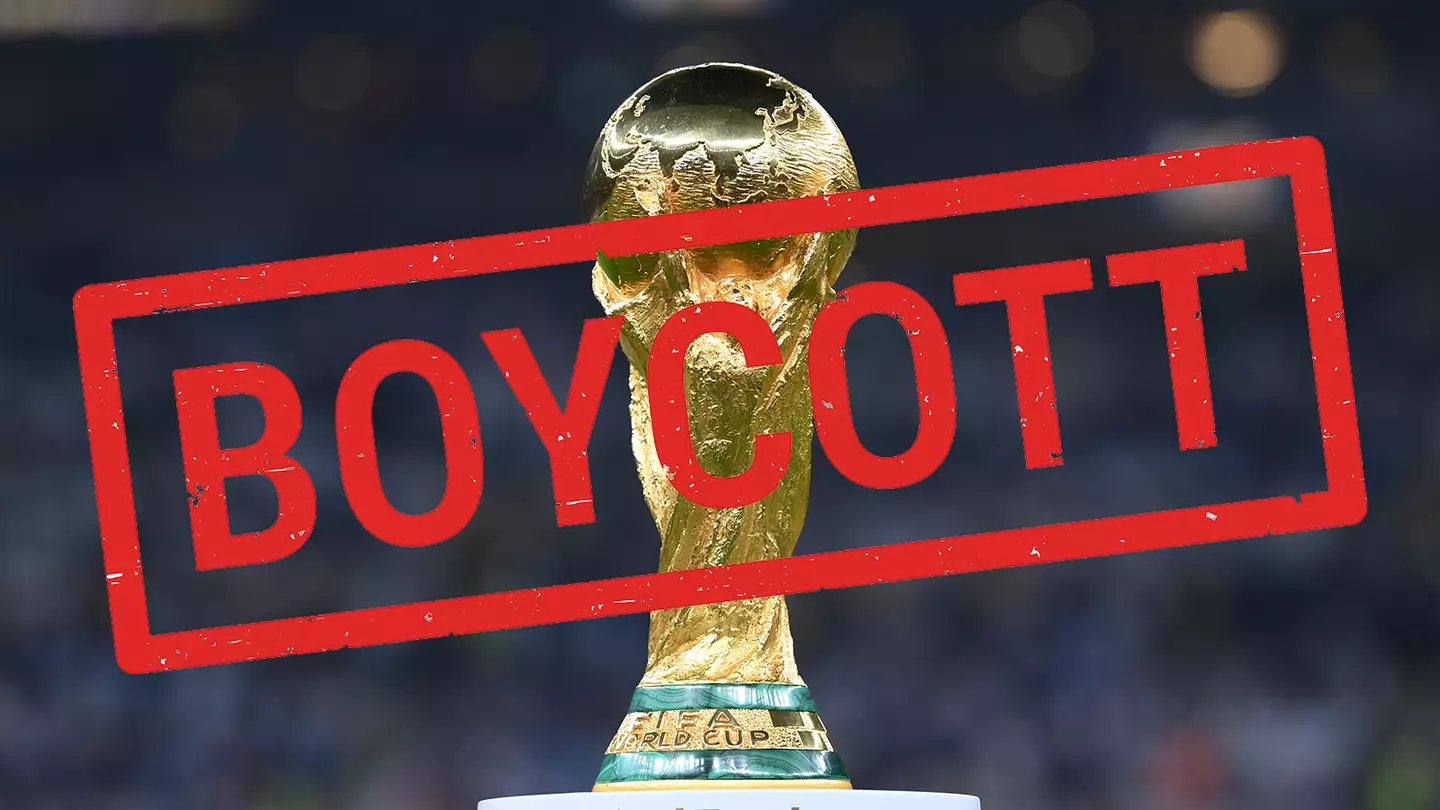
The 2026 FIFA World Cup, scheduled to kick off in just five months across the United States, Canada, and Mexico, is facing an unprecedented political crisis that has nothing to do with the beautiful game itself. Instead, the tournament now sits at the intersection of one of the deepest transatlantic tensions in recent memory — all because of U.S. President Donald Trump’s controversial push to acquire Greenland, a semi-autonomous Danish territory, and his threats to impose punishing tariffs on European nations who oppose him.
While no countries who are part of the European Union has formally announced a withdrawal from the tournament yet, discussions about a coordinated boycott have moved from whispered speculation into serious political discourse across the continent. Politicians, football officials, and grassroots activists are now openly asking whether Europe’s greatest sporting nations should stay home as a form of protest against Trump’s administration. The controversy reveals just how intertwined international politics and sports have become — and how fragile the consensus around hosting major sporting events actually is.
The catalyst for all this is Trump’s extraordinary campaign to bring Greenland under American control. In mid-January, Trump posted on his Truth Social platform that the U.S. needed Greenland for national security purposes, citing concerns about China and Russia in the Arctic region. What started as a negotiating tactic quickly escalated into something far more concerning when Trump didn’t rule out using military force to accomplish his goals. Danish Prime Minister Mette Frederiksen responded with a stark warning that any military action would effectively dissolve NATO, the alliance that has anchored Western security since the end of World War II.
The threat became concrete when Trump announced 10 percent tariffs on eight European countries — including NATO allies Denmark, Germany, France, the United Kingdom, the Netherlands, Sweden, Finland, and Norway — starting February 1, escalating to 25 percent by June 1. This wasn’t gentle negotiation. It was economic coercion targeting some of America’s closest allies. The EU scrambled into emergency mode, with the European Commission preparing unprecedented countermeasures and European leaders calling to suspend the recently negotiated EU-U.S. trade deal
The situation thawed slightly when Trump announced on three days ago that he’d reached a framework deal with NATO Secretary General Mark Rutte and would suspend the tariff threat. But the details remain murky — Trump referenced mineral rights, a proposed Golden Dome defense system, and vague notions of U.S. total access, while NATO officials insisted they had negotiated nothing that compromised anyone’s sovereignty. The framework essentially kicked the can down the road without resolving the underlying tensions.
This is where the World Cup enters the picture. As Trump’s threats dominated headlines, football officials and politicians began contemplating whether the sport itself could become a tool to push back against American aggression. The idea isn’t entirely unprecedented — countries have boycotted Olympics and World Cups before, most notably when dozens of nations stayed home from the 1980 Moscow Olympics — but a modern European-led boycott would be truly historic.
Serious voices in German politics have emerged as the loudest advocates. Oke Göttlich, vice president of the German Football Association and president of the club St. Pauli, told the Hamburger Morgenpost that the time has definitely come to discuss a World Cup boycott concretely. He drew a stark comparison to the Cold War boycotts of the 1980s, asking whether the current situation isn’t equally grave. Other German lawmakers echoed this sentiment. Roderich Kiesewetter, a senior conservative member of the Bundestag’s foreign affairs committee, stated that if Trump carries out his threats regarding Greenland and starts a trade war with the EU, it is hard to imagine European countries participating in the World Cup.
The German position matters enormously because Germany is one of Europe’s football superpowers and would lose more than most by missing the tournament. So would England, France, Spain, and the Netherlands — all nations that have already qualified and represent a significant share of the tournament’s commercial and cultural appeal. If even a handful of these European heavyweights stayed home, it would fundamentally damage the World Cup.
Support for a boycott extends beyond Germany. In the United Kingdom, MPs Simon Hoare and Kate Osborne have suggested that a boycott should remain on the table as leverage, and France’s far-left politician Éric Coquerel has made the case on social media that participating would be unconscionable. Seriously, can we imagine going to play the World Cup in a country that attacks its neighbors, threatens to invade Greenland, destroys international law, wants to torpedo the UN, and establishes a fascist and racist militia in its country?, he asked.
Not everyone in Europe agrees. France’s sports minister Marina Ferrari stated that her country has no desire to boycott and that sport should remain separate from politics, though she notably didn’t rule out future changes of position. This reflects a genuine split within Europe — some nations and leaders see a boycott as potentially effective leverage, while others believe that sports should be insulated from political disputes.
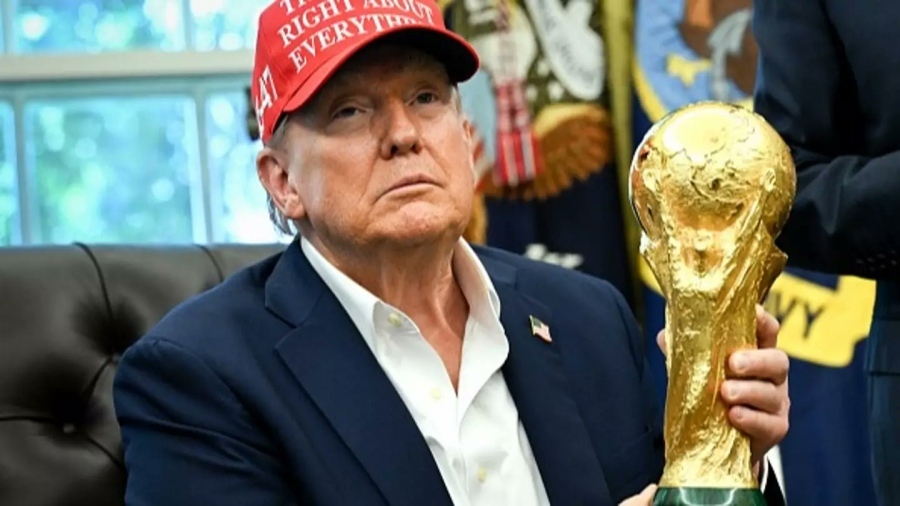
Grassroots momentum is building too. A petition in the Netherlands calling for a European boycott has gathered 135,000 signatures and continues to grow. The petition’s organizer, Teun van de Keuken, argues that while he loves the World Cup, the current political situation matters more. He’s frustrated by FIFA’s perceived neutrality and by what he sees as FIFA President Gianni Infantino’s coziness with Trump — the FIFA chief presented Trump with a newly created “peace prize” during the 2025 Club World Cup ceremony, a move that drew criticism from human rights advocates and football supporters’ organizations.
Here’s the thing, folks: The path forward remains deeply uncertain. The tournament takes place in less than five months, and no European country has formally committed to withdrawal despite the intense discussions. But the fact that such serious conversations are happening at all — among football federation officials, government ministers, and parliaments — demonstrates just how severely Trump’s Greenland campaign has damaged transatlantic relations.
What began as a trade dispute and a threat to Greenland’s sovereignty has now created a genuine risk that Europe’s football community might respond with one of the most dramatic gestures available to them, a coordinated absence from the world’s biggest sporting event.
With that… President Trump needs to back down because the World Cup is meant to be a celebration of global unity through sport, now faces the possibility of becoming a flashpoint in a broader clash between his America and a united Europe determined to draw a red line at its sovereignty.
When you do not follow a sport closely that does not stop you from having an opinion when politicians are getting in the way of of the entertainment aspects surrounding an event which happens every 4 years.