
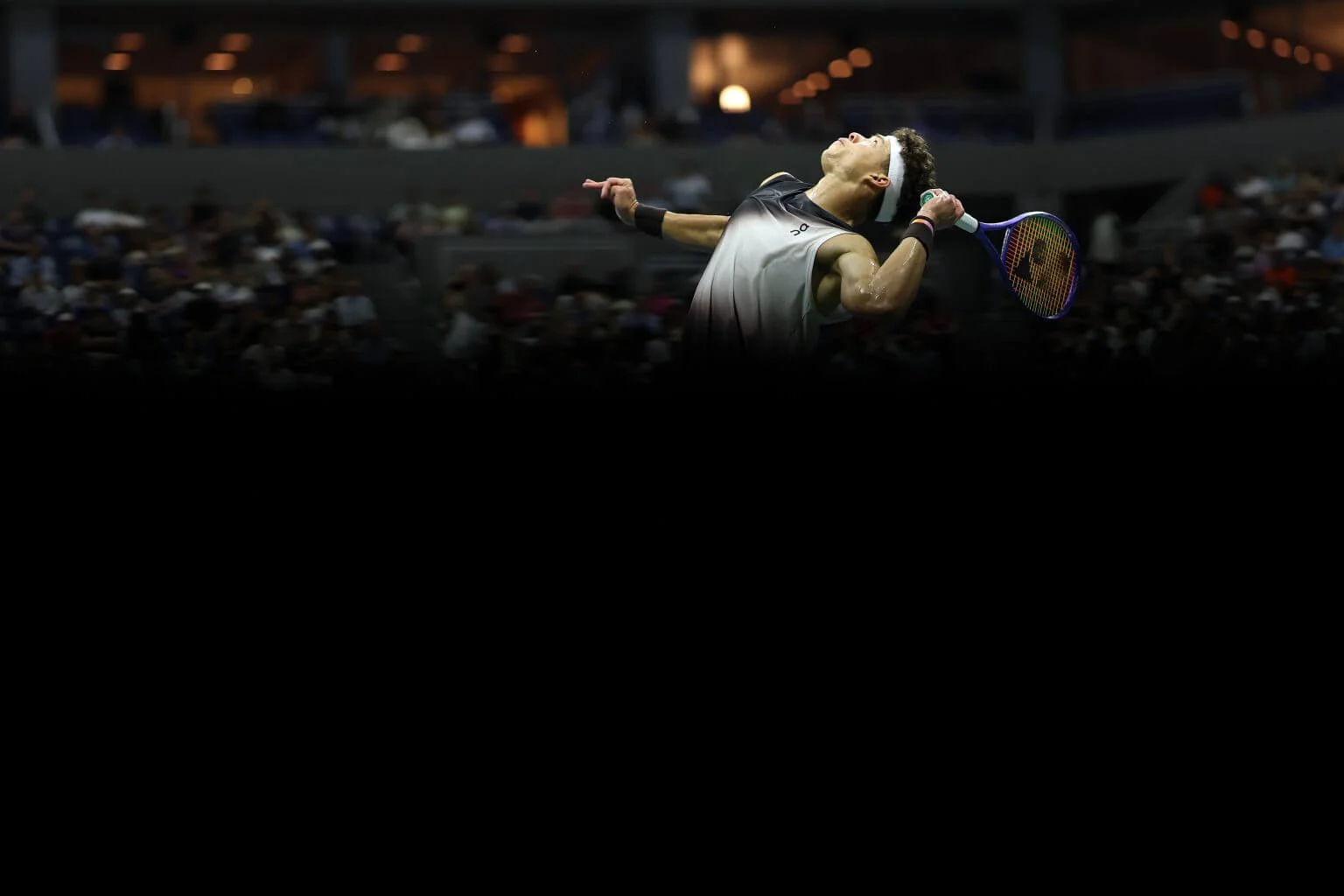
There’s typically scant little to do in Flushing in the wee small hours of the morning. Take it from a native that often wound up standing on the corner of Main Street and Roosevelt Avenue for a bus or, at least on winter paydays, a taxi that would mitigate my likelihood of catching frostbite. With the exception of the newsstand that was down to a few stale candy bars, nothing was open.
Ah, but during the U.S. Open, that truism changes once you head one stop west on the 7 line. Thanks to the insatiable demand for ESPN to have nighttime doubleheaders that usually has a men’s match typically beginning in the 9 p.m. hour there have been many a five-set showdown that has extended well past Seth Meyers’ sign-off. Per ESPN Research, in the Flushing Meadows era seven such Late Late shows that concluded in the 2 a.m. hour have occurred, three within the last four years alone. But last night–er, this morning–that record went by the boards.
As THE ATHLETIC’s Matthew Futterman gushed mere minutes ago:
When the end came, at 3:33 a.m., it was Shelton roaring to the faithful who had stayed behind, with a 7-6(5), 6-1, 6-3, 1-6, 7-6(10-7) win sealed by a 146 mph ace. It ended on his signature, the shot that he could always rely on but had never taken him past a player of Alcaraz’s gravity.
Epic doesn’t begin to describe the degrees of intensity and tenacity that the up-and-coming American and the sport’s anointed new king staged. Futterman did a wonderful job attempting to capture how the night–er–morning–reached a crescendo:
It was getting on 2 in the morning. There were still some 10,000 people in the stands. Shelton was on the ropes and a long night was about to go the distance. Nothing good is supposed to happen after 2 a.m., except when otherworldly tennis players choose the early hours to awaken from their slumber.
Fifth set. 2-2. Alcaraz rips a forehand to get break point. Here comes the kill. No, not now, Shelton says. He hops back two steps, rises and crushes an overhead that knocks Alcaraz to the ground. Then he pumps in that serve, gets the game, turns to the crowd and shakes his racket in the air. He wants noise. The U.S.A chant starts up.
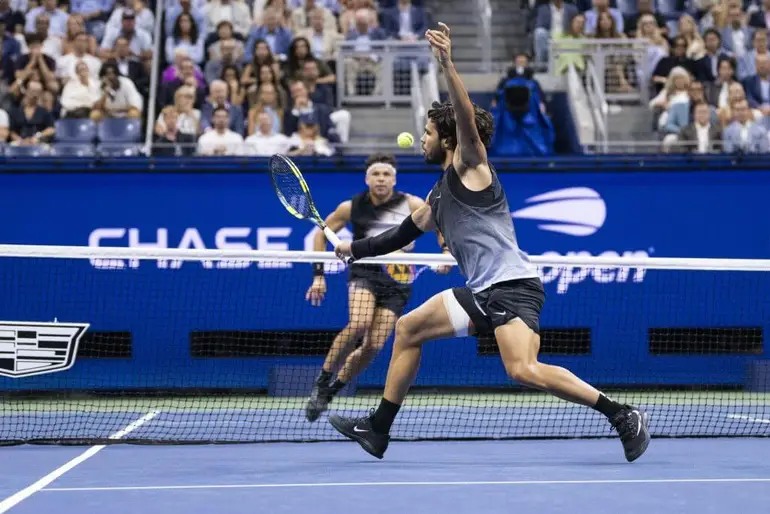 It’s 2:45 a.m. Shelton’s father is up on his feet. It’s nice to have a parent watching over you in the middle of the night. By 2:51 a.m., Shelton and Alcaraz have surpassed the latest finish in U.S. Open history. That was in 2022, when Alcaraz and Sinner played a quarterfinal that started as an expedition into the sport’s future and ended with its present ever-changed.
Now it was Alcaraz’s turn to mount a great escape. Shelton had three chances to earn a shot at serving out the match. He float a chip approach shot from the middle of the court, instead of ripping it, and as it kissed the ground the lights on the net posts turned red. Not this time.
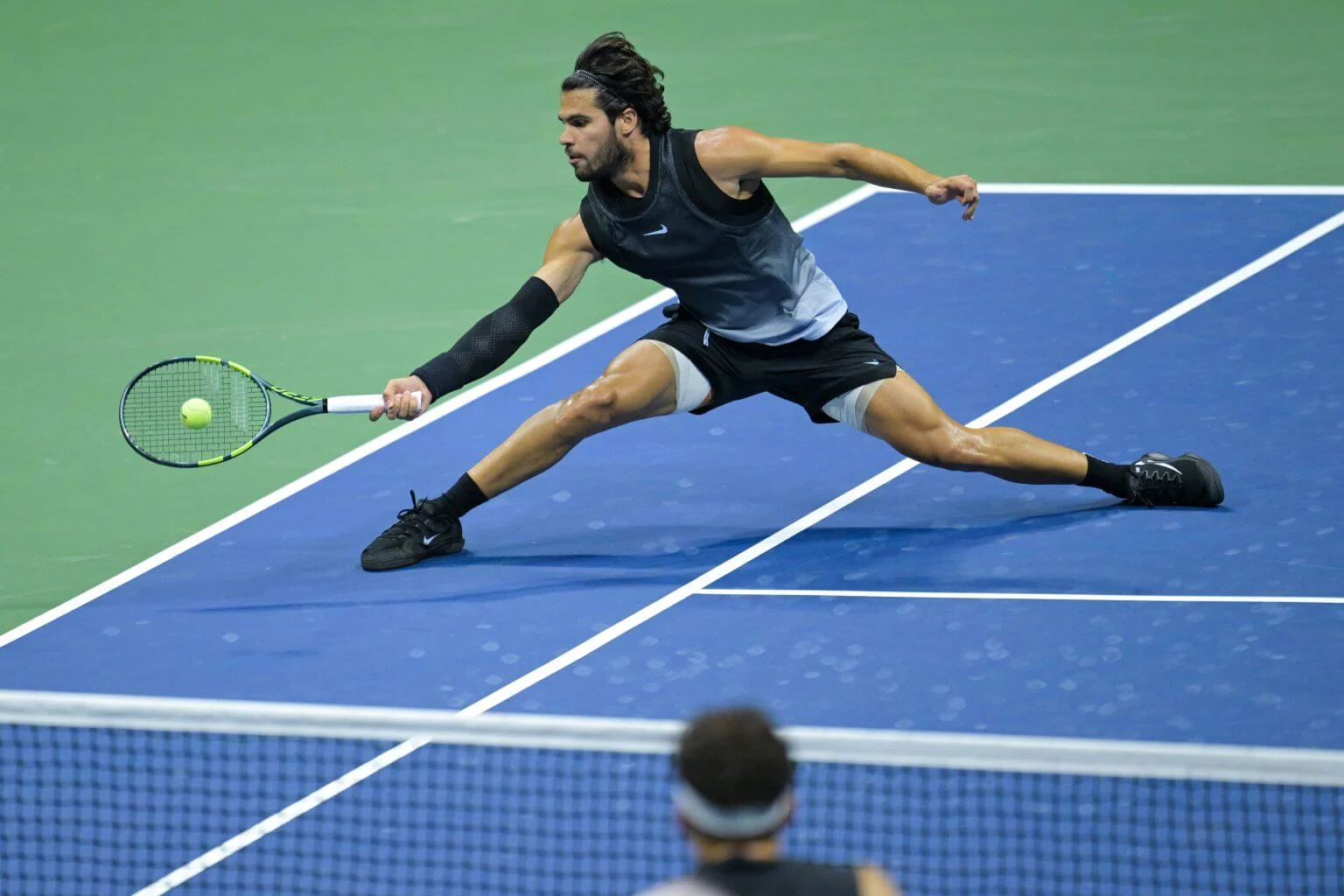
Alcaraz ripped a running crosscourt passing shot on the next one. Shelton whipped a backhand into the net on the third. 3 a.m. was here. And so, at 3:20, nearly 14 hours after tennis began for the previous day in the world’s biggest tennis arena, the two heavyweights played the only game that was left to play, a 10-point tiebreak to decide the match.
With Shelton leading 3-1, he made three errors in the next four points. Those, plus a big forehand from Alcaraz, let the Spaniard quiet the “Let’ss go Ben” chants. But then Alcaraz started to leak. “Let’s go Ben” boomed up again. Shelton crushed a serve. Alcaraz sent a forehand long. Shelton was two points from the finish. At 8-7 and serving, the match was on his racket. Bang into the body. Now just one more, Ace. Knockout.
 For as historic as this was, it was anything but aberrative. ESPN recapped how and why this match started so late in the first place, and what lies ahead already has the potential to eclipse even this:
Shelton will play No. 11 seed Frances Tiafoe, who kept coming back until he had reached his third US Open semifinal, beating Alex Michelsen 5-7, 3-6, 7-5, 6-3, 7-6 (10-6) on Tuesday.