
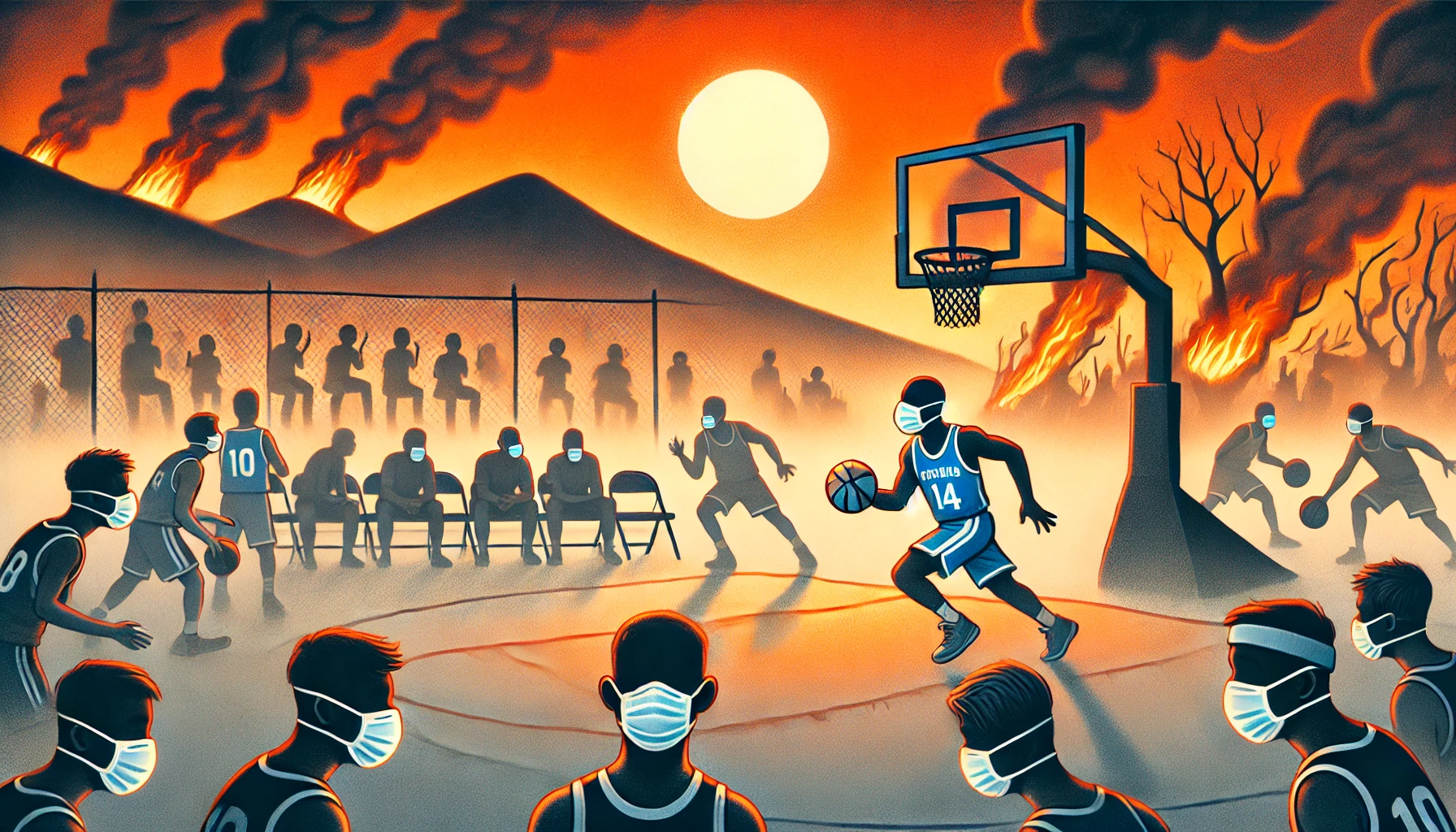
The wildfires in Southern California have brought another reminder of how natural and environmental disasters can disrupt even the most meticulously planned sporting events. Today, the Los Angeles Lakers’ game has been postponed, following the Kings’ game yesterday, as heavy smoke and poor air quality blanketed the region. Fans were understandably disappointed, but the health and safety of players, staff, and attendees had to take priority. It’s hard to overstate the significance of such decisions, especially given how much effort goes into scheduling and preparing for professional games. The increasing frequency of these disruptions raises questions about how sports organizations can adapt to protect everyone involved while maintaining the integrity of their seasons. These wildfires, sadly, are just the latest in a growing list of disasters forcing postponements.
In recent years, we’ve seen hurricanes, floods, and even earthquakes interrupt major sporting events. Hurricane Harvey in 2017 led to the Houston Astros relocating a home series to Florida, an unusual and logistically challenging decision. Players and fans alike had to contend with the emotional toll of the disaster as well as the practicalities of an unplanned move. Similarly, Hurricane Katrina’s devastation in 2005 forced the New Orleans Saints to play their entire season away from home. The Superdome, which served as a shelter for thousands of displaced residents, was left severely damaged and unusable for football. This upheaval deeply affected the team and its fanbase, highlighting the profound connection between sports and the communities they represent. The Saints became a symbol of resilience for New Orleans, but their journey that season underscored how disasters can alter the very fabric of a team’s identity.
Flooding has also played a significant role in postponing games, particularly in areas prone to heavy rains and rising waters. In 2016, floods in Louisiana forced LSU to relocate a home football game to Florida. The move was not only a logistical challenge but also a symbolic one, as many fans and players were directly affected by the disaster. Similar instances have occurred in other sports, with games delayed or canceled due to waterlogged fields or dangerous travel conditions. These scenarios highlight the interconnectedness of sports and the communities they represent, as well as the need for flexible and compassionate responses to crises.
Wildfires, like those currently affecting Southern California, have become increasingly common reasons for postponing games. In 2020, wildfires in the Pacific Northwest caused several MLB games to be postponed or moved due to hazardous air quality. The health risks for players, staff, and fans were too significant to ignore, and the decisions to postpone were widely supported despite the disruptions they caused. These situations often lead to discussions about climate change and its role in exacerbating such disasters. While sports are not the primary focus in these moments, they often serve as a lens through which broader societal issues are viewed and debated.
Beyond natural disasters, environmental crises like severe pollution and heat waves have also led to postponed or canceled games. The 2008 Beijing Olympics faced significant concerns about air quality, prompting organizers to implement measures like rescheduling outdoor events and providing masks for athletes. Similarly, extreme heat has forced adjustments in various sports, from delaying tennis matches to modifying marathon routes. These adaptations demonstrate the growing awareness of environmental factors in sports planning. They also underscore the need for proactive measures to ensure the safety and well-being of everyone involved.
As natural and environmental disasters become more frequent and severe, sports organizations are being forced to rethink their contingency plans. Flexible scheduling, backup venues, and improved communication with fans are becoming essential components of modern sports management. The use of technology, such as real-time weather and air quality monitoring, has been a game-changer in making informed decisions. However, these measures come with challenges, including financial costs and the potential for backlash from fans or other stakeholders. Balancing these considerations is no easy task, but it’s increasingly necessary in today’s world.
Athletes, team staff, and fans also have roles to play in adapting to these disruptions. For players and staff, this might mean being prepared for last-minute changes to travel plans or game schedules. Mental and physical flexibility has always been a part of professional sports, but it’s becoming even more critical as external factors increasingly impact the game. Fans, meanwhile, can support their teams by understanding the complexities of these situations and showing patience when plans change. The resilience of sports communities is often tested during times of crisis, and these moments can bring out the best in people when handled with empathy and cooperation.
Here’s the thing folks: Sports organizations might need to invest more in disaster preparedness and response training. This could include partnerships with emergency services, improved infrastructure at stadiums, and clear protocols for various types of disasters. The goal would be to minimize disruptions while ensuring the safety of everyone involved. It’s also worth considering how sports can contribute to broader efforts to address climate change and other underlying causes of these disasters. While individual teams and leagues can’t solve these issues alone, they have a platform that can be used to raise awareness and inspire action.
With that… The wildfires in Southern California are a stark reminder of the challenges we face as a society. For the Lakers and the Kings, these postponements are more than just inconveniences; they are reflections of a world where natural and environmental disasters are becoming a part of daily life. Athletes, staff, and fans must all adapt to this new reality, finding ways to navigate these disruptions while maintaining the spirit and resilience that make sports so special. Whether it’s through improved planning, community support, or broader societal change, the sports world has an important role to play in facing these challenges head-on.
While we may not be able to play with them, sometimes we can not root for them either.