

Today marks the 50th anniversary of Apple’s founding — a half-century since a group of young dreamers in a Silicon Valley garage changed how the world interacts with technology. Over the coming weeks, we will explore the key moments and people who transformed a modest idea into one of the most valuable companies on Earth with our Apple At 50 series. To begin, we go back to the day it all started — April 1, 1976.
There’s irony in the fact that Apple, now the world’s most admired corporation, was born on April Fools’ Day. That evening in Mountain View, California, three men — Steve Jobs, Steve Wozniak, and Ronald Wayne — signed a brief partnership agreement that gave life to Apple Computer Company. But Apple’s story isn’t just a legal milestone; it’s a story about vision, risk, and how a simple circuit board forced a group of hobbyists to become entrepreneurs.
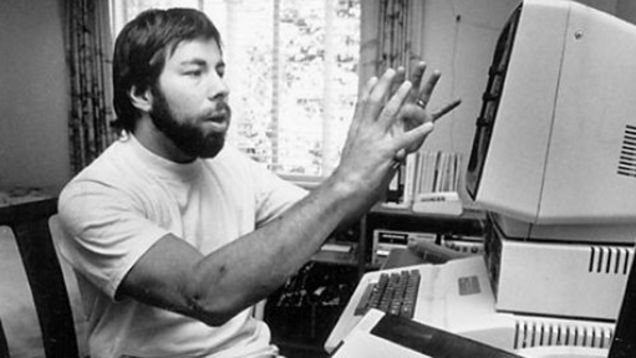
In 1975, Steve Wozniak wasn’t trying to start a business. He was a self-taught engineer at Hewlett-Packard who spent his nights at the Homebrew Computer Club, a community where tinkerers shared schematics and traded chips purely for the joy of discovery. Woz designed what became the Apple I to show that he could make a computer with far fewer components than anyone else — a minimalist gem of design and logic.
The Apple I was a quiet revolution. It could connect directly to a keyboard and television, replacing the noisy, expensive Teletype machines used in most hobbyist systems. Compact and approachable, it was one of the first glimpses of true personal computing. Woz wanted to give the design away for free and often helped others build their own.
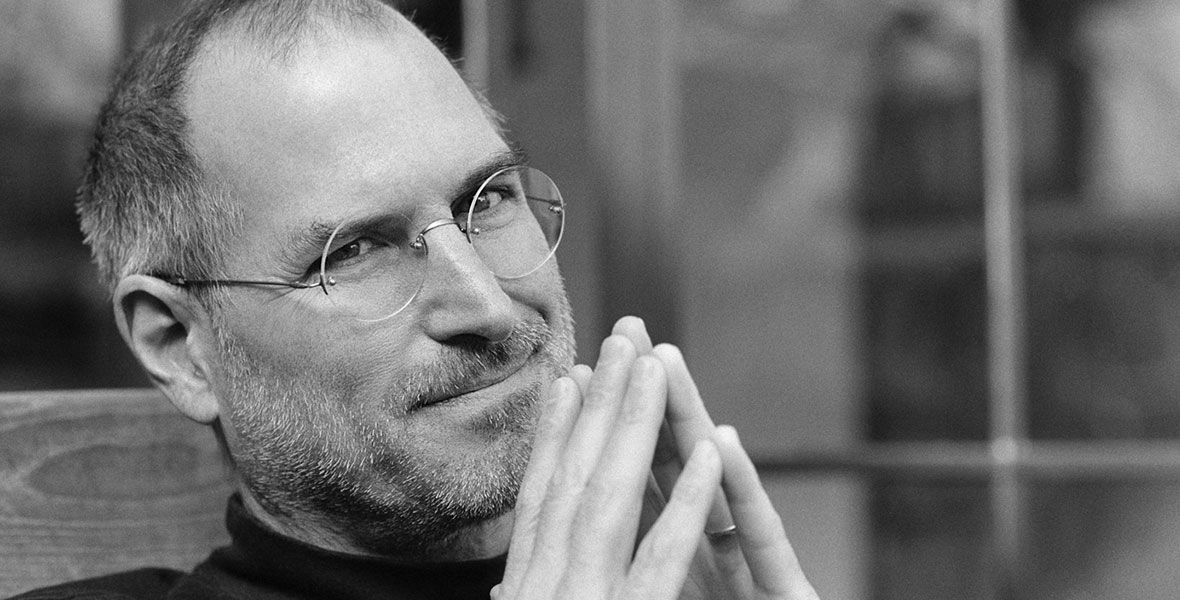
Then came Steve Jobs. At 21, Jobs had an uncanny sense for what people wanted before they did. Where Woz saw a fun project, Jobs saw a product with mass appeal. He convinced Woz to sell preassembled printed circuit boards to the Homebrew crowd rather than hand out free plans. To raise their $1,300 in startup funds, Jobs sold his Volkswagen van, and Woz sold his HP programmable calculator.
Still, Woz was torn. He felt a sense of duty to HP and wasn’t sure turning his hobby into a company was fair or wise. Jobs knew they needed a mediator — someone who could bridge idealism and business. He turned to Ronald Wayne, a 41‑year‑old colleague from Atari who had run a small manufacturing business.
On April 1, 1976, the three men met at Wayne’s apartment on California Street. In less than half an hour, Wayne persuaded Woz that formal ownership was necessary to protect their work and avoid disputes. Jobs quickly laid out the terms: Jobs and Wozniak would each hold 45 percent; Wayne would keep 10 percent as a tie-breaker. Wayne typed a three‑page agreement on his typewriter, and just like that, Apple Computer Company was born.
A few months later, Wozniak and Jobs presented their prototype, labeled Apple Computer A, at a Homebrew meeting. In the audience was Paul Terrell, owner of one of the first retail computer shops, The Byte Shop. Terrell was impressed but uninterested in selling bare boards. He told Jobs he’d buy 50 units if — and only if — they came fully assembled.
That single $25,000 order changed everything. Overnight, Apple went from being a concept to a business. Jobs used the purchase order as leverage to secure parts on credit, and his family’s garage became their factory. Friends and relatives joined in, hand‑assembling computers on the floor while Woz handled final testing. The first batch shipped a few weeks later.
During that hectic period, Wayne provided the organization Apple desperately needed. He wrote the Apple I Operations Manual, which contained detailed wiring diagrams and Woz’s source code for the monitor software. He also designed the company’s first logo — a pen‑and‑ink illustration of Isaac Newton beneath an apple tree, framed by a quote from Wordsworth.
 But Wayne quickly grew uneasy. As a general partner, he was personally liable for Apple’s debts, and the Byte Shop order meant taking real financial risks. Jobs and Woz had nothing to lose; Wayne had a house and savings he couldn’t gamble. Twelve days after signing the agreement, he withdrew from the company and sold his 10 percent share for $800. He later said that staying would have been like having a tiger by the tail.
The two Steves pressed on alone. In July 1976, the Apple I went on sale for $666.66 — a price Woz picked simply because he liked repeating digits. About 200 units were built, and most of them sold. That success gave Apple its first real profits and the confidence to begin developing the Apple II, which would bring color graphics, a sleek plastic case, and a new vision for home computing.
The Apple I was more than a circuit board; it was the bridge between Silicon Valley’s hobbyist culture and the consumer technology boom that followed. Wozniak’s engineering artistry met Jobs’s sense for design and simplicity, and their collaboration showed how technology could be not just functional but personal, even human.
That night in Mountain View — the one marked by an April Fools’ date on a basic partnership agreement — was the instant the personal computer truly began. It transformed three men with different temperaments and talents into partners in what would become a global cultural force.
Fifty years later, that garage partnership still echoes through every iPhone, MacBook, and Apple Watch in existence. The same spirit of curiosity, obsession with detail, and demand for beauty that drove Wozniak and Jobs continues to shape how billions of people connect, work, and dream.
What began as a late‑night experiment became the foundation of a digital world. And as Apple turns fifty, we’ll be revisiting that extraordinary journey with fresh eyes. Each of the next few weeks a new story in the Apple At 50 series will spotlight a different chapter of Apple’s evolution — from the Apple II and the early startup years to the near‑collapse of the 1990s and the stunning revival that followed. Stay tuned.
When you use the technology everyday learning how it came to be can be thrilling!