
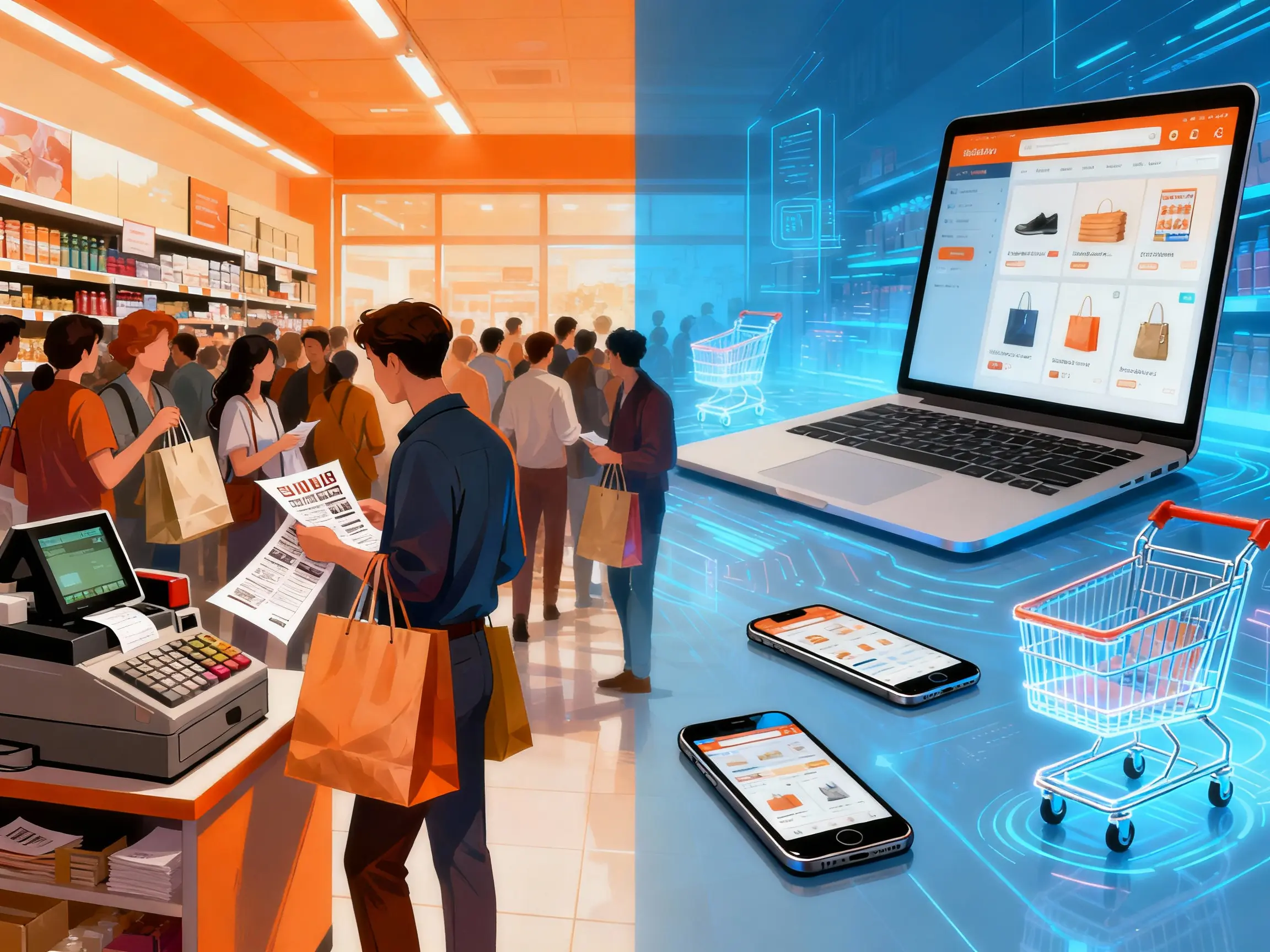
Remember when the end of Thanksgiving dinner signaled the beginning of a very specific, somewhat chaotic American ritual? You’d finish your pumpkin pie, maybe take a quick nap, and then start strategizing for the battlefield that was Black Friday. It was a physical event — a contact sport, really — where the only way to get the best deals was to stand in the freezing cold outside a big-box store at 4 a.m., waiting for the doors to slide open so you could sprint toward the electronics aisle. But then, something shifted. A quiet revolution happened, not in the parking lots of malls, but in the cubicles of corporate America.
It feels almost quaint now, but there was a time when the internet wasn’t in our pockets and our internet at home was very slow. If you want to understand why we have Cyber Monday, you have to teleport yourself back to the mid-2000s. Specifically, to 2005, which is impossible to do. That was the year the National Retail Federation (NRF) and its division, Shop.org, officially coined the term. They noticed a peculiar trend in the data: online sales were spiking on the Monday immediately following Thanksgiving. It wasn’t just a random blip; it was a consistent surge.
The reason behind this wasn’t that people loved Mondays. It was strictly technological. Back then, high-speed broadband internet was a luxury that few people had at home. Most of us were still listening to the screeching static of dial-up modems, patiently waiting minutes for a single webpage to load. But at work? That was a different story. Offices had T1 lines and fast broadband. So, after a long weekend of window shopping in crowded malls — or perhaps getting discouraged by the sheer volume of people fighting over the last toaster oven — people would return to their desks on Monday morning. Instead of diving straight into spreadsheets, they used their employer’s lightning-fast internet to buy the things they had seen over the weekend.
The NRF’s press release from November 2005, which you can read about in retrospectives like this one from NBC News, pitched Cyber Monday as a clever marketing hook based on this behavior. It was the digital answer to the analog chaos of Black Friday. The original pitch was simple: skip the lines, sleep in, and do your shopping from your ergonomic office chair while your boss thinks you’re working. It was a day defined by the constraints of technology and the desire for convenience.
Fast forward to today, and that original fast internet at work logic is completely obsolete. We carry high-speed internet in our pockets. We have 5G connections on the bus, in the park, and in our living rooms. We don’t need to wait until we get to the office to buy a discounted TV; we can buy it from our phones while we’re eating leftover turkey on Thursday night. Yet, the Cyber Monday brand stuck. It evolved from a necessity into a ritual of its own, anchoring the end of what has become a massive, amorphous shopping season.
This evolution has been driven heavily by the titans of e-commerce, most notably Amazon. The way Amazon has reshaped the calendar is also fascinating. It’s no longer just about the holiday season. Amazon introduced Prime Day in July 2015 to celebrate its 20th anniversary, essentially creating a second Black Friday in the middle of the summer. You can trace this history on Amazon’s own timeline, which details how the event grew from a one-day sale into a massive global phenomenon.
But Amazon didn’t stop there. In recent years, the retail giant has effectively instituted two Prime Days a year. Alongside the traditional July event, we now see a second major sales event in October — often branded as Prime Big Deal Days. This move has fundamentally altered the rhythm of holiday shopping. By placing a massive sale in October, Amazon effectively kickstarts the holiday shopping season before Halloween has even come and gone. It forces other retailers to compete, pulling the entire timeline of holiday deals earlier and earlier into the fall.
This brings us to the phenomenon of Black November. The idea of Black Friday being a single day — or even a single weekend — is dead. If you have paid any attention to your email inbox, you may have noticed in recent years that Black Friday deals now frequently start on November 1st. Retailers have been terrified of losing your dollar to a competitor who discounts a week earlier, so they all race to be first. The result is a two-month marathon of discounts rather than a weekend sprint.
And it doesn’t even end in December. The sales season has stretched out on the other end, too. While we used to think of the holiday shopping season ending on Christmas Eve, the cycle of deals now ends on New Years Weekend. It is becoming standard for Black Friday pricing to morph into holiday deals sometimes extending all the way until January 2nd. This extension captures the gift card spenders and the “New Year, New Me” crowd looking for fitness equipment or organization tools immediately after the ball drops.
The psychology of it all has changed, too. In the early days of Cyber Monday, there was a thrill to snagging a “web-exclusive” deal that you couldn’t get in the store. Now, the lines between online and offline are totally blurred. You might buy something online on Black Friday and pick it up in-store on Cyber Monday. Or you might stand in a store on Black Friday, scan a barcode with your phone, and buy it cheaper from a competitor online right then and there.
Here’s the thing, folks: The Cyber Monday that the NRF defined in 2005 was about access — giving people a way to shop that they couldn’t easily do from home. Today, it’s about volume and endurance. It’s the final crescendo of a symphony that began in October with Amazon’s second Prime Day and continued through a month of early access Black Friday sales.
With that… When you log on today, you aren’t just participating in a sale; you’re taking part in a twenty-year history of how the internet changed the way we live. We traded the sharp elbows of the department store crowds for the incessant refreshing of browser tabs. We traded the singular day of madness for a months-long siege of notifications. But the core appeal remains exactly what it was when office workers first started sneaking purchases on their T1 lines in 2005: the satisfaction of getting a deal without ever having to put on a coat.
When you are a professional who works in technology you know and understand the historical facts on a different level!